






An overhead view of a residential air conditioning condenser unit mounted on a concrete pad next to a house with vinyl siding.

AC Maintenance in Breese, IL

Tell us about the job

Takes about a minute. No obligation.

Tune-up, service, or cleaningCentral ACClinton County, IL
Step 1 of 2

What ZIP code is the job in?

A tune-up checks things you'd never see just by looking at the unit running. The refrigerant charge, for one. Too low and the coil can freeze over without the thermostat ever telling you something's wrong. A tech also checks the capacitor, which pushes the compressor and fan motor to start. A weak one can still let the system run for a while before it fails outright, so the system limps along looking fine until it isn't. They'll check the contactor too, since a pitted one causes the outdoor unit to not kick on at all. Then there's the coil itself. A dirty coil makes the whole system work harder to move the same amount of heat, and you won't see that from the thermostat or the vents, only on the unit itself.

5 months
May through September, your air conditioner is on duty
87°F
the average summer afternoon it cools against
7 hail events
in ten years, and hail bends the fins on outdoor coils
29 wind events
in ten years, and wind drives debris into outdoor units
Isometric cutaway illustration of a house interior showing ducted HVAC piping, an indoor air handler unit, and an outdoor condenser with fan connected by a line, rendered in grey tones on a white background.
Your air conditioner works hardest from June through August.

NOAA nClimDiv, 1991–2020 normals

Warm air from the vents, ice on the copper line, a unit that cycles on and off fast all point to the same thing before the compressor gives out.

A tune-up catches a weak capacitor or a dirty coil while the system is still running, not after it stops.

Power here costs 16.06 cents a kilowatt-hour, and a dirty system burns more of it

Power here costs 16.06 cents per kilowatt-hour
Cooling runs May through September
Summer afternoons average 87°F
May Starts the Season HereCooling runs May through September. Have the system checked in April, before it has to work.

A quick tune-up means someone glances at the unit, checks that air is blowing cold, and leaves. A thorough one means the panel comes off. The tech washes the condenser coil instead of just looking at it, because dirt packed between the fins doesn't always show from the outside. They check refrigerant pressure with gauges rather than guessing from how cold the air feels at the vent. The capacitor gets tested under load, not just eyeballed for bulging, since a weak one can still read fine sitting still. Blower wheel, drain line, electrical connections at the disconnect box, all get looked at whether or not anything seems wrong. If the visit takes the same ten minutes every year and the only thing that changes is the invoice, nothing is actually being measured, just checked off.

A system working harder than it needs to costs more every month

A dirty coil or a weak capacitor makes the system run longer to cool the same house, and power here isn't cheap. A tune-up finds those problems while the system is still running, not after it stops.

Find a contractor
A gray residential air conditioning condenser unit mounted on a concrete pad outdoors, surrounded by green grass under a partly cloudy blue sky.

A System Left Alone Doesn't Fail Today. It Fails Early

An air conditioner that never gets looked at doesn't fail all at once. It loses a little capacity every year and keeps running anyway, because the thermostat only knows whether the air is cold, not whether the system had to work twice as long to make it that way. A coil that was never washed collects a layer of dirt between the fins, and the compressor pushes harder against that layer every time it starts. A capacitor weakens slowly too. It still kicks the compressor over most mornings, right up until the morning it doesn't. None of that shows up as a problem you can see. It shows up as a system that runs longer, strains more, and wears out its compressor years before it should have.

Keep the Area Around the Unit Clear

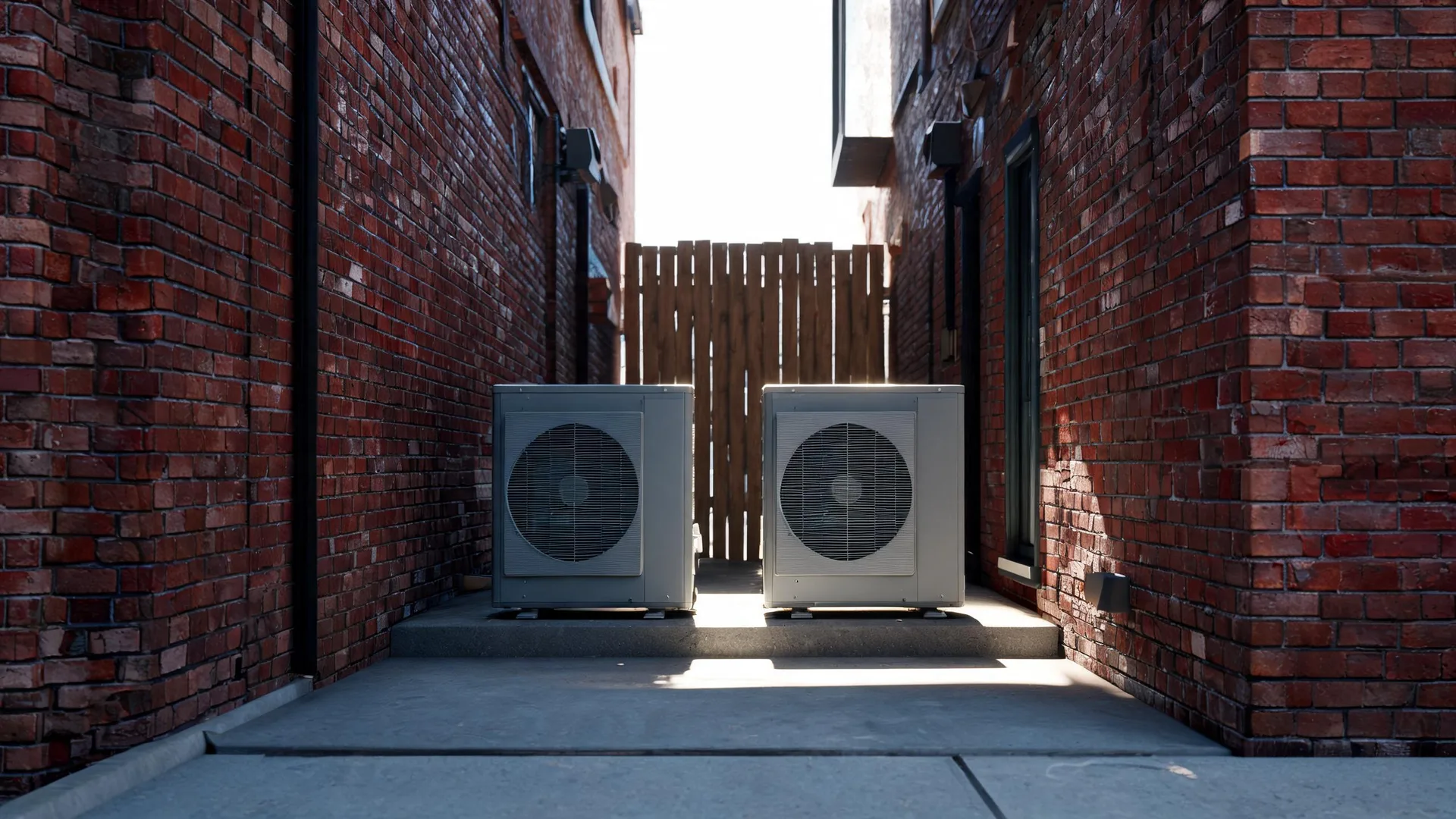
The outdoor unit needs open space to pull air through the coil. Grass clippings, mulch, leaves, a fence built too close, anything that blocks airflow makes the system work harder without you knowing it. Keep plants trimmed back from the cabinet and skip stacking anything against it, even for storage.

Change the Filter, Leave the Rest Alone

A dirty filter restricts airflow across the indoor coil, and that's the one thing between visits that's actually yours to manage. Check it monthly and swap it when it looks gray or clogged. Past that, leave the panels closed. Refrigerant, the capacitor, the coil itself, those need gauges and training to check safely, not a homeowner with a screwdriver.

Aerial view of a residential air conditioning condenser unit mounted on a concrete pad next to a house with vinyl siding and a sliding glass door.

Book your AC tune-up in April, before homes here start needing cooling in May.

  1. Jan
  2. Feb
  3. Mar
  4. Apr
  5. May
  6. Jun
  7. Jul
  8. Aug
  9. Sep
  10. Oct
  11. Nov
  12. Dec

A tune-up checks the refrigerant charge, cleans the coils, tests the capacitor and tightens the electrical connections.

A tune-up also covers the fan motor and the blower, since both run on bearings that wear down over time. A motor working on worn bearings pulls harder to spin at the same speed, and that shows up as heat, not noise you'd necessarily catch. The tech checks the fan blade for wobble and makes sure the blower wheel isn't caked with dust, because a dirty wheel moves less air even at full speed. Drain line gets checked too. A clogged condensate line backs up and can shut the system down on a safety switch, or worse, overflow where you won't see it right away. Electrical connections get tightened, since a loose connection at the disconnect or the contactor generates heat and wears the connection further every time the system cycles. None of this is guesswork. It's the same set of checks, done the same way, whether the system seems fine or not.