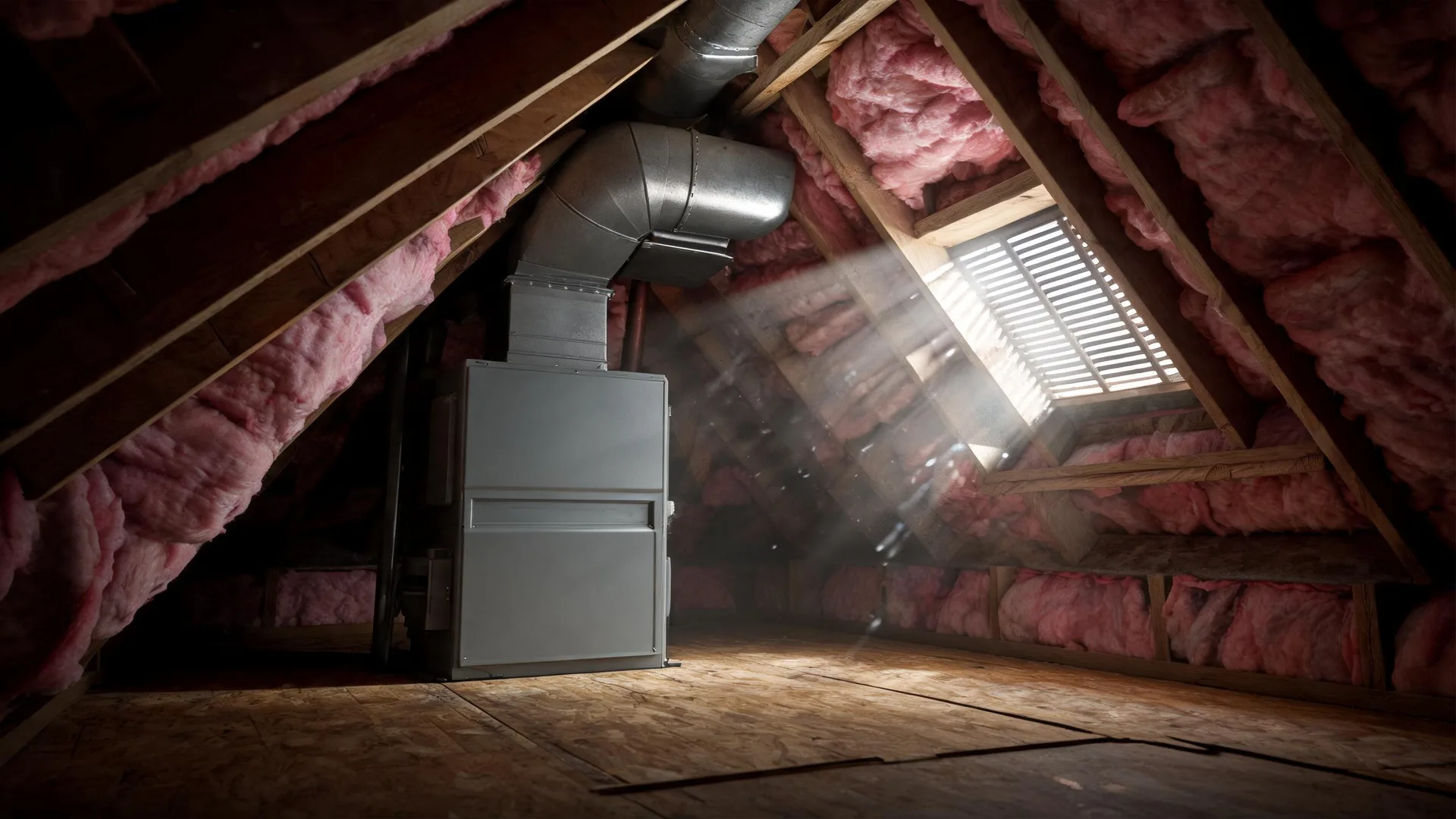
A two-story black house with a covered porch, framed by large deciduous trees and trimmed hedges, photographed from a low angle across a lawn with blurred grass in the foreground.

AC Maintenance in Centralia, IL

Tell us about the job

Takes about a minute. No obligation.

Tune-up, service, or cleaningCentral ACMarion County, IL
Step 1 of 2

What ZIP code is the job in?

A dirty filter works the whole system harder

When the filter clogs, the blower has to pull harder to move air across the coil. The coil can start icing over instead of cooling, and the compressor runs longer to make up for it. Changing the filter on a regular basis is the one thing that protects everything downstream of it.


The drain line is a quiet point of failure

The indoor coil pulls moisture out of the air as it cools, and that water has to leave through the condensate drain. Algae and sludge build up in that line over time with nothing to warn you until it backs up. A clogged drain can shut the system down on its own or let water spill out near the unit.

5 months
May through September, your air conditioner is on duty
86°F
the average summer afternoon it cools against
6 hail events
in ten years, and hail bends the fins on outdoor coils
36 wind events
in ten years, and wind drives debris into outdoor units
Isometric line illustration of a cutaway single-story building showing interior rooms, ceiling ductwork and an air handler, connected by lines to an outdoor condenser unit beside the exterior wall.
Your air conditioner works hardest from June through August.

NOAA nClimDiv, 1991–2020 normals

The refrigerant charge only shows itself in numbers, not in how the air feels.

A gauge reading tells a tech if the system is low or overcharged well before the house feels warm.

Cooling starts working in May. Have it checked in April.

Cooling runs May through September
Summer afternoons average 86°F
Power costs 15.87 cents a kWh statewide

Half the homes in Marion County were built in 1973 or earlier. A system working in a house that old is usually not the original. Whatever is running now has been put in at some point to replace something older, and nobody but the homeowner knows exactly when. A yearly check is how a tech catches the wear that comes with age before it turns into a breakdown, a worn contactor, a weak capacitor, a refrigerant leak that started small. None of that shows up as a change in how the house feels until the system is already struggling.

A neglected system costs more to run here

Illinois electricity ran 15.87 cents per kilowatthour in 2024, and a system that has to work harder than it should burns more of it every time it cycles on. A dirty filter, a weak capacitor, a low charge all make the compressor run longer to do the same job. A yearly check catches that before the system has to run all summer on it.

Find a contractor
A gray cylindrical air conditioning condenser unit mounted on a concrete pad next to a light-colored vinyl-sided house exterior.

The longer it runs, the more a mid-season check tells you

A system that runs fine on a cool morning can still be close to trouble by afternoon. Heat is what wears parts out, and the parts under the most heat are the ones that fail quietly. A capacitor weakens a little at a time and gives the compressor a harder start each time, until one day it doesn't start at all. A contactor's points pit and burn with every cycle until they stick or stop making contact. None of that shows up as a change in cooling until the day it does. A check partway through the season catches a capacitor testing low or a contactor showing wear while it's still just a reading on a meter, not a no-cool call.

A compressor that short-cycles wears out from the inside

A system low on refrigerant or fighting a dirty coil starts and stops more than it should. Every start puts a surge through the compressor windings. Left alone, the compressor is what finally fails, and it's the hardest part in the system to replace.

Neglect doesn't announce itself, it accumulates

Nobody skips one maintenance visit and breaks down the next week. A fan motor runs a little hotter than it should. A coil stays coated in dust and starts losing its grip on the heat it's supposed to pull out of the air. Each season the system is asked to do the same job under worse conditions, until the margin it used to have is gone.

Aerial view of a gray outdoor air conditioning condenser unit mounted on a concrete pad next to a house with vinyl siding.

Book your AC tune-up in April, before homes here start needing cooling in May.

  1. Jan
  2. Feb
  3. Mar
  4. Apr
  5. May
  6. Jun
  7. Jul
  8. Aug
  9. Sep
  10. Oct
  11. Nov
  12. Dec

A tune-up checks the refrigerant charge, cleans the coils, tests the capacitor and tightens the electrical connections.

A tune-up starts outside, not at the thermostat. A tech pulls the panel and checks the capacitor and contactor under load, not just by sight, because a part can look fine and still test weak. The coil gets inspected and cleaned if it's coated, since dust on the coil makes the system pull heat less efficiently no matter how strong the compressor is. The refrigerant charge gets checked against what the system calls for, high or low, both make the compressor work harder than it should. The drain line gets flushed so it can't back up later in the season. Electrical connections get tightened, because a loose connection generates heat on its own and burns a point until it fails. None of this is guesswork. It's a list of the parts that wear quietly, checked while they still show up as a reading instead of a breakdown.