A nighttime street view of several illuminated two-story red brick homes with front porches, flanked by a large tree.

AC Maintenance in DeKalb, IL

Tell us about the job

Takes about a minute. No obligation.

Tune-up, service, or cleaningCentral ACDeKalb County, IL
Step 1 of 2

What ZIP code is the job in?

Change the filter

A dirty filter is the one thing you can check yourself without opening the cabinet. Hold it up to a light. If you can't see through it, swap it. A clogged filter starves the system of airflow, which makes the coil run colder than it should and can ice it over.


Keep the outdoor unit clear

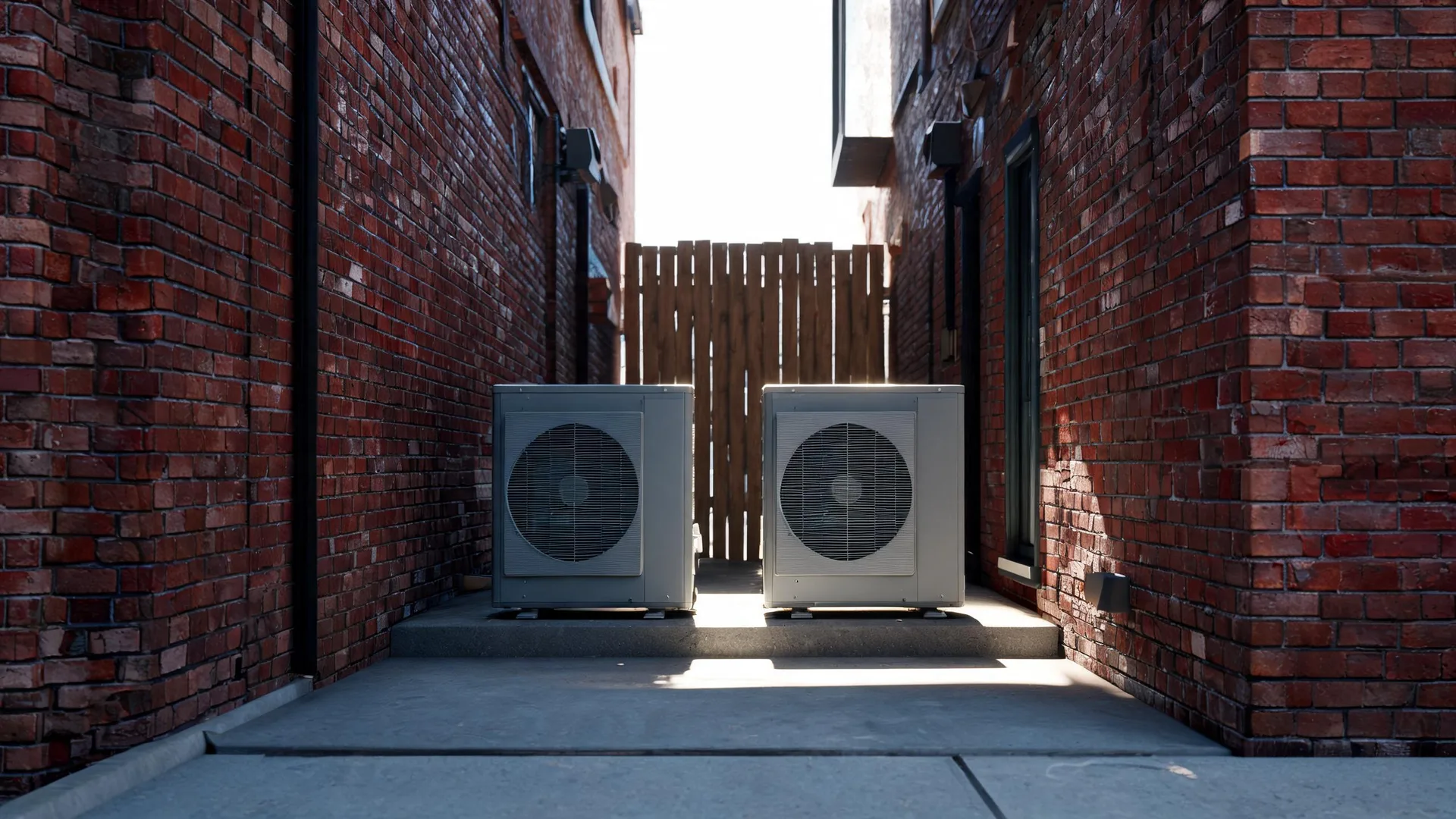
The condenser outside needs open space around it to shed heat. Pull weeds, trim back bushes, and clear leaves or grass clippings off the cabinet. Nothing should be stacked against it or sitting on top of it. If it can't breathe, it works harder and struggles to cool the house.

3 months
June through August, your air conditioner is on duty
82°F
the average summer afternoon it cools against
27 hail events
in ten years, and hail bends the fins on outdoor coils
105 wind events
in ten years, and wind drives debris into outdoor units
Isometric line illustration of a cutaway single-story building showing interior rooms, ceiling ductwork, an indoor air handler, and an outdoor condenser unit connected by a line set.
Your air conditioner works hardest from June through August.

NOAA nClimDiv, 1991–2020 normals

June is when cooling starts in DeKalb County.

Have it checked in May, before the system has to work.

DeKalb sees its share of storms, but that's not a reason to check this system more than once a year.

166 severe weather events from 2015 to 2024
16% of homes statewide lost power a day or more in 2024
105 damaging wind events from 2015 to 2024

A once a year check is enough for this system no matter when the house was built. DeKalb County splits down the middle, half the homes built in 1978 or earlier and half in 1978 or later. Older or newer doesn't change what the air conditioner needs. The refrigerant charge still wants checking, the electrical connections still work loose over time, and the coil still collects dust whether the ductwork behind the wall is old or new. One visit before summer covers it.

One visit a year covers what this system needs

A once a year check covers what this system needs. Illinois homes paid 15.87 cents per kilowatthour for electricity in 2024, and a system that has to work harder to cool the house spends more of it. One visit catches the loose connection or the low charge before the hot months put a price on it.

Find a contractor
A gray residential air conditioning condenser unit mounted on a concrete pad outdoors, surrounded by green grass under a partly cloudy blue sky.

What a skipped check does to the system over time

Skip enough checks and the first sign is usually weak cooling, not a dead system. The coil picks up a layer of dust and can't pull heat out of the air as well, so the house falls behind on hot afternoons. A refrigerant charge that's slipped low makes the compressor run longer to do the same job, and running longer wears it out faster. Electrical connections loosen over time and build resistance and heat where they shouldn't, and that's how a contactor or capacitor fails early. None of this shows up the first summer a check gets skipped. It shows up a few summers later, as a system that runs longer than it should and quits sooner than it should have.

What gets checked, not just cleaned

A quick visit hoses off the condenser coil and calls it done. A thorough one checks the refrigerant charge against what the system calls for, tests the capacitor under load instead of just looking at it, and checks amp draw on the compressor and fan motor. Those readings catch a part that's weakening but hasn't failed yet.

The thermostat cycle tells you something

A tech who sets the thermostat down and watches the system start, run, and shut off is checking that it responds the way it should and holds steady once it's running. One who's gone before the first cycle finishes isn't checking that at all.

An overhead view of a residential air conditioning condenser unit mounted on a concrete pad next to a house with vinyl siding.

Book your AC tune-up in May, before homes here start needing cooling in June.

  1. Jan
  2. Feb
  3. Mar
  4. Apr
  5. May
  6. Jun
  7. Jul
  8. Aug
  9. Sep
  10. Oct
  11. Nov
  12. Dec

A tune-up checks the refrigerant charge, cleans the coils, tests the capacitor and tightens the electrical connections.

A full tune-up checks more than the parts you can see from the cabinet. The condensate drain line gets flushed, since algae and dirt build up in there and clog it, and a clogged drain backs water up into the house instead of outside. The blower wheel gets looked at too, because dust cakes onto the blades over time and throws off airflow the same way a dirty filter does, only you can't fix this part yourself. Refrigerant lines get checked for rubbing or wear where they pass through the cabinet or the wall. The disconnect box and wiring get a look for anything scorched or loose, since that's where a failing connection usually shows itself first. None of this takes long, but skipping it means the system runs all summer on whatever shape it happened to be in last fall.