A two-story black-clad house with a covered porch behind a trimmed hedge, photographed from ground level across a blurred lawn, with large green trees and a neighboring gray house nearby under an overcast sky.

AC Maintenance in Eureka, IL

Tell us about the job

Takes about a minute. No obligation.

Tune-up, service, or cleaningCentral ACWoodford County, IL
Step 1 of 2

What ZIP code is the job in?

Electricity here isn't cheap

Homes in Woodford County paid an average of 17.77 cents per kilowatt-hour in 2025, more than most counties in the country pay. A dirty coil or a low charge makes the compressor work harder to do the same job, and that difference shows up on the meter.


The air gives it no rest

The dew point here averages 64°F across June, July and August, so the air stays heavy most of the summer. Your air conditioner is pulling moisture out of that air on top of cooling it, and a system that's behind on maintenance strains at both jobs at once.

4 months
June through September, your air conditioner is on duty
84°F
the average summer afternoon it cools against
41 hail events
in ten years, and hail bends the fins on outdoor coils
70 wind events
in ten years, and wind drives debris into outdoor units
Isometric line illustration of a cutaway house showing an indoor air handler with branching ducts in the attic space, connected by a line set to an outdoor condenser unit beside the building, with simple furniture in two rooms.
Your air conditioner works hardest from June through August.

NOAA nClimDiv, 1991–2020 normals

A dirty coil can't shed heat the way a clean one does.

The compressor runs longer to make up the difference, and it never catches up.

Half these homes were built before anyone worried about SEER ratings

Half the homes here were built by 1972
Cooling runs June through September
Summer afternoons average 84°F
June Starts It WorkingCooling runs June through September here. May is when to get it checked.

If your house is one of the older ones here, nobody expects you to know what shape the ductwork is in or how the system was sized when it went in. That's what a yearly check is for. A tech can check the refrigerant charge, clean the coil, and see whether the system is pulling the load it should. Catching a weak capacitor or a coil going dirty now means fixing a small problem instead of replacing a compressor that burned out doing extra work all summer. On a system that's been running a long time already, that yearly look is what keeps a small issue from turning into a breakdown on the hottest day of the year.

A tune-up pays for itself on a meter like this one

A dirty coil or a low charge makes the compressor run longer than it needs to, and power here costs more than most places pay for it. A tune-up gets the coil clean and the charge checked before the next hot stretch, so the system isn't working harder than the job calls for.

Find a contractor
A man in a cap, navy T-shirt and tan work pants, seen from behind, carries a worn canvas tool bag up concrete steps toward a teal front door flanked by a potted shrub.
An outdoor air conditioning condenser unit mounted on a concrete pad surrounded by gravel, photographed against a partly cloudy blue sky.

What a Real Tune-Up Covers

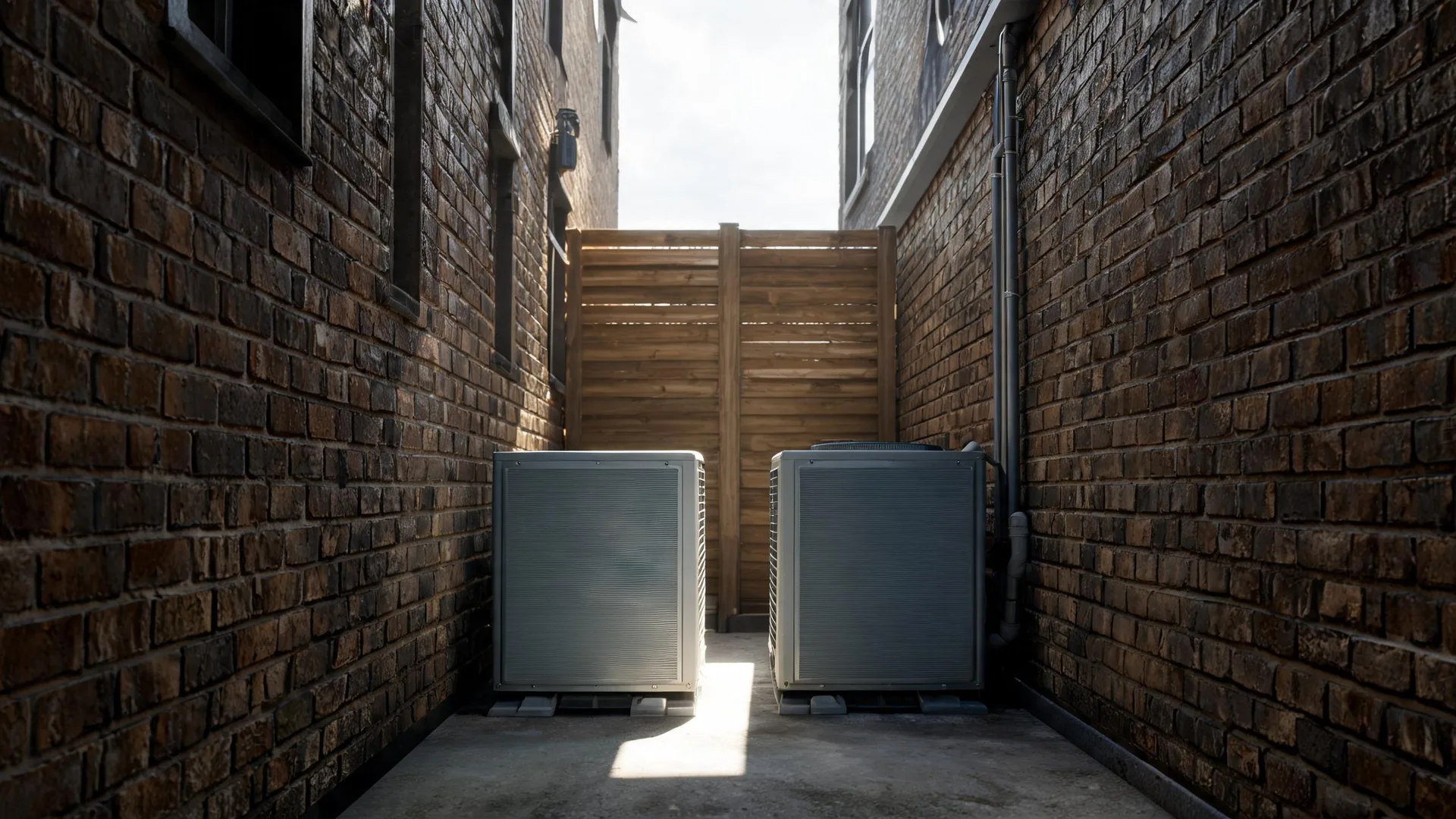
A thorough tune-up starts outside at the condenser. The tech pulls the panel and actually looks at the coil instead of hosing it off through the fins, because caked-on dirt between the fins doesn't rinse clean from the outside. They check refrigerant charge by measuring pressures and temperatures, not by glancing at a gauge for a second and calling it fine. The capacitor gets tested under load, since a capacitor can read close to right and still be too weak to start the compressor hard on a hot afternoon. Inside, the blower wheel gets checked for dust buildup on the blades, which throws off airflow even when the filter looks clean. A short visit means a quick look and a squirt of coolant on the coil from a distance. A real one means pulled panels, actual readings written down, and someone willing to tell you a part is marginal instead of waiting for it to fail.

Keep the filter clean

A dirty filter is the one thing worth checking yourself between visits. Pull it out, hold it up to a light, and if you can't see through it, swap it or wash it depending on the type you have. A clogged filter starves the blower of airflow, and the coil behind it can ice over when that happens. Once ice forms on the coil, the system stops cooling altogether until it melts.

Leave the rest alone

The coil, the charge, and the capacitor aren't things to open up yourself. Refrigerant is handled under pressure with gauges, and adding or checking it without the right equipment can damage the compressor. A capacitor holds a charge even with the power off and can give a real shock. Keep the area around the outdoor unit clear of leaves and grass clippings, and leave the inside of the cabinet for someone who does this for a living.

Aerial view of a gray central air conditioning condenser unit on a concrete pad next to a house with vinyl siding.

Book your AC tune-up in May, before homes here start needing cooling in June.

  1. Jan
  2. Feb
  3. Mar
  4. Apr
  5. May
  6. Jun
  7. Jul
  8. Aug
  9. Sep
  10. Oct
  11. Nov
  12. Dec

A tune-up checks the refrigerant charge, cleans the coils, tests the capacitor and tightens the electrical connections.

A tune-up is also when a tech checks the things that cause a no-cool call later in the summer. Loose electrical connections at the disconnect box get tightened, since a connection that's just a little loose builds resistance and heat behind it. The condensate drain gets checked for algae growth, because a clogged drain backs up and shuts the system down through a safety switch, or it just overflows wherever the line runs. The contactor gets looked at too, since the points on it pit and burn with age until the compressor stops getting a clean signal to start. None of these are things you'd notice from inside the house until the day the system doesn't come on. A tech catches them because they're pulling the panel and looking, not because the system was making noise about it.