A dark two-story house with a covered porch stands behind a hedge and large deciduous trees, viewed from a low angle across a mowed lawn under an overcast sky.

AC Maintenance in Galesburg, IL

Tell us about the job

Takes about a minute. No obligation.

Tune-up, service, or cleaningCentral ACKnox County, IL
Step 1 of 2

What ZIP code is the job in?

Electricity here isn't cheap

Homes in Knox County paid an average of 17.71 cents per kilowatt-hour in 2025, more than most US counties pay. A dirty coil or a low charge makes the compressor run longer to cool the same house. That difference shows up on the meter every month.


The air here works your system harder

Summer dew points in Knox County average 63°F across June, July and August, so the air carries real weight. Your air conditioner has to pull that moisture out along with the heat. A unit that's falling behind on either job runs longer to keep up, and longer runtimes are where the extra cost comes from.

3 months
June through August, your air conditioner is on duty
83°F
the average summer afternoon it cools against
40 hail events
in ten years, and hail bends the fins on outdoor coils
74 wind events
in ten years, and wind drives debris into outdoor units
Isometric line illustration of a cutaway house showing interior rooms, ceiling ductwork, an indoor air handler unit, and an outdoor condenser connected by lines along the exterior wall.
Your air conditioner works hardest from June through August.

NOAA nClimDiv, 1991–2020 normals

June is when cooling starts in Knox County, and that's when your AC goes straight to work.

Have it looked at in May, before the first hot stretch asks something of it.

Half the homes here were built in 1957 or earlier, and an old system needs eyes on it every year

Half the homes here were built by 1957
Cooling runs June through August
Summer afternoons average 83°F

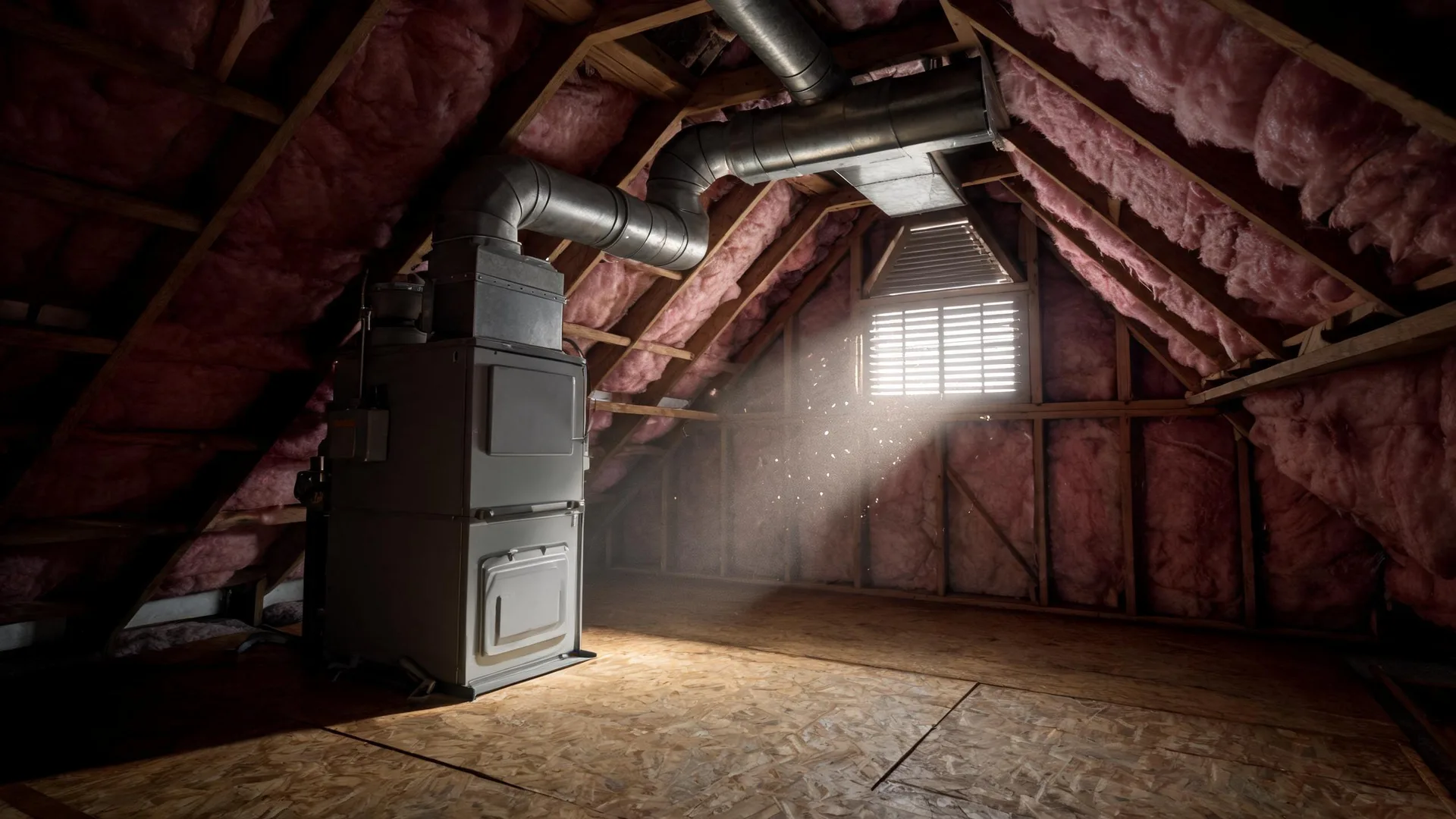
A dirty filter or coil doesn't stop your AC, it just makes the compressor work longer to do the same job. That's usually how skipped maintenance shows up first, not as a breakdown but as a system that runs more than it used to. Left alone, a dirty coil makes the compressor run hotter, and heat is what wears a compressor out early. Low refrigerant does something similar. It makes the system work harder to pull heat out of the house, and over time that extra strain reaches the compressor too. A clogged condensate line backs up water that can trigger a safety switch and shut the unit off entirely, or worse, overflow into the house. None of this happens on the first hot day. It builds over a season or two, until the part that was already stressed finally gives out.

A tune-up pays for itself on the meter

Power here costs more than in most places, and a system that's dirty or low on charge runs longer to do the same job. A tune-up gets the coil clean and the charge right before summer asks anything of it. That's time off the compressor's clock, and it shows up on the meter all season.

Find a contractor
An outdoor air conditioning condenser unit mounted on a concrete pad beside a house, with electrical conduit running to a wall-mounted disconnect box.

The signs it's asking for help

Your AC gives notice before it quits. Short cycles, where it kicks on, runs a few minutes, and shuts off again, mean it's not finishing a full cooling run. Warm air out of the vents while the thermostat says it's running means the problem is somewhere between the compressor and the register. A hissing or bubbling sound near the unit can mean refrigerant escaping, and that's not something that fixes itself. Ice on the copper line or the indoor coil means airflow or refrigerant is off, and running it iced up only stresses the compressor more. A fan that spins slow or grinds on startup is wearing out its bearings. Water pooling near the indoor unit means the condensate line is clogged or the pan is cracked. Any one of these is worth a look before it's the reason the whole system stops.

Gauges find what your ears can't

A technician checks refrigerant pressure against what the system is supposed to run at, not just whether it's cooling. A unit can still blow cold air while running low on charge, and by the time you notice the difference, the compressor has already been working harder for weeks. The gauges catch that gap early.

The coil fails from the inside first

Dust and grime build up on the coil fins where you'd never see them without pulling the cabinet apart. That buildup acts like a blanket, so the coil can't shed heat the way it's supposed to. The compressor behind it runs longer and hotter to make up the difference, and that's wear you can't undo once it's done.

Overhead view of an air conditioning condenser unit on a concrete pad next to a house with asphalt shingle roofing and vinyl siding.

Book your AC tune-up in May, before homes here start needing cooling in June.

  1. Jan
  2. Feb
  3. Mar
  4. Apr
  5. May
  6. Jun
  7. Jul
  8. Aug
  9. Sep
  10. Oct
  11. Nov
  12. Dec

A tune-up checks the refrigerant charge, cleans the coils, tests the capacitor and tightens the electrical connections.

A tune-up follows a checklist because the parts most likely to cause trouble aren't the ones you can see. The technician pulls the capacitor and tests it under load, since a capacitor can read fine sitting still and still fail to kick the compressor on. The contactor gets checked too, because its contacts pit and burn with every start, and a worn contactor can stick closed and run the compressor when it should be off. Belts aren't part of this anymore on most systems, since the blower motor drives the fan directly, but the motor bearings still get checked for play. The drain line gets flushed so algae and dirt don't build up and back water into the pan. Thermostat calibration gets checked last, since a system that's perfectly tuned still runs wrong if the thermostat is reading the room incorrectly.