An outdoor air conditioning condenser unit mounted on a concrete pad next to a blue-sided residential house at sunset.

AC Maintenance in Marion, IL

Tell us about the job

Takes about a minute. No obligation.

Tune-up, service, or cleaningCentral ACWilliamson County, IL
Step 1 of 2

What ZIP code is the job in?

Electricity here isn't cheap

Homes in Williamson County paid an average of 17.22 cents per kilowatt-hour in 2025. That's higher than most US counties pay. A dirty coil or a low charge makes the compressor work harder to do the same job, and every extra minute it runs costs more here than it would somewhere else.


A neglected unit runs harder, not just longer

Marion summers sit at a 67°F dew point on average through June, July and August, heavy air that keeps an air conditioner working most of the day. A system that's clean and properly charged handles that load the way it was built to. One that isn't fights the air and your electric bill at the same time.

5 months
May through September, your air conditioner is on duty
87°F
the average summer afternoon it cools against
39 hail events
in ten years, and hail bends the fins on outdoor coils
88 wind events
in ten years, and wind drives debris into outdoor units
Isometric cutaway illustration of a small house showing interior rooms with furniture, ceiling ductwork and an air handler, plus an outdoor condenser unit connected by refrigerant lines beside the building.
Your air conditioner works hardest from June through August.

NOAA nClimDiv, 1991–2020 normals

The air coming out of the vents is weak even though the compressor outside sounds fine.

A tune-up checks the airflow path, not just the compressor, so a weak system gets caught before it burns out.

Half these homes are still within their system's working life

Half the homes here were built by 1981
Cooling runs May through September
Summer afternoons average 87°F
May Starts the WorkCooling runs May through September here. April is when a tune-up still gets ahead of it.

Half the homes in this county were built in 1981 or later, which means a lot of the air conditioners sitting outside them haven't hit the age where parts start failing on their own. That's worth protecting with a yearly check instead of waiting for a breakdown. A tune-up on a newer system catches the small stuff, a sensor drifting out of calibration, a coil starting to pick up dust, before any of it turns into a repair bill or a shortened lifespan. The system still has years ahead of it. Keeping it checked every year is what gets it there.

A Clean, Properly Charged System Costs Less to Run Here

A tune-up gets the coil clean and the charge right, so the compressor stops working overtime for the same cooling. Power here already costs more than most places pay, so that difference shows up on the bill every month the system runs.

Find a contractor
A man in a cap, dark work shirt and dusty tan pants walks up concrete steps toward a blue front door, carrying a worn canvas tool bag in his right hand, with a potted shrub beside the entry.
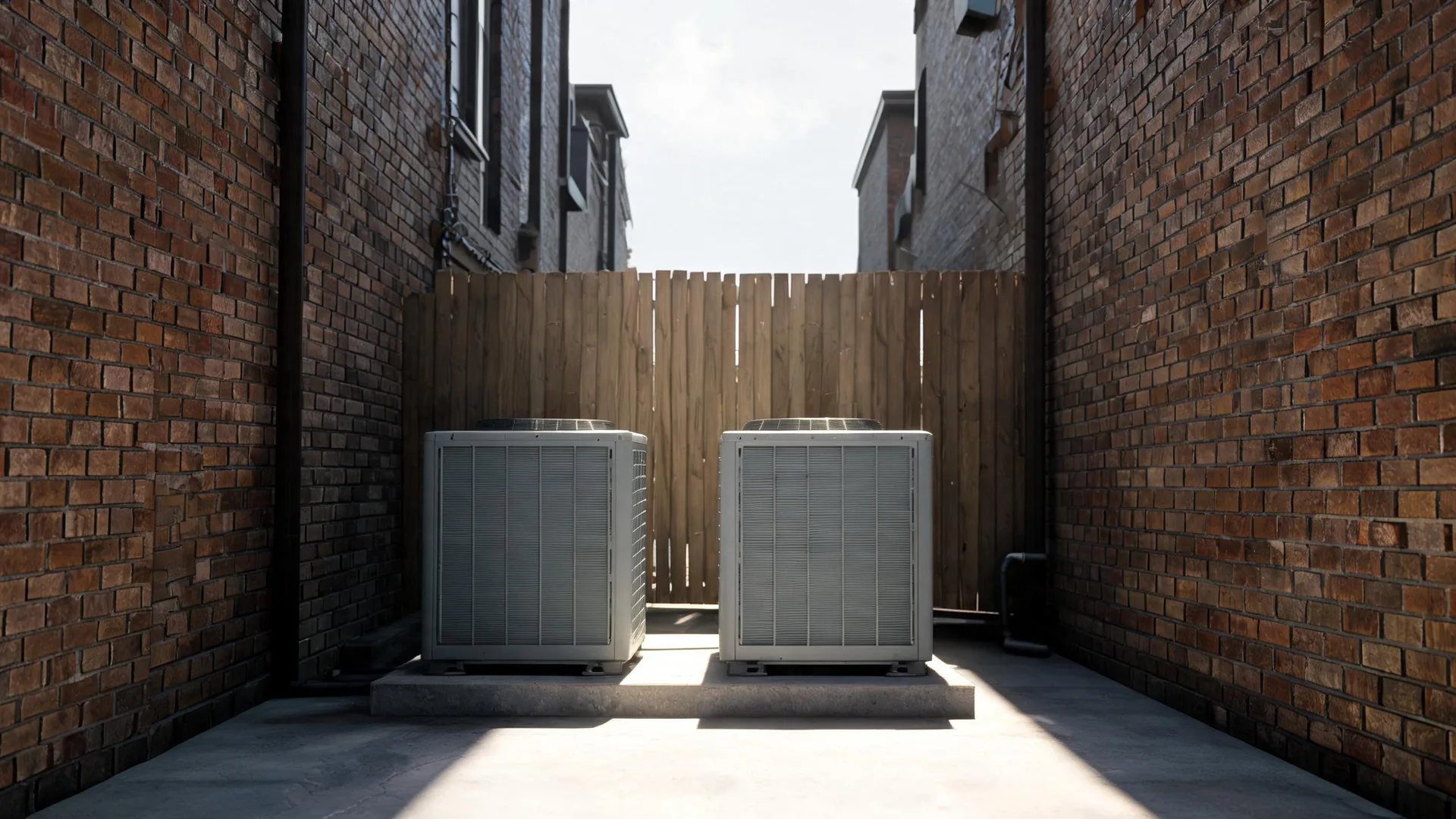
An outdoor air conditioning condenser unit mounted on a concrete pad surrounded by gravel, photographed against a partly cloudy blue sky.

Three Parts, One Job

The filter is the first line of defense. Air has to pass through it before it ever reaches the coil, and once it loads up with dust and pet hair, the whole system has to pull harder just to breathe. A clogged filter starves the coil of airflow, and a coil that doesn't get enough air across it can ice over even on a hot day. The coil itself, the one inside, is where the actual cooling happens. Dust settles on those fins over time and acts like a blanket, so the refrigerant inside can't pull heat out of the air the way it's supposed to. The outdoor coil has the same problem in reverse. It needs to dump that heat back outside, and if it's caked with grass clippings or dirt, it can't let go of the heat it just collected. Then there's the drain. Cooling the air pulls moisture out of it, and that water has to go somewhere. It runs down through a drain line, and that line can grow algae or get a clog of dust and sludge same as any drain does. When it backs up, the water has nowhere to go but back into the system or out onto the floor. Some systems shut themselves down when that happens, as a safety measure. Others just leak until someone notices. None of these three parts fail on their own schedule. A filter gets checked and swapped. A coil gets cleaned before the dust turns to grime. A drain line gets flushed before algae seals it shut. Skip all three and the compressor is the one that pays for it, because it keeps running harder to make up for air it isn't getting and heat it can't shed.

The Charge Gets Checked Against a Gauge, Not a Guess

A system can be low on refrigerant and still blow cold air at the register. The only way to know the charge is right is to hook up gauges and read the pressures against what that system is supposed to run. A system running low loses capacity slowly, so the house still cools, just not as well, and the compressor pays for the difference every time it cycles on.

A Capacitor Can Be Failing Long Before It Quits

The capacitor gives the compressor and fan motor the push they need to start. A weak one can still get the system started on a mild day and fail outright on a hot one, so the unit can pass for working right up until the day it doesn't. A meter reading during a tune-up catches a capacitor drifting out of range before it strands the system mid-summer.

An outdoor air conditioning condenser unit installed beside the exterior wall of a blue vinyl-sided house at sunset.

Book your AC tune-up in April, before homes here start needing cooling in May.

  1. Jan
  2. Feb
  3. Mar
  4. Apr
  5. May
  6. Jun
  7. Jul
  8. Aug
  9. Sep
  10. Oct
  11. Nov
  12. Dec

A tune-up checks the refrigerant charge, cleans the coils, tests the capacitor and tightens the electrical connections.

A tune-up works through the system in order, not at random. The contactor and electrical connections get checked, because a loose connection builds resistance and resistance builds heat right at the point most likely to fail. The condensate switch gets tested too, if the system has one, to make sure it actually shuts the unit down when water backs up instead of just sitting there. Fan blades get looked at for cracks, since a damaged blade throws the airflow off balance and wears the motor bearing faster than it should wear. None of this shows up from outside the cabinet. The unit can look fine, sound fine, and still have a connection working its way loose or a blade a few degrees out of true, and that's what the check is for.