Three months of real work
Your air conditioner in Rock Island County runs from June through August, with afternoon highs averaging 83°F and the air sitting heavy at a 63°F dew point. That's a full season of steady use, not occasional strain.
Takes about a minute. No obligation.
Your air conditioner in Rock Island County runs from June through August, with afternoon highs averaging 83°F and the air sitting heavy at a 63°F dew point. That's a full season of steady use, not occasional strain.
A tune-up in spring catches a weak capacitor or a low refrigerant charge before the heat sets in. With one real cooling season here, there's no case for checking the system more than once a year.

NOAA nClimDiv, 1991–2020 normals
Your air conditioner goes straight to full demand in June, no easing into it.
May is when that tune-up belongs, so the system is ready before the heat hits.




A lot of what fails in an air conditioner doesn't show up as a sound or a smell first. It shows up as the house running a little warmer than it used to, or the system staying on longer to get there, and most people chalk that up to the weather. A technician checks things a homeowner has no way to see without taking the unit apart: the refrigerant charge against what the system is supposed to hold, the amp draw on the compressor, whether the contactor is pitted from switching on and off all season. None of that is visible from the thermostat on the wall. A capacitor can be on its way out while the system still cools the house fine, right up until the day it doesn't start at all. Catching that on a slow check in spring is a different experience than catching it the first hot week of summer.

A dirty coil or a clogged filter makes the system run longer to do the same job. That extra run time wears on the compressor, and the compressor is the one part you don't want to replace early. Dirt on the outdoor coil works the same way as dirt on the indoor filter. It makes the whole system push harder to move heat it should be moving easily. Left alone, that strain doesn't show up as one big failure. It shows up as a system that cycles longer, costs more to run, and leaves the house a few degrees warmer than the thermostat says it should be. A yearly check catches the coil before it's caked, the refrigerant charge before it's low enough to strain the compressor, and the electrical connections before a loose one burns through. None of that needs a machine that's already struggling to show it. A tech checking the system while it still runs fine is the only way to catch what's wearing down quietly.
A clogged filter starves the system of airflow. The coil behind it still tries to pull heat from the air passing over it, and with less air moving, it can't shed that heat the way it should. Ice can form right on the coil. Once that happens, the system is cooling less while running more, and nobody notices until the house stops getting cold.
An air conditioner pulls moisture out of the air all summer, and that water has to leave through the condensate drain. Algae and dirt build up in that line over time and block it. When it backs up, water finds somewhere else to go, usually down through the ceiling or into the cabinet around the air handler. Clearing that line is part of the same visit that checks the coil and the filter.
A tune-up checks the refrigerant charge, cleans the coils, tests the capacitor and tightens the electrical connections.
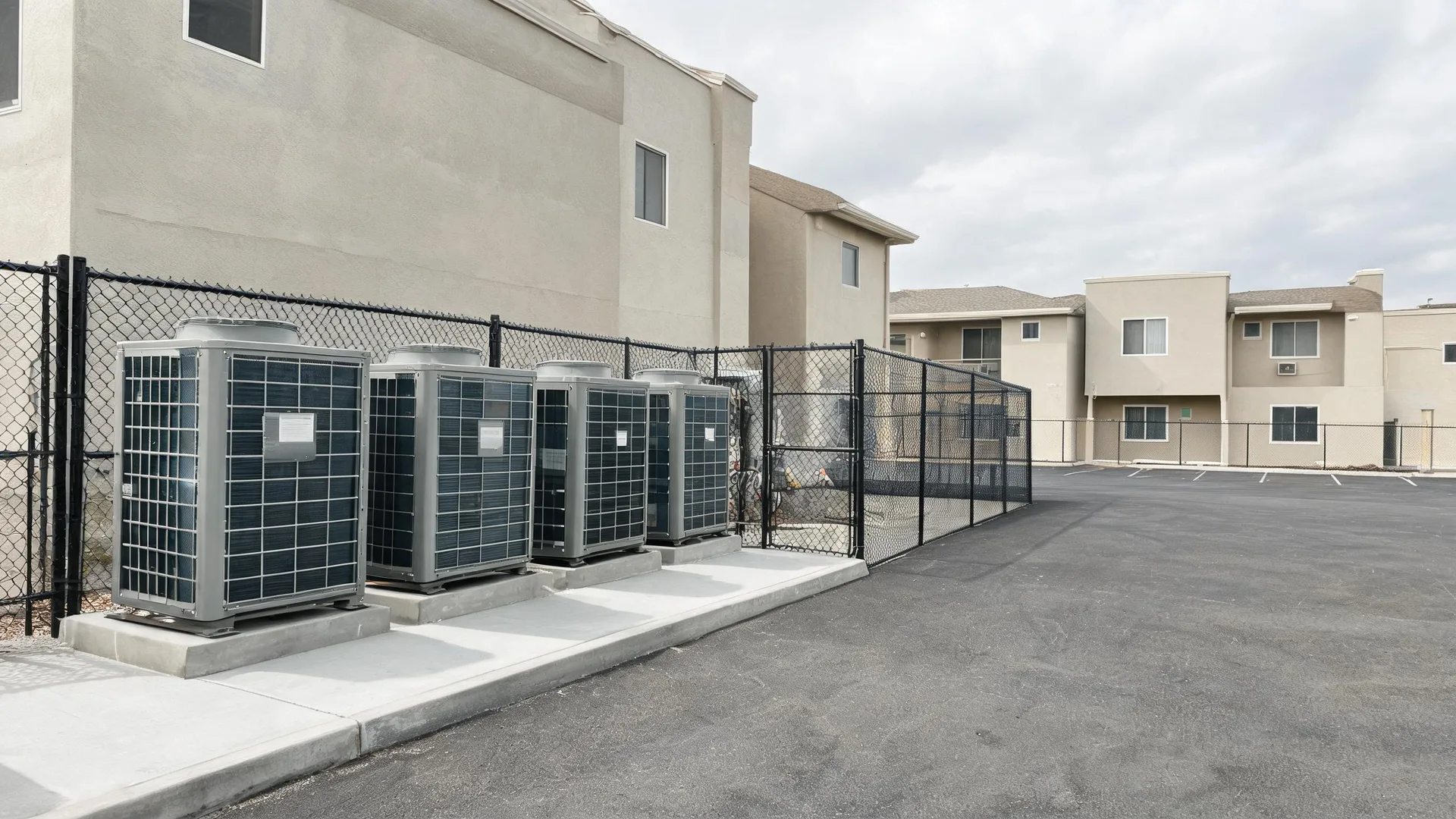
A tune-up starts outside, at the condenser. The tech checks the refrigerant charge, because a system low on refrigerant cools poorly and runs the compressor harder than it should. They clean the condenser coil, since dirt on those fins blocks the system from releasing heat the way it's supposed to. Electrical connections get checked too, including the capacitor that gets the compressor and fan motor started. A weak capacitor still runs the system, just not for long, and it tends to fail on the hottest day rather than give warning. Inside, the tech checks the evaporator coil and the blower, confirms the thermostat is reading correctly, and makes sure the condensate drain is clear. Each of these fails on its own timeline, not on a schedule, which is why someone has to actually look.