






Overhead view of an outdoor AC condenser unit on a concrete pad next to a house with a dark shingle roof.

AC Maintenance in Oswego, IL

Tell us about the job

Takes about a minute. No obligation.

Tune-up, service, or cleaningCentral ACKendall County, IL
Step 1 of 2

What ZIP code is the job in?

Cooling starts in June here and runs through August. May is the month to get a technician out, before the system has to work at all. A unit that has sat unused all winter can have problems that stay hidden until the first hot day puts a real load on it. Have it checked in May and whatever needs attention gets handled before you need the house cold.

3 months
June through August, your air conditioner is on duty
83°F
the average summer afternoon it cools against
34 hail events
in ten years, and hail bends the fins on outdoor coils
70 wind events
in ten years, and wind drives debris into outdoor units
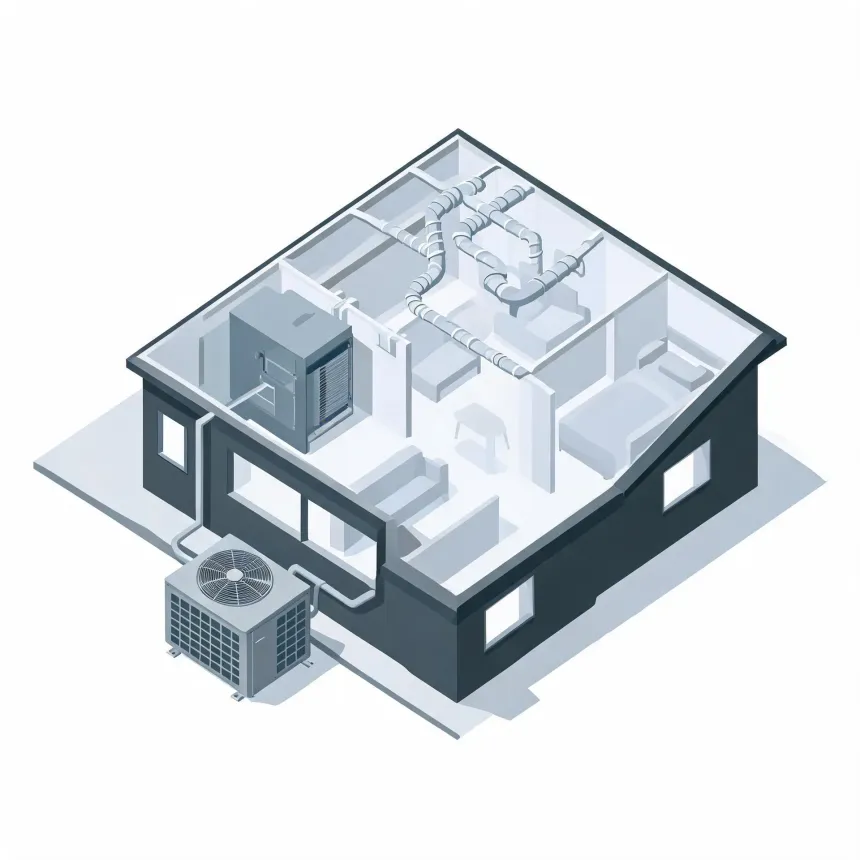
Isometric cutaway illustration of a small house showing interior rooms with furniture, ceiling ductwork and an air handler, plus an outdoor condenser unit connected by refrigerant lines beside the building.
Your air conditioner works hardest from June through August.

NOAA nClimDiv, 1991–2020 normals

Cooling here only has to run from June through August, with afternoon highs averaging 83°F.

Three months of steady work a year doesn't call for more than one check from a technician.

Half the homes here are young enough that a yearly check is what keeps the system that way

Half the homes here were built by 2001
Cooling runs June through August
Summer afternoons average 83°F
Weather here is the wildcard, not the machineKendall County recorded 130 severe weather events from 2015 to 2024, including 70 damaging wind events and 34 hail events

Between visits, the filter is the one thing worth checking yourself. Pull it out and hold it up to a light. If light doesn't pass through it easily, it's blocking airflow the system needs, and a thermostat set colder won't fix what a dirty filter is choking off. Look at the outdoor unit too. Keep grass clippings, leaves and anything else that piles up against the cabinet cleared away, since the coil behind those louvers needs open air on all sides to shed heat. Inside, listen for anything that changes: a new rattle, a hum that wasn't there before, air coming out warmer than it should. None of that is something to fix yourself. It's something to mention when the technician is already there.

Keep a newer system working like one

If your system came with the house, book the yearly check now instead of waiting for a problem to force it. That's what keeps a newer unit running the way it did on day one.

Find a contractor
A man in a cap, dark jacket and tan pants, seen from behind, steps onto a porch toward a teal front door while carrying a waxed canvas tote bag; a potted shrub in a blue planter sits to the right.
A gray residential air conditioner condenser unit mounted on a concrete pad in an open grass field.

What skipping a year actually costs the machine

A system that never gets looked at doesn't fail all at once. Dust builds up on the condenser coil outside, and that coil can't shed heat the way it's supposed to. The compressor behind it has to run longer to do the same job, and it runs hotter while it does. Refrigerant drops a little from a slow leak nobody caught, and the compressor strains harder against a charge that's too low. None of this trips a breaker or throws an error. It just means the unit runs longer, pulls more power, and cools less. Left alone long enough, that extra strain is what takes the compressor out early, and the compressor is the part that makes an air conditioner worth replacing instead of repairing.

The charge gets measured, not guessed

A technician checks refrigerant with gauges, against the pressure the system is supposed to run at. A unit low on charge can still blow cold air out of the vent and still cool the house. What it can't do is cool the house without the compressor working harder than it should, and that only shows up on a gauge, not on your hand held up to a vent.

The drain line backs up before you see water

Condensate is supposed to run off through a drain line to the outside. Algae and dirt build up inside that line slowly, and once it's blocked the water has nowhere to go but back into the pan, and from there into the house. A tune-up clears that line before it's full, not after you find the stain on the ceiling.

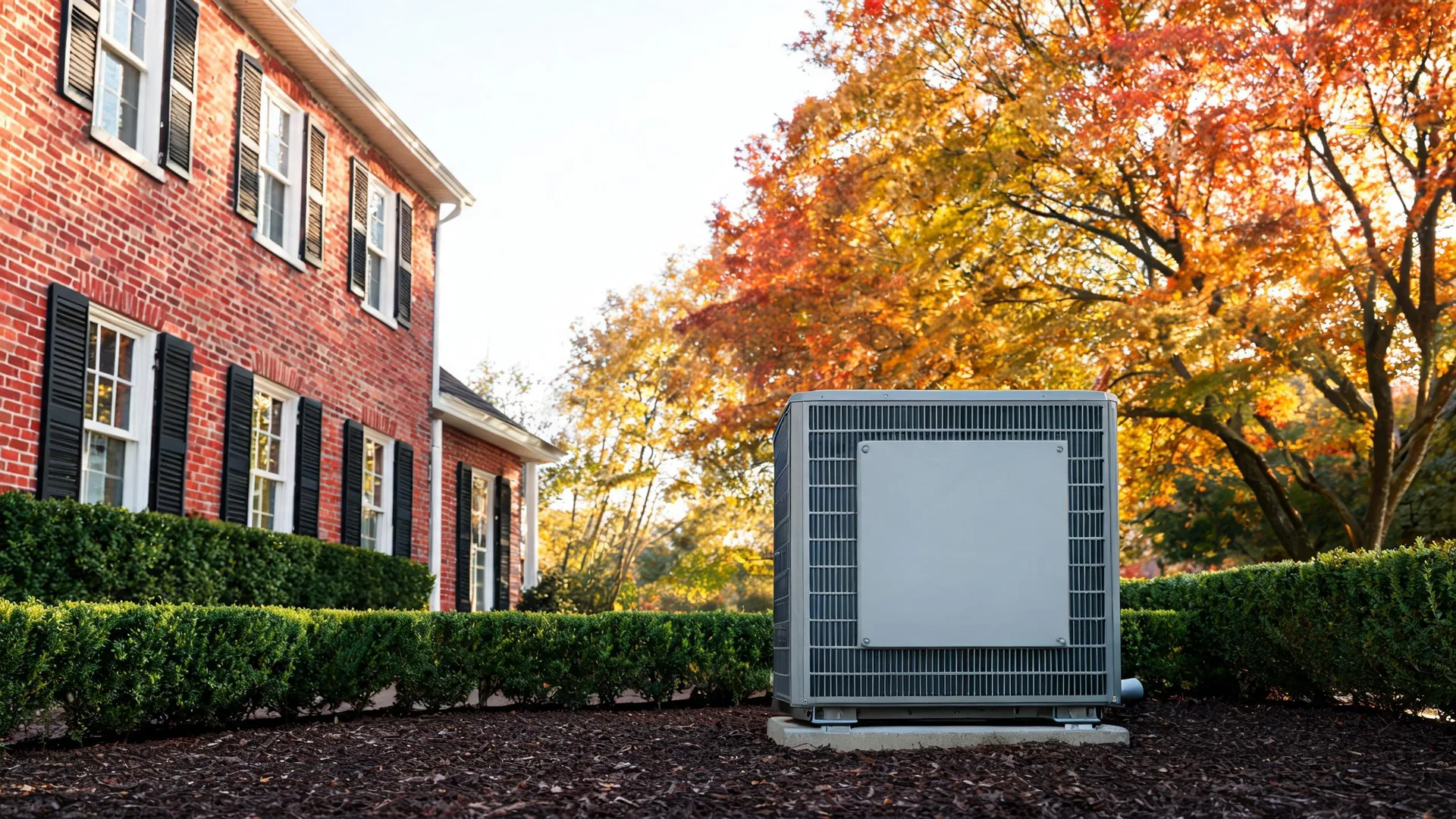
Aerial view of a gray central air conditioning condenser unit on a concrete pad next to a house with vinyl siding.

Book your AC tune-up in May, before homes here start needing cooling in June.

  1. Jan
  2. Feb
  3. Mar
  4. Apr
  5. May
  6. Jun
  7. Jul
  8. Aug
  9. Sep
  10. Oct
  11. Nov
  12. Dec

A tune-up checks the refrigerant charge, cleans the coils, tests the capacitor and tightens the electrical connections.

A tune-up is a fixed list, not a once-over. The technician checks refrigerant charge against the pressure the system is built to run at, and tops it off only if it's actually low. The condenser coil outside gets cleaned so it can shed heat the way it's designed to. The blower wheel and evaporator coil get checked too, since dirt on either one cuts down the airflow the whole system depends on. Electrical connections get tightened, because a loose connection builds resistance and that resistance builds heat. The contactor and capacitor get tested under load, not just looked at, since both can measure fine sitting idle and still fail the moment the compressor asks for power. None of this is guesswork. It's the same sequence every time, because that's what catches a small problem while it's still small.