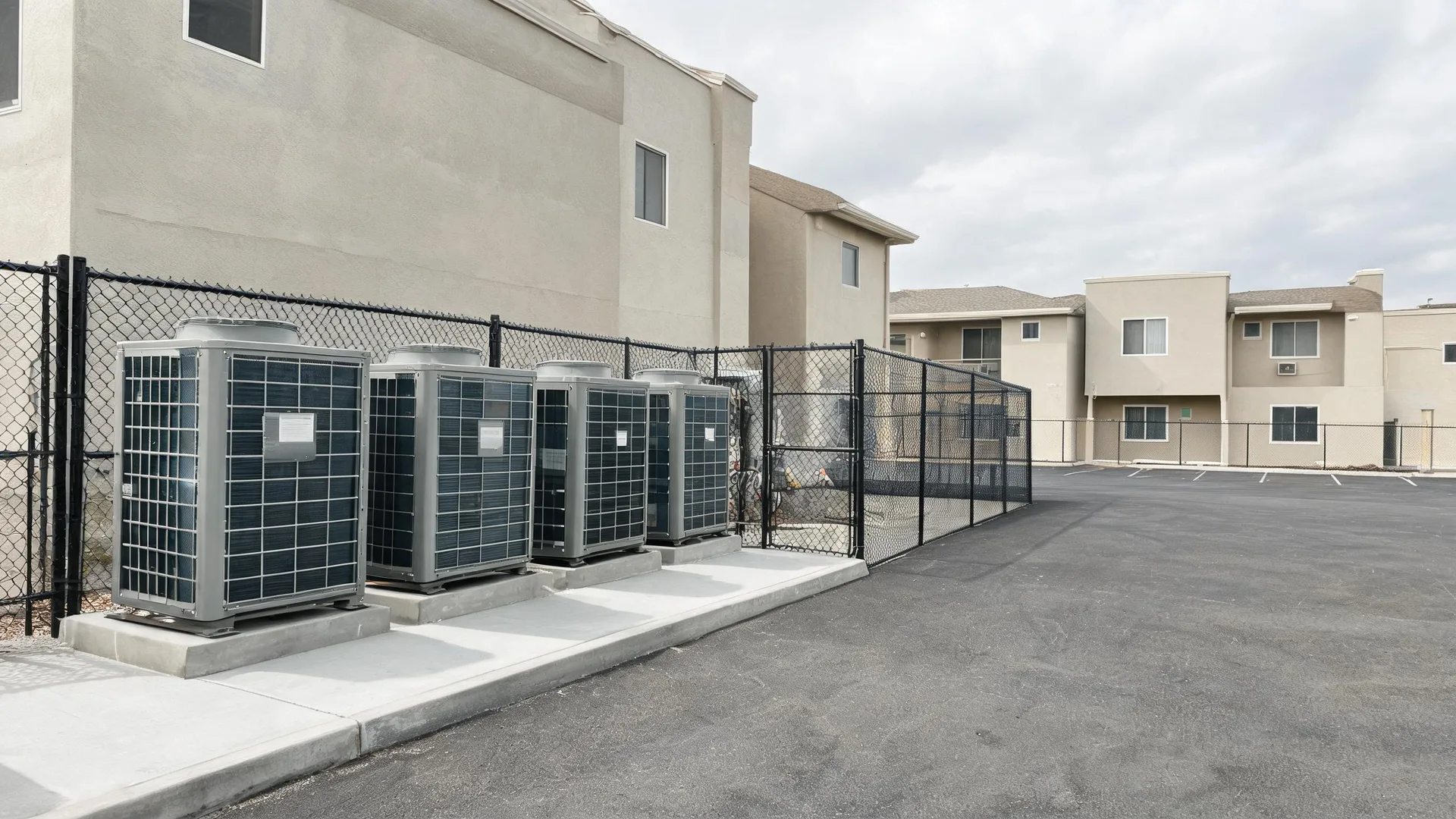
Your air conditioner here only has to work about three months a year, June through August, with afternoon highs averaging around 83°F. That's a real but not extreme load. The air runs heavy in summer, with dew points averaging 63°F, which makes the system lean on both cooling and moisture removal, but that's normal work for the unit, not a strain it wasn't built for. A yearly check before summer starts is what keeps it running the way it should through those three months. There's no reason to do it more than once a year here.
3 months
June through August, your air conditioner is on duty
83°F
the average summer afternoon it cools against
39 hail events
in ten years, and hail bends the fins on outdoor coils
124 wind events
in ten years, and wind drives debris into outdoor units
Your air conditioner works hardest from June through August.
Jan
Feb
Mar
Apr
May
Jun
Jul
Aug
Sep
Oct
Nov
Dec
NOAA nClimDiv, 1991–2020 normals
June is when cooling starts in Ottawa, and that's when the system goes straight to work.
Have it checked in May, before that first hot stretch asks anything of it.
Nothing here runs this machine harder than it's built for
Power here costs 16.82 cents per kilowatt-hourCooling runs June through AugustSummer afternoons average 83°F
LaSalle County sees its share of rough weather. Between 2015 and 2024 the county logged 124 damaging wind events, 39 hail events and 23 tornadoes. None of that wears on an air conditioner the way summer heat does. Wind and hail hit the outdoor unit the same way they hit a fence or a roof, and a tune-up doesn't change what a storm does. What a yearly check does is catch a loose connection or a weak capacitor before the cabinet gets knocked around or debris gets into the coil. One visit a year, timed before summer, covers both the normal wear and whatever the weather adds to it.
If the system in your house came with it and nothing's been swapped out, it's worth finding out how old it actually is. The data plate inside the outdoor unit's access panel usually has a manufacture date on it. Once you know that, a yearly check before summer is what catches a worn part on a schedule instead of waiting for it to fail during a hot stretch.
Dirt is what does the damage
An air conditioner cleans the air passing through it, not itself. Dust settles on the evaporator coil and the outdoor condenser coil, and both need to stay clear to move heat the way they're built to. A dirty coil makes the compressor work harder to do the same job, and a compressor that runs hotter for longer wears out sooner than it should. None of that announces itself. The system still blows cold air, right up until the day it doesn't.
Small parts fail first
A capacitor weakens slowly, a contactor's points pit a little more with every cycle, a blower motor bearing dries out over seasons of running. Caught early, these are a quick swap. Left alone, a weak capacitor means the compressor strains to start every time, and a strained compressor is the expensive part to replace. A yearly check is what puts a hand on these parts before one of them picks the hottest day to quit.
Book your AC tune-up in May, before homes here start needing cooling in June.
Jan
Feb
Mar
Apr
May
Jun
Jul
Aug
Sep
Oct
Nov
Dec
A tune-up checks the refrigerant charge, cleans the coils, tests the capacitor and tightens the electrical connections.
A proper tune-up starts outside at the condenser. The coil gets checked for dirt and straightened if the fins are bent over, since bent fins block airflow the same as dirt does. The refrigerant charge gets checked against what the system calls for, because too little or too much both make the compressor work harder than it should. Inside, the evaporator coil gets a look, the condensate drain gets checked so it isn't clogged and backing up, and the blower wheel gets cleaned if it's caked with dust. The electrical side matters just as much as the mechanical side. A technician checks the capacitor's output, looks at the contactor's points for pitting, and tightens any connection that's worked loose from months of the system cycling on and off. Last, the thermostat gets checked against the actual temperature in the house, since a stat reading a few degrees off makes the whole system run longer than it needs to.