A two-story dark-painted house with a covered front porch, white-trimmed windows and a trimmed hedge, framed by large deciduous trees, photographed from ground level across a lawn with blurred grass in the foreground.

AC Maintenance in Pekin, IL

Tell us about the job

Takes about a minute. No obligation.

Tune-up, service, or cleaningCentral ACTazewell County, IL
Step 1 of 2

What ZIP code is the job in?

Tazewell County sees its share of storms

Tazewell County recorded 261 severe weather events between 2015 and 2024, including 154 damaging wind events, 82 hail events and 15 tornadoes. An outdoor AC unit sits outside through all of it, with nothing shielding the coil or the fan from wind-blown debris and hail.

Power doesn't always come right back

Across Illinois, 16% of households went at least 24 hours without power in 2024. A unit that's already weak on a breaker or low on charge is more likely to struggle to restart once the power does come back on.

4 months
June through September, your air conditioner is on duty
84°F
the average summer afternoon it cools against
82 hail events
in ten years, and hail bends the fins on outdoor coils
154 wind events
in ten years, and wind drives debris into outdoor units
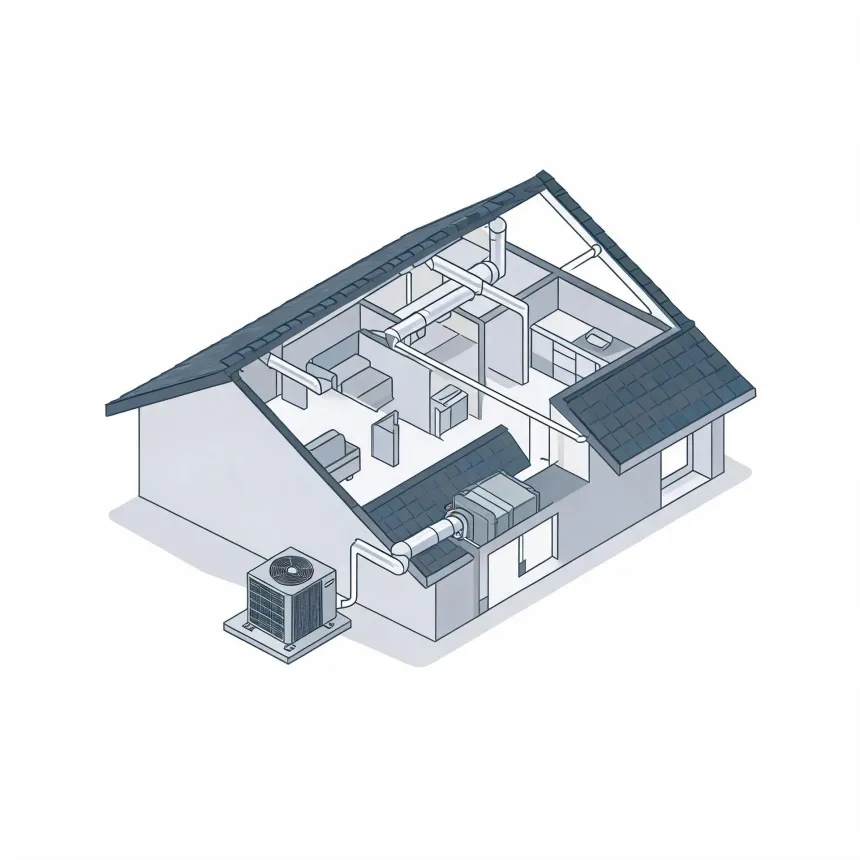
Isometric line illustration of a cutaway single-story house showing interior rooms, ceiling ductwork and an air handler, connected to an outdoor condenser unit on a pad beside the building.
Your air conditioner works hardest from June through August.

NOAA nClimDiv, 1991–2020 normals

June is when cooling starts in Tazewell County, and it starts hard.

Have the unit checked in May, before it has to carry that load.

At 17.94 cents a kilowatt-hour, a dirty coil costs more here than most places

Power here costs 17.94 cents per kilowatt-hour
Cooling runs June through September
Summer afternoons average 84°F
Half the homes here are older than the AC inside themIn Tazewell County, half the homes were built in 1969 or earlier.

June through September is four straight months of real work for the unit, with afternoon highs averaging 84°F and a dew point near 64°F, heavy enough to feel on top of the heat. There's no slow start to ease into. The system goes from idle to full load fast once the first hot stretch hits, and anything left weak from last year shows itself right away. A capacitor on its way out or a coil that never got cleaned tends to fail early in the season, not late in it.

Have the outdoor unit checked before the next storm does

That outdoor unit sits through wind, hail and whatever else moves through this county, with no cover over the coil or the fan. A tune-up catches bent fins, loose panels and a weak breaker or capacitor now, while the unit is still running fine, not after a storm knocks the power out and it won't restart.

Find a contractor
An outdoor residential air conditioning condenser unit mounted on a concrete pad, surrounded by gravel with a blue sky in the background.

Four months of work, then a cold start

Four months is the whole window this unit gets. It shuts off sometime in September and sits idle through fall, winter and spring. Then June comes and it has to start cold and run full out, same day. Nothing eases it in. That's the time to get it looked at, before the season asks anything of it, while there's still room to fix a weak capacitor or a dirty coil instead of finding out about it in July.

The system tells you before it quits

An air conditioner rarely fails without warning. It runs longer than it used to before the house cools down. The air coming out of the vents isn't as cold as it was. It cycles on and off more than it should, or it makes a hum, a click, or a rattle that wasn't there before. Any one of those is the unit asking for a look before the part behind it gives out.

The signs are easy to miss until the load hits

Most of these signs show up quiet, during the weeks the unit isn't working hard. A weak capacitor still starts the compressor, just slower. A low charge still cools the house, just not as well. It's only once the unit has to run flat out, hour after hour, that a marginal part turns into a dead one. A check beforehand catches what easy running hides.

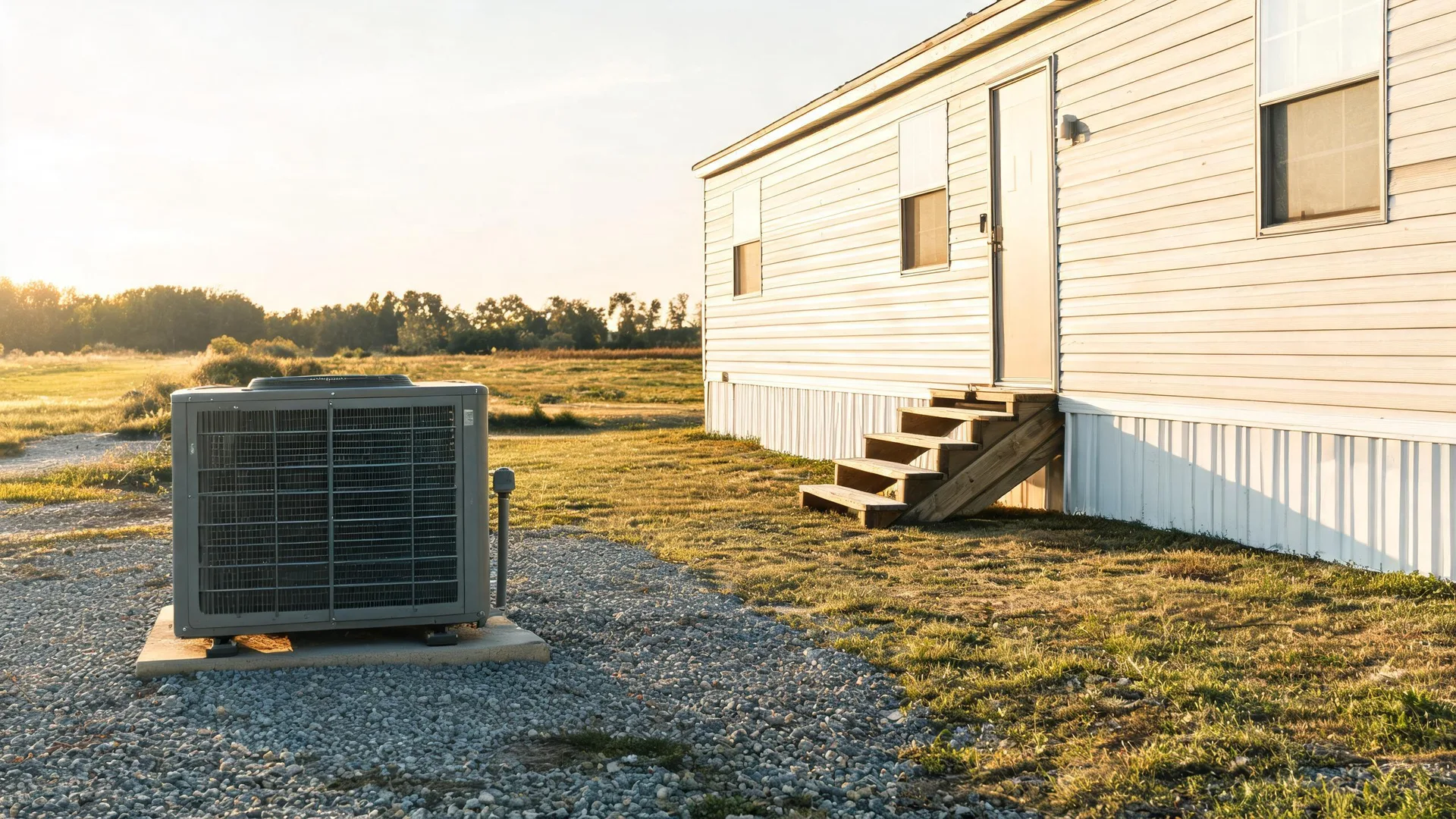
An outdoor air conditioning condenser unit on a concrete pad next to the gray vinyl siding of a residential home.

Book your AC tune-up in May, before homes here start needing cooling in June.

  1. Jan
  2. Feb
  3. Mar
  4. Apr
  5. May
  6. Jun
  7. Jul
  8. Aug
  9. Sep
  10. Oct
  11. Nov
  12. Dec

A tune-up checks the refrigerant charge, cleans the coils, tests the capacitor and tightens the electrical connections.

A proper tune-up starts outside at the condenser. The coil gets cleaned, not just rinsed, because dirt packed between the fins blocks airflow and makes the compressor work harder to move the same heat. The fan motor and blades get checked for wobble or noise. Refrigerant charge gets measured against what the system calls for, since too little and the compressor runs long and still falls short, too much and it can slug the compressor over time. The capacitor gets tested under load, not just looked at, because a capacitor can measure fine sitting still and still fail the moment the compressor tries to start. Electrical connections get tightened, since a loose connection heats up under load and that heat is what eventually takes out a contactor or a breaker. Inside, the evaporator coil and the drain line get checked too, since a clogged drain backs up and can shut the system down on its own. None of this fixes something broken. It finds what's marginal while it still works, so the unit isn't finding out about it on the first hot day instead.