






A row of dark-clad single-story cottages with gabled roofs behind trimmed hedges, with a mown lawn in the foreground and large leafy trees under an overcast sky.

AC Maintenance in Peoria, IL

Tell us about the job

Takes about a minute. No obligation.

Tune-up, service, or cleaningCentral ACPeoria County, IL
Step 1 of 2

What ZIP code is the job in?

Peoria County saw 280 severe weather events between 2015 and 2024. That includes 147 damaging wind events, 106 hail events, and 11 tornadoes. An outdoor AC unit sits outside through all of it, exposed to wind-driven debris and hail that can bend the fins or crack the fan blades. None of this means your unit has been hit. It means the odds of it happening to someone in this county are higher than in most places, and the only way to know your unit came through clean is to have it looked at.

4 months
June through September, your air conditioner is on duty
84°F
the average summer afternoon it cools against
106 hail events
in ten years, and hail bends the fins on outdoor coils
147 wind events
in ten years, and wind drives debris into outdoor units
Isometric cutaway illustration of a house interior showing ducted air handling equipment, ceiling ducts, furniture in two rooms, and an outdoor condenser unit connected by lines outside the wall.
Your air conditioner works hardest from June through August.

NOAA nClimDiv, 1991–2020 normals

Half the homes in Peoria County were built in 1966 or earlier.

A system in a house that old has had a lot of years to drift out of tune, and a yearly check is how you find that before it costs you a summer.

A neglected system burns more power, and power here already costs more

Power here costs 18.04 cents per kilowatt-hour
Cooling runs June through September
Summer afternoons average 84°F

June through September, this unit runs most days, and the air it's pulling in is heavy. The dew point averages 64°F here in summer, which means the AC isn't just cooling the house, it's wringing water out of the air to do it. That's more load on the compressor than a dry 84°F would be on its own. Parts that are already worn show their age faster under that kind of work than they would somewhere drier. A tune-up before June catches that drift while it's still cheap to fix.

Have your outdoor unit checked before the next storm finds what the last one left behind

That storm count outside stacks up on the unit in your yard. Before the next round of wind or hail comes through, have it checked for bent fins, a cracked fan blade, or anything else a storm left behind.

Find a contractor
A man in a cap, long-sleeved shirt and work pants climbs wooden porch steps toward a dark teal front door, carrying a waxed canvas tool bag, with a potted shrub beside the entry.
A gray residential air conditioning condenser unit mounted on a concrete pad outdoors, surrounded by green grass under a partly cloudy blue sky.

Four months of work start in June

Cooling runs June through September here, four months of steady work for one machine. June is when it starts, and it starts at full load, not easing into it. A system that was drifting out of tune in September has sat idle since, and idle time doesn't fix anything. Have it checked in May, before that first hot stretch asks the compressor and the fan motor to carry the house all day.

A dirty filter starves the whole system

When the filter clogs, the blower has to pull harder to move the same air, and less of it gets across the evaporator coil. That coil can ice over when airflow drops too far, and once it's coated in ice it stops absorbing heat from the house at all. A tune-up checks the filter and the airflow it's choking off before that happens.

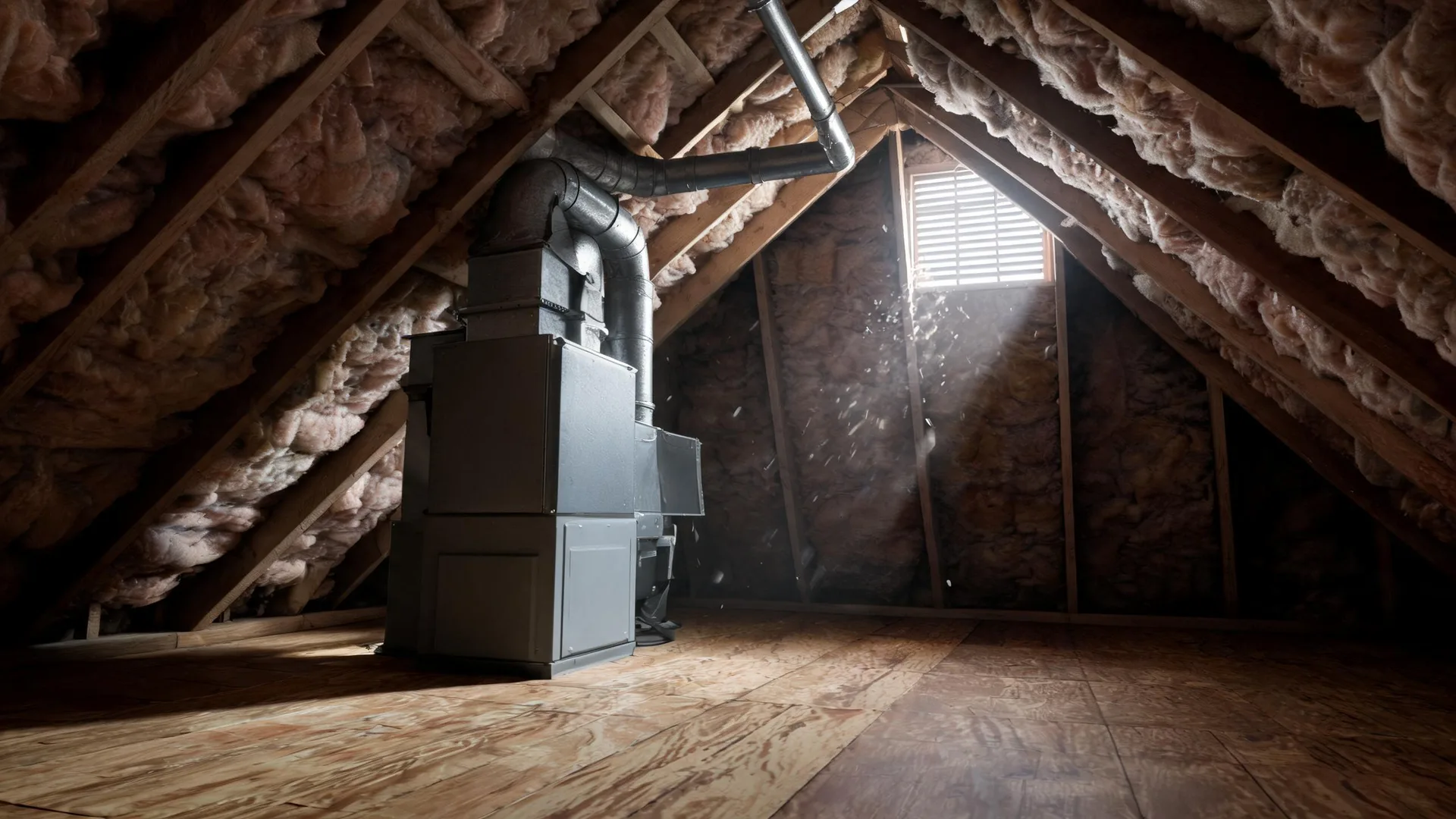
The drain line is the part nobody thinks about

The indoor coil pulls moisture out of the air all summer, and that water has to leave through a condensate drain. Algae and dust build up inside that line and narrow it until it backs up. A clogged drain means a pan that overflows into the house, usually right above a ceiling or a closet, with no warning before it happens.

An outdoor air conditioning condenser unit positioned on a concrete pad next to a blue-sided house, surrounded by green shrubs and flowering hydrangeas at sunset.

Book your AC tune-up in May, before homes here start needing cooling in June.

  1. Jan
  2. Feb
  3. Mar
  4. Apr
  5. May
  6. Jun
  7. Jul
  8. Aug
  9. Sep
  10. Oct
  11. Nov
  12. Dec

A tune-up checks the refrigerant charge, cleans the coils, tests the capacitor and tightens the electrical connections.

A tune-up is a set list, not a glance at the unit. The refrigerant charge gets checked against what the system calls for, because too little and it loses cooling power, too much and the compressor runs harder than it should. The condenser coil outside gets cleaned, since dirt and grass clippings packed into those fins block the airflow the system needs to dump heat. The capacitor gets tested, because that's the part that gives the compressor and fan motor the jolt they need to start, and a weak one leaves you with a unit that hums but won't kick on. Electrical connections get tightened, since a loose one heats up and burns over time. The thermostat gets checked against the actual temperature in the house, because a sensor that's drifted off tells the system to run longer than the house needs.