





A row of single-story houses with dark siding and gray shingled roofs behind large deciduous trees, with a trimmed hedge in the left foreground and a mown lawn under an overcast sky.

AC Maintenance in Princeton, IL

Tell us about the job

Takes about a minute. No obligation.

Tune-up, service, or cleaningCentral ACBureau County, IL
Step 1 of 2

What ZIP code is the job in?

June through August is the real cooling stretch here, with afternoon highs averaging 83°F. The dew point runs around 63°F those months, which is what makes the air feel heavy even when the temperature itself isn't extreme. That's a steady load on the system, not a punishing one. A single checkup before summer starts is enough to catch a weak capacitor or a dirty coil before the heat arrives. The unit also sits outside year round, exposed to wind and hail that hit this county often, so that same spring visit is the time to check the cabinet, the fins, and the wiring running to it. There's no case here for twice a year. Once, timed before the season, does the job.

3 months
June through August, your air conditioner is on duty
83°F
the average summer afternoon it cools against
46 hail events
in ten years, and hail bends the fins on outdoor coils
72 wind events
in ten years, and wind drives debris into outdoor units
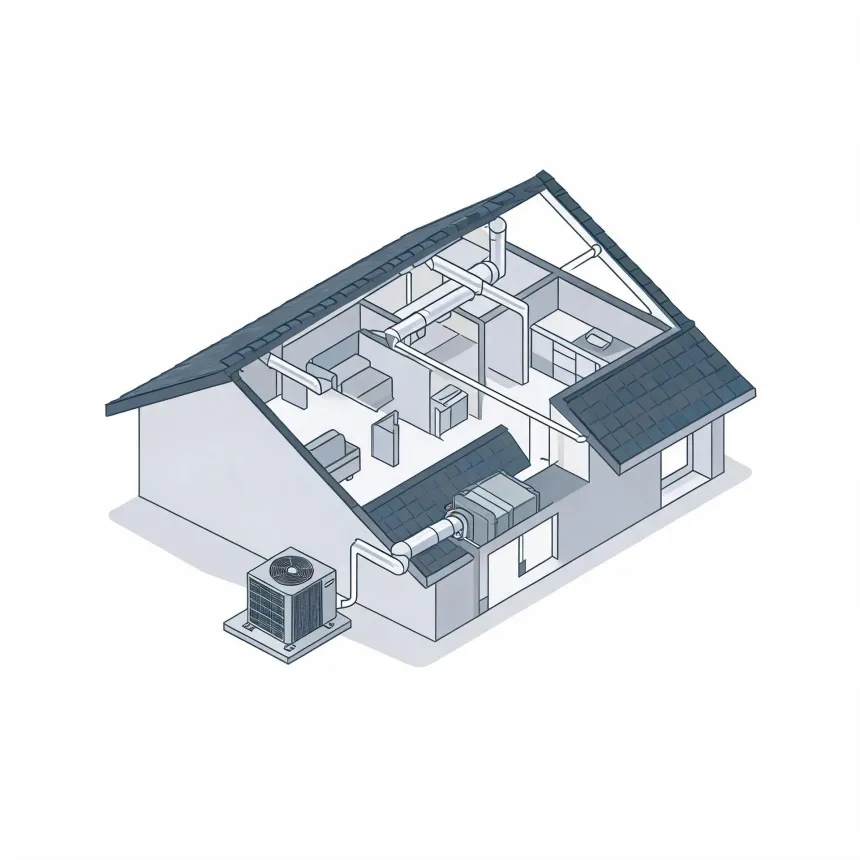
Isometric line illustration of a cutaway single-story house showing interior rooms, ceiling ductwork and an air handler, connected to an outdoor condenser unit on a pad beside the building.
Your air conditioner works hardest from June through August.

NOAA nClimDiv, 1991–2020 normals

Cooling in Bureau County starts in June, right when the season begins.

Have the AC checked in May, so it's ready before that first hot stretch.

Weather here is hard on a cabinet sitting outside all year

150 severe weather events from 2015 to 2024
16% of homes statewide lost power a day or more in 2024
72 damaging wind events from 2015 to 2024
Older Homes, Same Yearly CheckHalf the homes in Bureau County were built in 1958 or earlier.

Electricity here runs 16.11 cents per kilowatt-hour, on the higher side for the state. That makes it worth having the system running at its best rather than losing output to a dirty coil or a weak capacitor. A unit that has to work harder to do the same job shows up on the bill before it shows up as a breakdown. None of that calls for more visits, just one done at the right time. A spring checkup catches the kind of wear that costs money quietly, before the summer electric bills arrive.

Get the Yearly Look Before Summer

If your system came with the house, a spring checkup is how whoever services it finds a worn part while it's still cheap to fix. That matters more the longer the system has been running. Book the one visit, and let the technician tell you how the unit is holding up.

Find a contractor
A gray residential air conditioning condenser unit mounted on a concrete pad outdoors, surrounded by green grass under a partly cloudy blue sky.

What a Skipped Checkup Costs the Machine

A system that never gets looked at doesn't fail all at once. Dust builds up on the coil, and the coil can't shed heat the way it's supposed to. The compressor runs longer to make up for it, and runs hotter while it does. A dirty filter adds to that same strain, choking off airflow the coil needs. The capacitor that gets the compressor started weakens slowly, not all at once, so the unit keeps running right up until the morning it doesn't. None of this announces itself. The house still cools. The air still comes out cold. What's missing is anyone checking the refrigerant charge, tightening the electrical connections, or clearing the condensate drain before it clogs and backs up. Skip that long enough and a small worn part takes the compressor down with it, and the compressor is the expensive half of the system.

A Real Checkup Means Taking the Cabinet Apart

A quick visit gets a glance at the filter and a check of the thermostat, maybe a reading on the gauges. A thorough one opens the condenser cabinet, washes the coil fin by fin, and pulls the panel to look at the electrical connections. The technician checks the capacitor's actual output instead of assuming it's fine because the unit started up fine. The refrigerant charge gets measured against what the manufacturer specifies for that unit, not just glanced at. That difference doesn't show up in how long the visit takes. It shows up in whether the problems get found before they turn into a service call.

Ask What Gets Measured, Not Just Looked At

Washing a coil you can see is easy work. Measuring the airflow across it, checking the temperature split between the air going in and the air coming out, and testing the capacitor under load takes longer and tells you whether the system is actually performing. A technician who writes down numbers and compares them to what the unit should be doing is running a real diagnostic. One who eyeballs the unit and calls it good is doing maintenance by appearance. The readings are what catch a problem while it's still a small part, not a failed compressor.

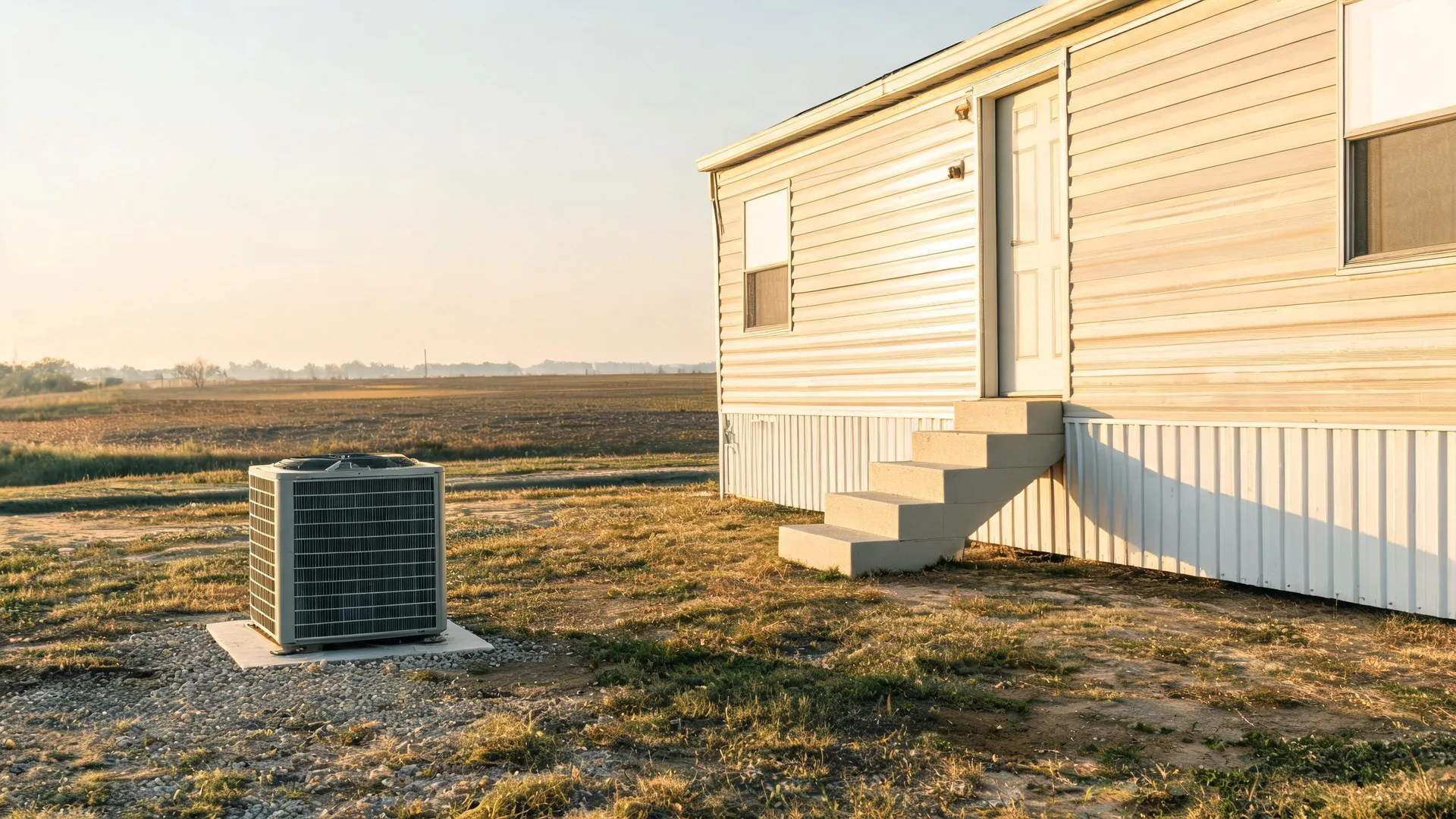
An overhead view of a residential air conditioning condenser unit mounted on a concrete pad next to a house with vinyl siding.

Book your AC tune-up in May, before homes here start needing cooling in June.

  1. Jan
  2. Feb
  3. Mar
  4. Apr
  5. May
  6. Jun
  7. Jul
  8. Aug
  9. Sep
  10. Oct
  11. Nov
  12. Dec

A tune-up checks the refrigerant charge, cleans the coils, tests the capacitor and tightens the electrical connections.

A tune-up starts outside at the condenser. The technician cuts power to the unit before touching anything, then pulls the panel to get at the capacitor and contactor. The capacitor gets tested under load, not just eyeballed, because a weak one still lets the compressor start most mornings right up until it doesn't. The coil gets washed fin by fin, since dirt on it keeps the system from shedding heat no matter how well everything else works. Inside, the evaporator coil and blower get a look too, and the drain line gets cleared so condensate has somewhere to go. Refrigerant charge gets checked against what the unit was built to run, not topped off on a guess. Every electrical connection gets tightened, because a loose one generates heat on its own and wears out the part it's attached to.