







An outdoor air conditioning condenser unit mounted on a concrete pad next to a blue-sided residential house at sunset.

AC Maintenance in Quincy, IL

Tell us about the job

Takes about a minute. No obligation.

Tune-up, service, or cleaningCentral ACAdams County, IL
Step 1 of 2

What ZIP code is the job in?

Electricity in Adams County runs 17.96 cents per kilowatt-hour, higher than most of the country pays. A dirty coil or a weak capacitor makes the compressor work harder to move the same amount of heat out of the house. That extra work shows up on the meter before it shows up as a breakdown. Summer dew points here average 65°F across June, July and August, which is heavy air, and heavy air means long run times just to keep the house comfortable. Run those hours through a strained system instead of a clean one, and the difference lands on the power bill every month.

4 months
June through September, your air conditioner is on duty
85°F
the average summer afternoon it cools against
33 hail events
in ten years, and hail bends the fins on outdoor coils
48 wind events
in ten years, and wind drives debris into outdoor units
Isometric line illustration of a cutaway house showing interior rooms with furniture, ductwork leading to an indoor air handler, and an outdoor condenser unit connected by a line set.
Your air conditioner works hardest from June through August.

NOAA nClimDiv, 1991–2020 normals

A dirty condenser coil makes the compressor run longer to move the same heat out of the house.

Skip the cleaning and that extra run time shows up on the bill long before the compressor ever fails.

Half these homes were built by 1965, and old systems need a closer look

Half the homes here were built by 1965
Climate zone 5A
Power here costs 17.96 cents per kilowatt-hour
Get it checked in MayCooling season in Adams County starts in June and runs four months straight.

If your AC has been in the house since before you owned it, don't assume it's been looked at. A yearly check means someone has eyes on the coil, the capacitor, and the refrigerant charge before any of them turns into a breakdown midsummer. On an older system, that's worth doing every year, not every few years. Parts wear at different rates, and a tune-up is what catches the one closest to failing while it's still cheap to deal with.

A clean system costs less to run

A tune-up gets the coil clean and the capacitor tested before the compressor has to work around them. Power here costs more than most places pay, and a strained system runs up that cost every month until someone deals with it.

Find a contractor
A man in a cap, gray shirt and tan pants carries a worn canvas tool bag up wooden porch steps toward a teal front door, with a potted shrub to the right.
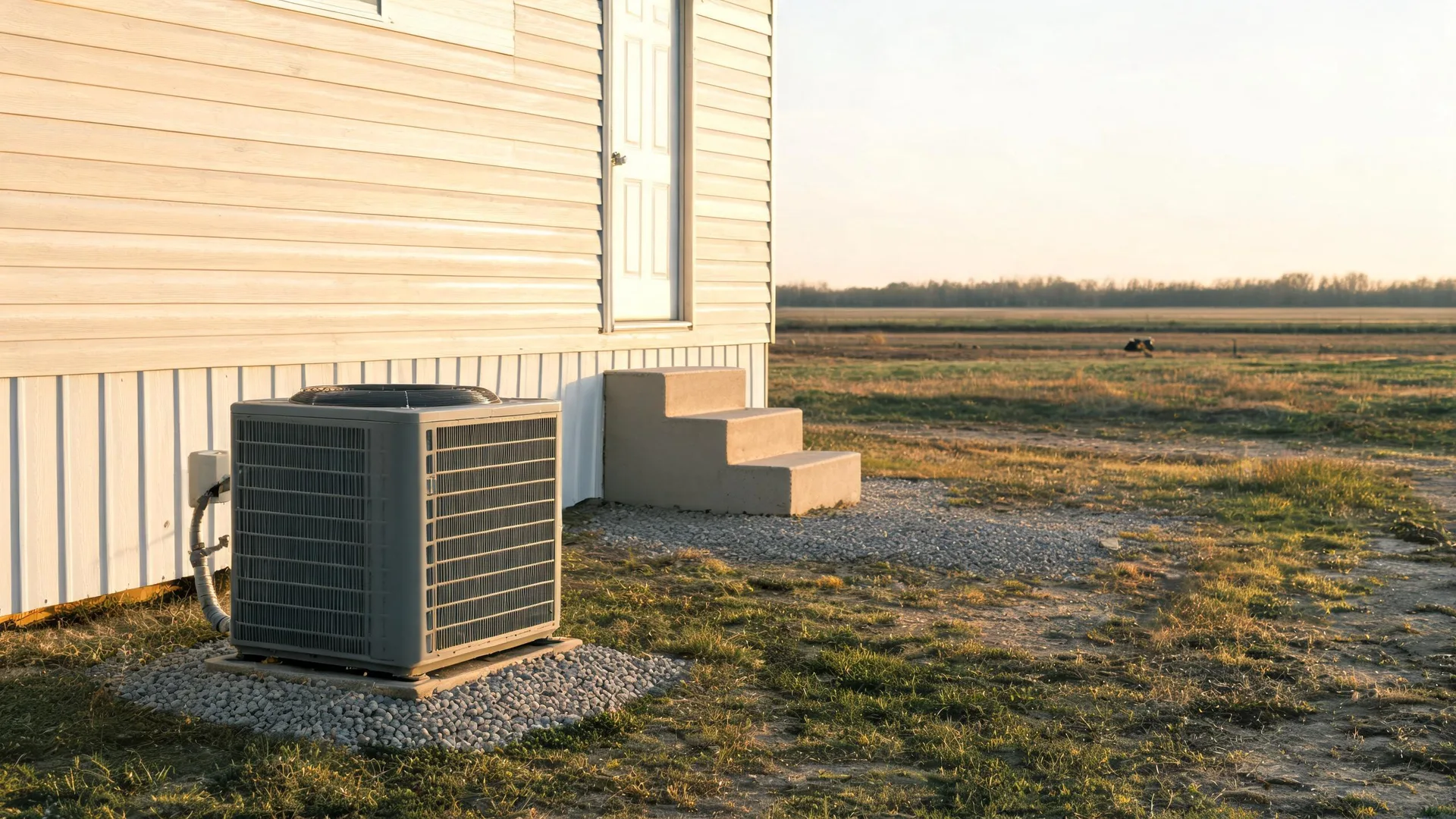
A gray residential air conditioner condenser unit mounted on a concrete pad in an open grass field.

Running all day wears on the parts that keep it breathing

The filter is the first thing in the way of the air moving through the system, and the coil behind it is where the heat actually leaves the house. Let the filter load up with dust and the blower has to pull harder to get the same air across the coil. Airflow drops, the coil can't shed heat the way it should, and on a long enough run it can get cold enough to ice over. Once it ices, it stops doing its job entirely until it thaws. The outdoor coil has the same problem from the other side, coated in grass clippings and cottonwood and whatever else blows against it, unable to let the heat go. The drain underneath the indoor coil matters just as much and gets thought about the least. That coil pulls moisture out of the air all day, and all of it has to go somewhere. A drain line clogged with algae backs up quietly, and the first sign is usually water where it shouldn't be, not a warning beforehand.

Gauges on the system, not just a glance at it

A thorough tune-up checks refrigerant pressure against what the system is supposed to run, not just whether the lines feel cold. It means pulling the blower access and looking at the squirrel cage, not just swapping the filter. The capacitor gets tested under load, not eyeballed for a bulge. A quick visit skips the gauges and the amp readings and calls the system fine because it's running. Running and running right are different things, and only one of them holds up through a long summer.

What a quick visit leaves for the compressor to find out

Skip the amp draw check on the compressor and a weak run capacitor goes home undiagnosed, still limping the motor along until it trips on overload some afternoon. Skip clearing the condensate drain and the system looks fine until the pan overflows. The parts a rushed tune-up skips are exactly the ones that fail without warning. A thorough one finds them while they're still just a reading on a gauge, not a service call.

An outdoor central air conditioning unit mounted on a concrete pad beside a blue-sided house at sunset.

Book your AC tune-up in May, before homes here start needing cooling in June.

  1. Jan
  2. Feb
  3. Mar
  4. Apr
  5. May
  6. Jun
  7. Jul
  8. Aug
  9. Sep
  10. Oct
  11. Nov
  12. Dec

A tune-up checks the refrigerant charge, cleans the coils, tests the capacitor and tightens the electrical connections.

A real tune-up starts outside at the condenser, pulling the fan apart from the housing if it needs to and washing the coil fins from the inside out so the dirt doesn't just get pushed deeper in. Inside, the technician pulls the blower wheel and checks it for the same buildup, because a coated wheel moves less air no matter how clean the filter is. The contactor gets a look too, since the points on it pit and burn with every cycle and a worn one can start sticking. Refrigerant lines get checked for rub spots anywhere they pass through metal, not just at the connections. None of this shows up from across the room. It shows up when someone takes the covers off and looks.