






A row of dark-painted single-story houses with gabled shingle roofs behind a trimmed hedge and mown lawn, surrounded by large leafy trees under an overcast sky.

AC Maintenance in Rochelle, IL

Tell us about the job

Takes about a minute. No obligation.

Tune-up, service, or cleaningCentral ACOgle County, IL
Step 1 of 2

What ZIP code is the job in?

A quick tune-up means someone checks the refrigerant pressure, glances at the filter, and calls it done. A thorough one means the coils get washed, not just looked at, because a coil caked with dirt can't shed heat no matter what the pressure reading says. It means pulling the capacitor and testing it under load instead of eyeballing whether it looks swollen. It means flushing the condensate drain so it doesn't back up and shut the system down on the first humid stretch. A tech doing it right also checks the contactor for pitting, tightens the electrical connections, and makes sure the blower wheel isn't caked with dust that's choking airflow. If the visit takes less time than it took to explain all that, something got skipped.

3 months
June through August, your air conditioner is on duty
82°F
the average summer afternoon it cools against
18 hail events
in ten years, and hail bends the fins on outdoor coils
76 wind events
in ten years, and wind drives debris into outdoor units
Isometric cutaway illustration of a house interior showing ducted HVAC piping, an indoor air handler unit, and an outdoor condenser with fan connected by a line, rendered in grey tones on a white background.
Your air conditioner works hardest from June through August.

NOAA nClimDiv, 1991–2020 normals

A dirty filter is the one thing that undoes a good tune-up fast.

Check it monthly and swap it when it looks gray, so the coils stay clean until the next visit.

Half the homes here were built by 1972, and an AC system that old doesn't fail all at once, it fails a part at a time

Half the homes here were built by 1972
Cooling runs June through August
Summer afternoons average 82°F
One visit a yearIllinois electricity ran 15.87 cents per kilowatthour in 2024, and a clean system doesn't waste it.

Cooling in Rochelle runs June through August. May is the month to get the check done. By the time June hits, the system is running most of the day to keep up, and that's a bad time to find out the capacitor was already weak or the coil needed washing. A check in May catches that while the unit is still sitting idle, before it has to prove itself on the first hot stretch.

Light duty still needs a yearly check

Three months of real work a year is not much to ask of a system. It does not mean nothing wears. The capacitor weakens, the coil picks up dirt, the contactor pits, whether the summer is long or short. A yearly check catches that wear while the unit is still sitting idle. Get it looked at before June.

Find a contractor
A gray residential air conditioning condenser unit mounted on a concrete pad outdoors, surrounded by green grass under a partly cloudy blue sky.

Start the yearly habit now

If your system came with a house built decades back, nobody knows how many tune-ups it's actually had. A yearly check from here forward is how you find out what's still good and what's wearing thin, before a part that's been failing quietly picks the hottest week to quit.

What's hiding behind a normal reading

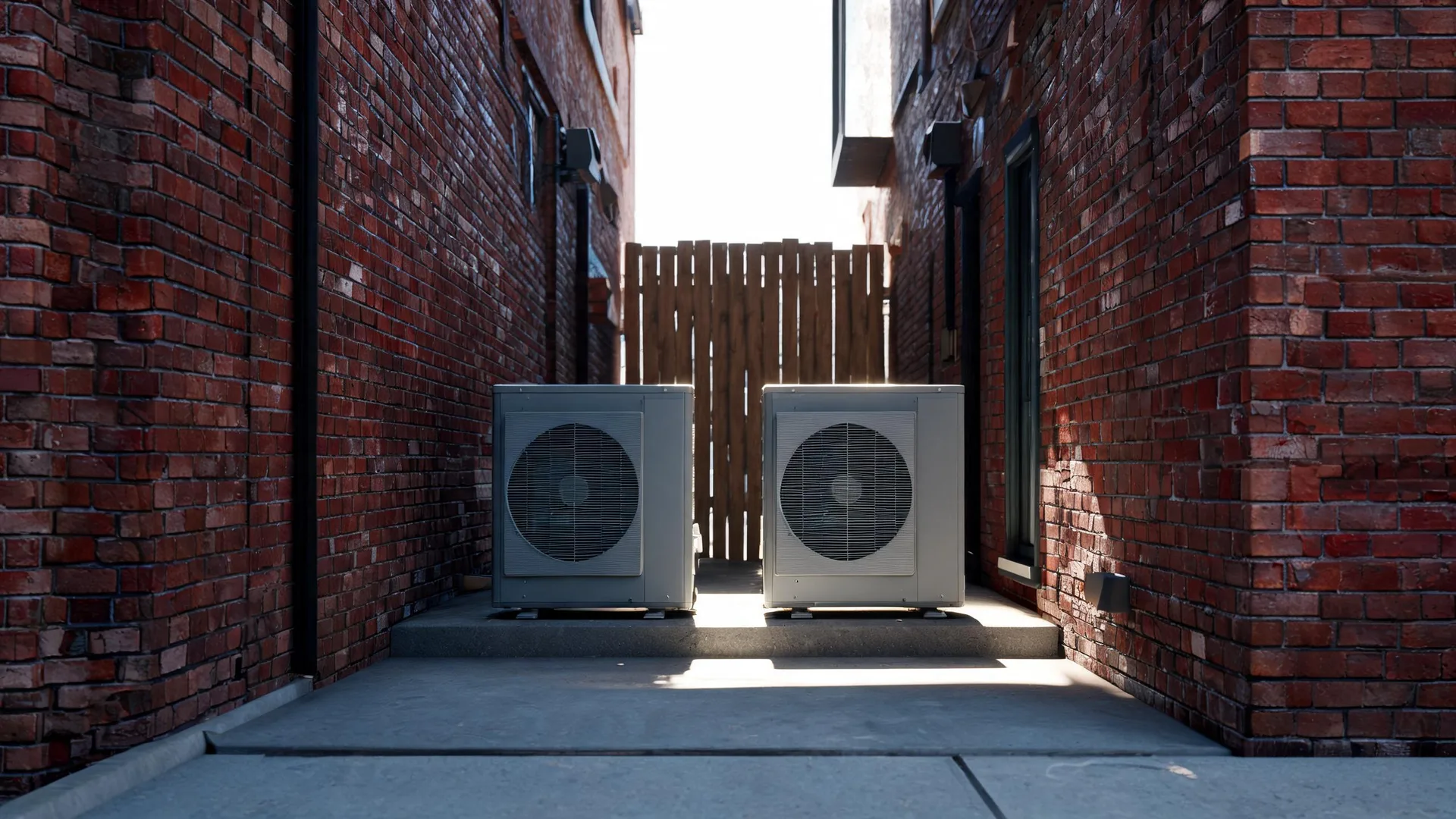
A gauge can show the charge sitting right where it should and still miss a coil fin that's bent flat over a long stretch, choking the airflow that reading depends on. It can miss a start capacitor that tests fine cold but folds once the compressor's been running a while. The number on the gauge is only ever as good as everything feeding into it.

What it means for the system left alone

A system that never gets opened up keeps running on whatever shape its parts are in, good or bad, and nothing about the thermostat tells you which. A weak run capacitor still starts the compressor, right up until the morning it doesn't. A tune-up catches that part while it's failing, not after, which is the only point where catching it does any good.

An overhead view of a residential air conditioning condenser unit mounted on a concrete pad next to a house with vinyl siding.

Book your AC tune-up in May, before homes here start needing cooling in June.

  1. Jan
  2. Feb
  3. Mar
  4. Apr
  5. May
  6. Jun
  7. Jul
  8. Aug
  9. Sep
  10. Oct
  11. Nov
  12. Dec

A tune-up checks the refrigerant charge, cleans the coils, tests the capacitor and tightens the electrical connections.

A refrigerant check only means something if the airflow across the coil is right first, so a thorough tune-up checks static pressure, not just the charge. It means pulling the blower access panel to look at the wheel, not just listening to see if it spins. The outdoor fan motor gets checked for play in the bearing, since a wobble there now is a seized motor later. On the indoor side, the drain pan gets a look too, not just the line, because standing water left in a dirty pan grows things you don't want blowing into the house. A tech should also check that the disconnect box is sound and the whip isn't frayed, since that's the same power feeding everything else tested that day. None of this takes a tool more complicated than a meter and a brush, but skipping it is how a system passes a tune-up and quits a few weeks later anyway.