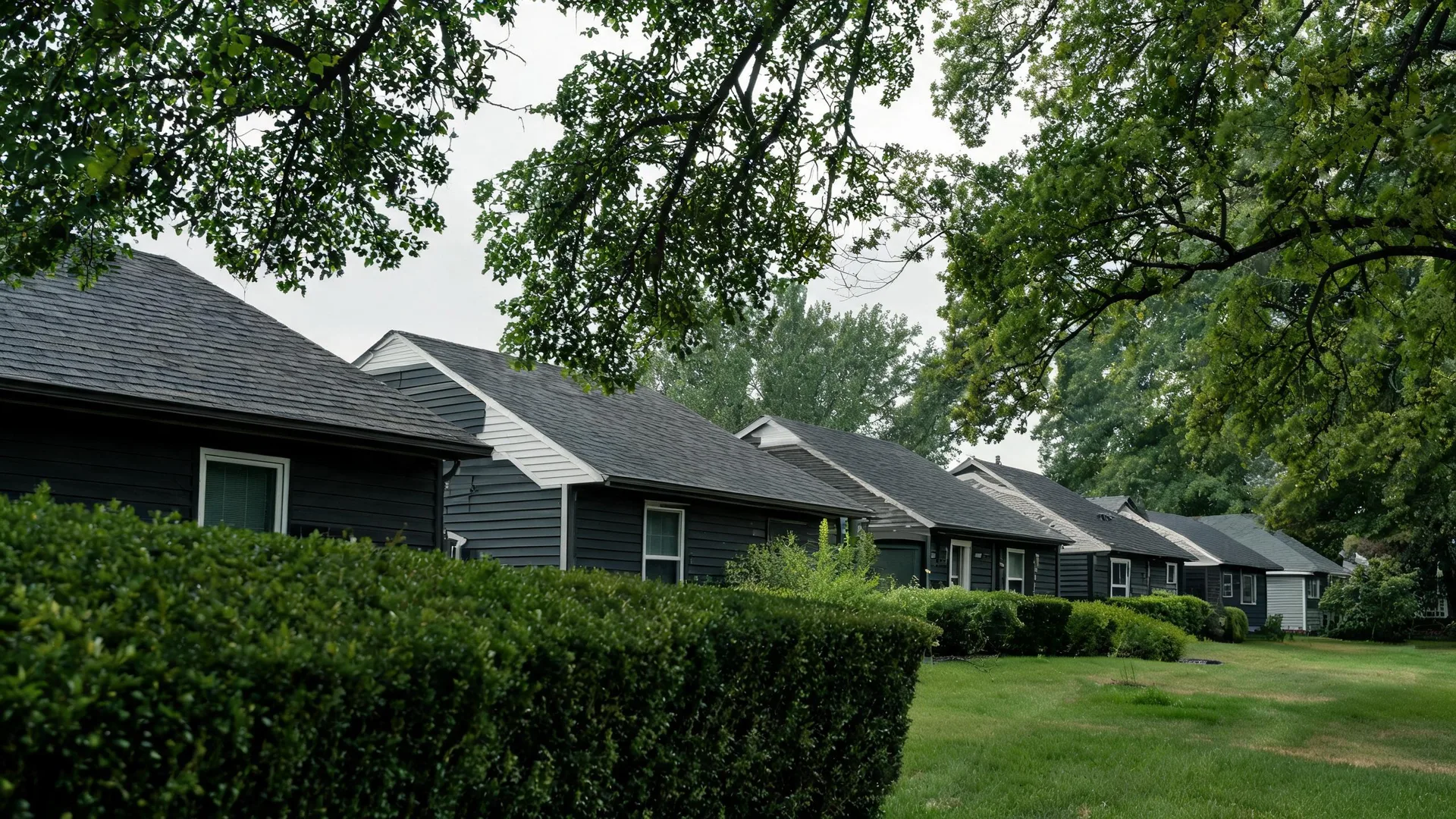







A row of dark gray single-story houses with asphalt shingle roofs behind trimmed hedges and a mown lawn, framed by overhanging tree branches under an overcast sky.

AC Maintenance in Sterling, IL

Tell us about the job

Takes about a minute. No obligation.

Tune-up, service, or cleaningCentral ACWhiteside County, IL
Step 1 of 2

What ZIP code is the job in?

Cooling runs about three months here, June through August, and June is when it has to work right away. There's no mild stretch at the start where a problem can slide. May is the month to get the check done, before the first hot stretch asks the system to prove itself. A tune-up then catches a weak part while it's still idle, not after it's run a month in the heat. Waiting until June means booking it while it's already working, and fixing it if it falls behind.

3 months
June through August, your air conditioner is on duty
83°F
the average summer afternoon it cools against
37 hail events
in ten years, and hail bends the fins on outdoor coils
58 wind events
in ten years, and wind drives debris into outdoor units
Isometric cutaway illustration of a single-story house showing interior rooms, ceiling ductwork, an indoor air handler, and an outdoor condenser unit connected by lines, in gray and white tones on a white background.
Your air conditioner works hardest from June through August.

NOAA nClimDiv, 1991–2020 normals

Summer here runs about three months, June through August.

One check before June covers the season this system actually has to work.

Weather here tests the power grid, not this machine

137 severe weather events from 2015 to 2024
16% of homes statewide lost power a day or more in 2024
58 damaging wind events from 2015 to 2024
One check a year keeps it that wayElectricity here runs 18.23 cents per kilowatt-hour, so a system that's out of tune costs more to run every day it's off.

Half the homes in Whiteside County were built in 1961 or earlier. A system in one of those houses has had a lot of years to pick up small problems, a weak capacitor, a coil losing its charge, a motor bearing starting to wear. None of that shows up as a breakdown right away. It shows up as the system running longer to do the same job, which you'd likely never notice on your own. A yearly check is what catches it, because the parts get looked at and tested before they fail outright, not after.

An older system is worth a yearly look

If your system came with a house built decades ago, schedule the yearly check before summer asks anything of it. That's how a weak capacitor or a worn bearing gets caught on the bench, not in the middle of a hot week.

Find a contractor
A man in a dark jacket, cap and tan work pants climbs concrete steps toward a teal front door, carrying a canvas tool bag beside a potted shrub in a blue planter.
An outdoor air conditioning condenser unit mounted on a concrete pad surrounded by gravel, photographed against a partly cloudy blue sky.

The system usually tells you first

An air conditioner gives you signals before it quits. The airflow from the vents feels weaker than it used to, even on the lowest setting. A room that used to cool down fast now takes a while. The system cycles on and off more than it should, running short bursts instead of settling into a steady stretch. Sometimes it's a sound: a hum from the outdoor unit that wasn't there before, a rattle when the fan kicks on, a click that repeats instead of starting the compressor clean. Sometimes it's a smell, musty air coming through the vents that points to moisture sitting somewhere it shouldn't. None of these mean the system is about to fail outright. They mean a part is already working harder to cover for another part that's slipping. A check finds that part while it's still doing its job, just not doing it well, and that's the difference between a tune-up and a repair call.

The filter is doing more than you think

A dirty filter chokes the airflow across the evaporator coil. Starved of air, that coil can get cold enough to frost over, and once it's iced up it cools worse, not better. The system runs longer to do less, and the compressor behind it carries that extra strain.

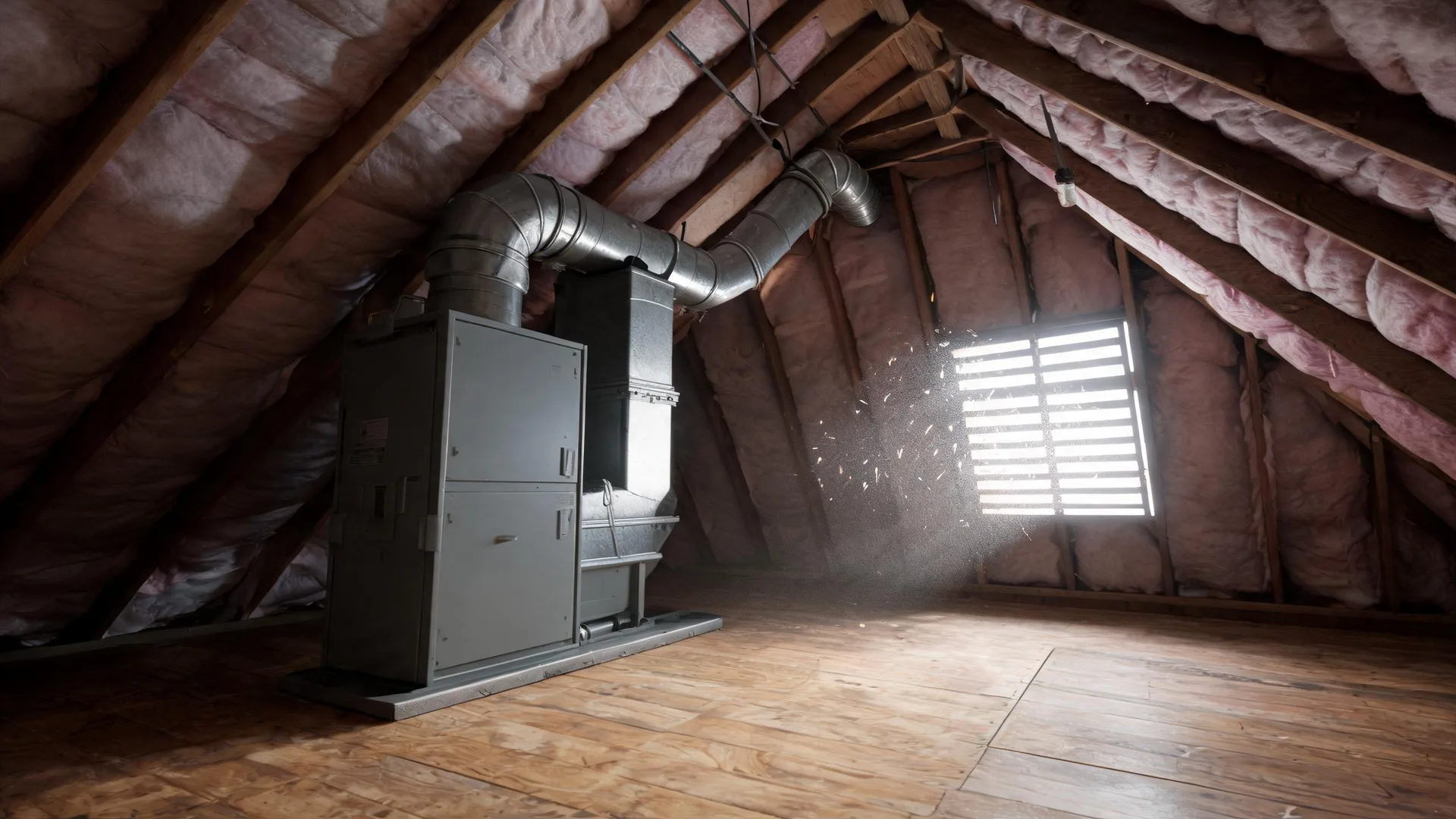
A check clears what you can't see

The outdoor coil collects grass clippings, pollen and dust until it can't shed heat the way it should. The drain line grows a film inside it that narrows the path until water backs up instead of draining. Both sit out of sight, so a yearly check is what actually clears them.

An outdoor air conditioning condenser unit mounted on a concrete pad next to a blue-sided residential house at sunset.

Book your AC tune-up in May, before homes here start needing cooling in June.

  1. Jan
  2. Feb
  3. Mar
  4. Apr
  5. May
  6. Jun
  7. Jul
  8. Aug
  9. Sep
  10. Oct
  11. Nov
  12. Dec

A tune-up checks the refrigerant charge, cleans the coils, tests the capacitor and tightens the electrical connections.

A tune-up starts with the filter and the coils, because nothing else works right if airflow is already choked. From there a tech checks the refrigerant charge, since a system low on refrigerant cools poorly and makes the compressor work past what it's built for. The capacitor and contactor get tested, since a weak capacitor is one of the most common reasons a compressor struggles to start or an outdoor fan runs slow. The condensate drain gets cleared, because that line grows a film that narrows it until water backs up. Electrical connections get checked too, since a loose connection at the contactor or disconnect runs hotter than it should and wears out the part around it. Each of these is small on its own. Caught separately, each is a five-minute fix. Missed, they add up to the compressor doing the work the rest of the system should be sharing.