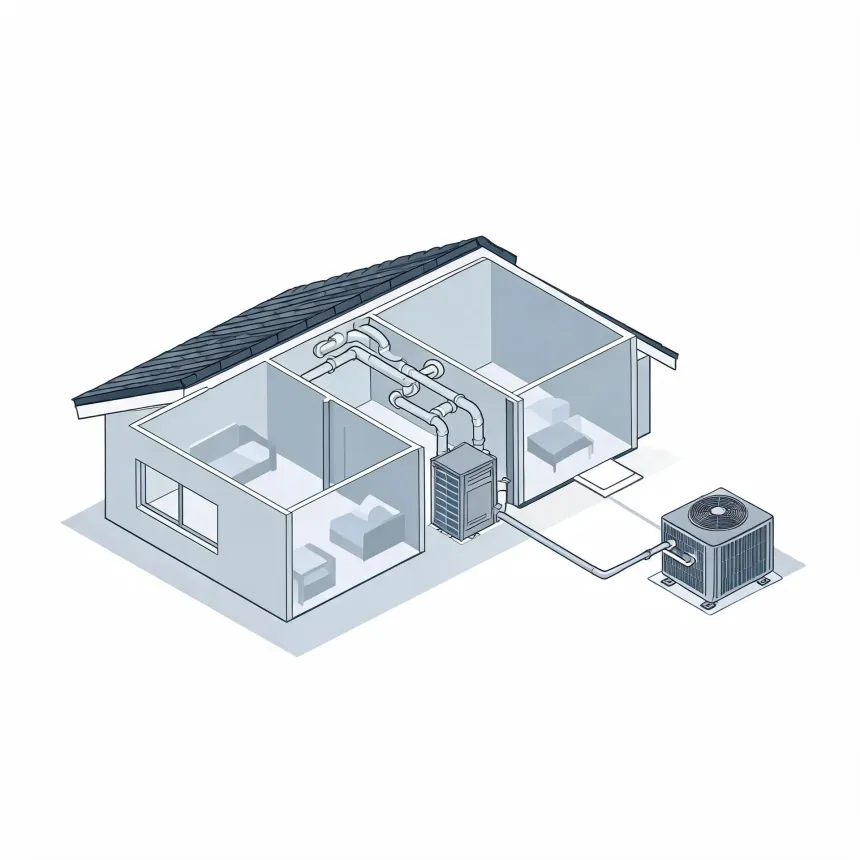
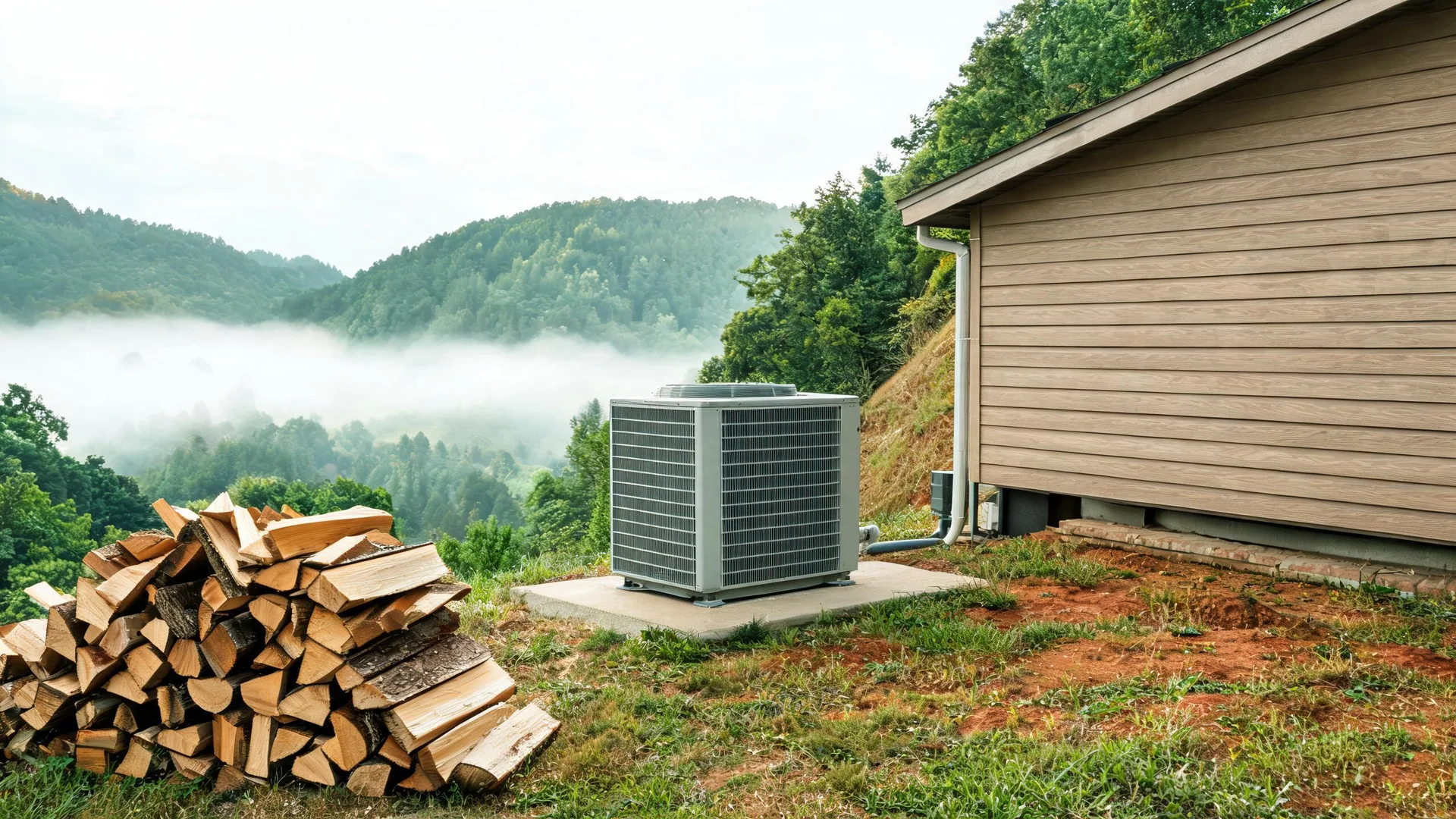
A few signs mean your air conditioner wants a look before anything fails outright. The air from the vents feels weaker than it used to, even though the thermostat setting hasn't changed. The system runs longer than it used to for the same drop in temperature. You notice a musty smell when it kicks on, which usually points to moisture sitting somewhere it shouldn't. Ice on the refrigerant line is never normal, and neither is water pooling near the indoor unit. A tech can check the refrigerant charge, clean the coil and confirm the drain line is clear before any of that turns into a bigger repair.
3 months
June through August, your air conditioner is on duty
81°F
the average summer afternoon it cools against
64 hail events
in ten years, and hail bends the fins on outdoor coils
138 wind events
in ten years, and wind drives debris into outdoor units
Your air conditioner works hardest from June through August.
Jan
Feb
Mar
Apr
May
Jun
Jul
Aug
Sep
Oct
Nov
Dec
NOAA nClimDiv, 1991–2020 normals
Cooling in Waukegan starts in June.
May is when to get the check done, before the system is running every day.
Three months of real work is still worth one check a year
Cooling runs June through AugustSummer afternoons average 81°F138 damaging wind events from 2015 to 2024
One visit a year covers what an air conditioner here needs. Nothing about Waukegan homes works this system harder than it works anywhere else, so there's no case for extra visits or chasing problems that haven't shown up. A tech looks at the refrigerant charge, the coil and the drain line, and confirms the capacitor is holding up. That's the system accounted for. Illinois electricity ran 15.87 cents per kilowatt-hour in 2024, and a unit that isn't maintained draws more of it to do the same job. One check before summer catches that early instead of showing up on the bill all season.
Half the homes in Lake County were built in 1983 or later. If yours is one of them, or if the system itself was put in more recently than that, it's probably not fighting age yet. A yearly check keeps it that way. The capacitor, the coil, the refrigerant charge all hold up fine on their own for a while, but a system that gets looked at once a year tends to stay out of trouble longer than one that doesn't.
What's behind the panel
A dirty coil or a weak capacitor doesn't always show up as warm air right away. The system can still run and still cool the house while losing efficiency underneath, and nothing about that is visible from the thermostat or the vents. Pulling the panel is the only way to see the coil, check the capacitor's readings against what it should hold, and catch a refrigerant charge that's drifted low before it turns into a compressor problem.
What it means for the job ahead
Catching a weak capacitor or a coil that's starting to foul means a planned fix instead of a system that quits on a hot day. The same visit confirms the drain line is clear, so water has somewhere to go instead of backing up near the indoor unit. A capacitor that's already weak rarely gets better on its own, and a coil that's fouled only picks up more buildup the longer it runs that way.
Book your AC tune-up in May, before homes here start needing cooling in June.
Jan
Feb
Mar
Apr
May
Jun
Jul
Aug
Sep
Oct
Nov
Dec
A tune-up checks the refrigerant charge, cleans the coils, tests the capacitor and tightens the electrical connections.
A proper tune-up starts outside at the condenser. The tech clears leaves and debris away from the cabinet, then straightens the fins if they've gotten bent, since airflow across that coil is how the system dumps heat. Inside, the evaporator coil gets checked for dirt and mold, because a coil caked with buildup can't pull heat out of the air the way it should. The refrigerant charge gets tested against what the system is supposed to hold, not just topped off by guess. Electrical connections get tightened, since a loose connection is what burns out a contactor or a capacitor over time. The condensate drain gets flushed clear so it can't back up. Last, the tech runs the system and checks that it's actually cooling to the temperature called for, not just blowing air.