





Aerial view of a residential air conditioning condenser unit mounted on a concrete pad next to a house with vinyl siding and a sliding glass door.

AC Maintenance in West Frankfort, IL

Tell us about the job

Takes about a minute. No obligation.

Tune-up, service, or cleaningCentral ACFranklin County, IL
Step 1 of 2

What ZIP code is the job in?

Electricity in Franklin County runs 17.10 cents per kilowatt-hour, more than most places in the country pay. A dirty coil or a weak capacitor makes the system work harder to move the same amount of heat out of the house. That extra work shows up as extra power draw, every hour the unit runs. Summers here are heavy and humid, with a dew point around 67°F through June, July and August, so the system runs a lot once it gets hot. A unit running that much, working harder than it should, turns a small loss in efficiency into real money over the summer.

5 months
May through September, your air conditioner is on duty
87°F
the average summer afternoon it cools against
24 hail events
in ten years, and hail bends the fins on outdoor coils
80 wind events
in ten years, and wind drives debris into outdoor units
Isometric line illustration of a cutaway house showing interior rooms with ductwork, an indoor air handler, and an outdoor condenser unit connected by lines, on a white background.
Your air conditioner works hardest from June through August.

NOAA nClimDiv, 1991–2020 normals

Cooling season starts in May here.

Book the tune-up in April, before the system has to work.

Half the homes here were built by 1963, and so was the system cooling plenty of them

Half the homes here were built by 1963
Cooling runs May through September
Summer afternoons average 87°F

A unit that old has had a long time to drift out of tune. Refrigerant seeps out slowly, contacts wear, the coil picks up a film of dirt nobody can see from across the room. None of that announces itself. The system just runs a little worse each year until one summer it can't keep up at all. A yearly check catches the drift before it turns into a breakdown, and it's the only way to know whether a system that old still has a few good summers left in it or is costing you more than it's worth to run.

A tuned system costs less to run all summer

A clean coil and a good capacitor let the system move heat without straining. On power priced the way it is here, that difference shows up on the bill all summer long. A tune-up before the heat sets in is the cheap way to find it.

Find a contractor
A gray metal air conditioning condenser unit mounted on a concrete pad in a flat grassy field under a partly cloudy sky.

Three Parts That Decide How Hard This Machine Has to Work

The filter is the first line of defense. Once it loads up with dust, air can't move through it the way it should, and the blower has to pull harder to get the same airflow across the coil. Less airflow means the evaporator coil runs colder than it's built for, and eventually it ices over instead of pulling moisture out of the air. A frozen coil stops cooling altogether until it thaws. The outdoor coil has its own problem: it sits outside all year collecting grass clippings, cottonwood fluff, dust, whatever blows past it, and once that builds up on the fins, the system can't dump heat into the outside air as easily. It ends up running longer to do the same job. The condensate drain is the one people forget entirely. It's just a small tube carrying off the water the coil pulls out of the air, but algae and dirt build up inside it over time, and when it clogs, that water backs up into the pan and then into the house. A clean filter, a clean coil and a clear drain are what let the system do the job it was built to do, nothing more.

The system won't tell you until it can't keep up

A system losing its charge or running a dirty coil doesn't shut off or throw a warning. It just works harder and quieter than any sign in the house. The sound stays the same, the vents still blow cold, and the strain sits in the parts you can't see until a capacitor gives out or a compressor overheats on the hottest day it has to work.

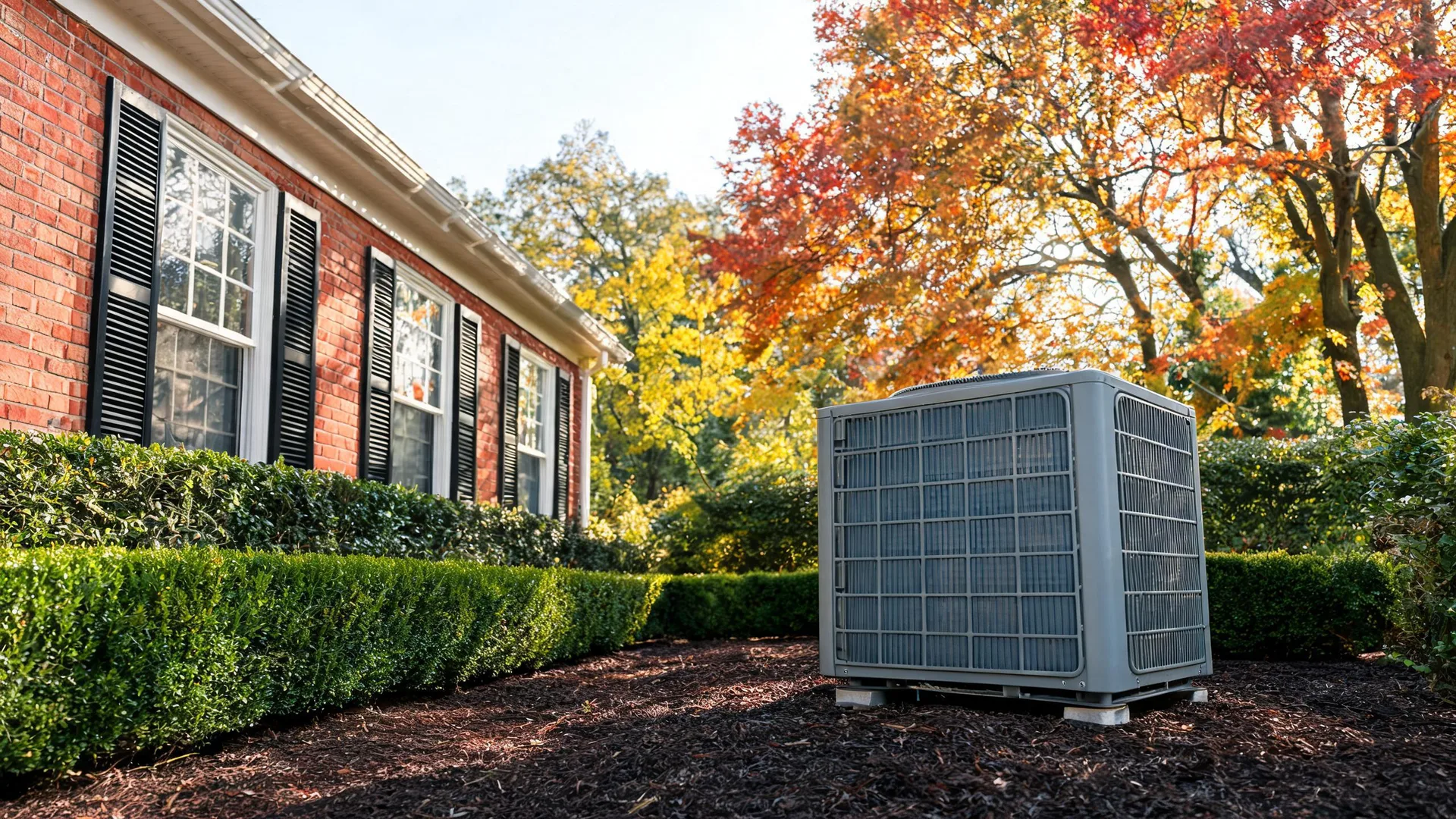
A tune-up is the only time anyone actually checks

Nobody opens the cabinet or pulls the panel off the condenser unless there's a reason to. A tune-up is that reason. It's when someone actually checks the refrigerant charge, tightens electrical connections that work loose from vibration, and tests the capacitor and contactor before either one fails outright instead of after.

Overhead view of an air conditioning condenser unit on a concrete pad next to a house with asphalt shingle roofing and vinyl siding.

Book your AC tune-up in April, before homes here start needing cooling in May.

  1. Jan
  2. Feb
  3. Mar
  4. Apr
  5. May
  6. Jun
  7. Jul
  8. Aug
  9. Sep
  10. Oct
  11. Nov
  12. Dec

A tune-up checks the refrigerant charge, cleans the coils, tests the capacitor and tightens the electrical connections.

A real tune-up is a set of checks, not a hose-down. The technician measures refrigerant charge against what the system calls for, since too little and the coil can't absorb heat the way it should, and too much makes the compressor work harder than it needs to. Electrical connections get tightened, because a loose connection heats up and burns a terminal over time. The capacitor and contactor get tested under load, since both wear out slowly and then fail all at once. The condenser fan motor gets checked for noise and play in the bearing, and the blower wheel gets looked at for the same reason. Airflow gets measured across the coil, not just glanced at, because a system can look clean and still be moving less air than it needs.