A row of dark gray gabled houses behind a trimmed hedge and mowed lawn, framed by large leafy trees under an overcast sky.

AC Repair in Aurora, IL

Tell us about the job

Takes about a minute. No obligation.

RepairCentral ACKane County, IL
Step 1 of 2

What ZIP code is the job in?

Storms here hit outdoor units directly

Kane County saw 298 severe weather events between 2015 and 2024, with 190 damaging wind reports, 65 hail events and 23 tornadoes in that stretch. An outdoor AC unit sits outside through all of it, exposed to wind-blown branches and hail with nothing to shield it.


Running doesn't mean undamaged

A condenser can keep cooling for weeks after hail dents the fins or wind drives debris into the coil. Weakened airflow and refrigerant leaks from that kind of damage tend to show up later as a harder-working system or a bigger bill, not as a sudden breakdown.

3 months
June through August, your air conditioner is on duty
82°F
the average summer afternoon it cools against
65 hail events
in ten years, and hail bends the fins on outdoor coils
190 wind events
in ten years, and wind drives debris into outdoor units
Isometric line illustration of a cutaway single-story building showing interior rooms, ceiling ductwork and an air handler, connected by lines to an outdoor condenser unit beside the exterior wall.
Your air conditioner works hardest from June through August.

NOAA nClimDiv, 1991–2020 normals

AC in Kane County starts working in June.

May is the month to get a weak unit checked, before the first real load finds the part that won't hold.

Half these homes were built in 1985 or later, and the AC in them is usually worth fixing

Half the homes here were built by 1985
Climate zone 5A
Power here costs 17.51 cents per kilowatt-hour

If your AC came in with the house, a repair bill makes more sense than a full replacement. A system that age still has working parts worth saving. A technician can tell you fast whether what's wrong is a contained problem, a capacitor, a fan motor, a low charge, or something that points to the whole unit wearing out. On a newer system it's usually the first kind. Get the diagnosis before you assume the worst.

After a storm, have the unit checked before it tells you itself

If hail or wind came through recently, get the outdoor unit looked at even if it's still cooling. A technician can check the coil and fins for damage that won't show up as a problem until the next heavy load hits them.

Find a contractor
A man in a cap, navy T-shirt and tan work pants, seen from behind, carries a worn canvas tool bag up concrete steps toward a teal front door flanked by a potted shrub.
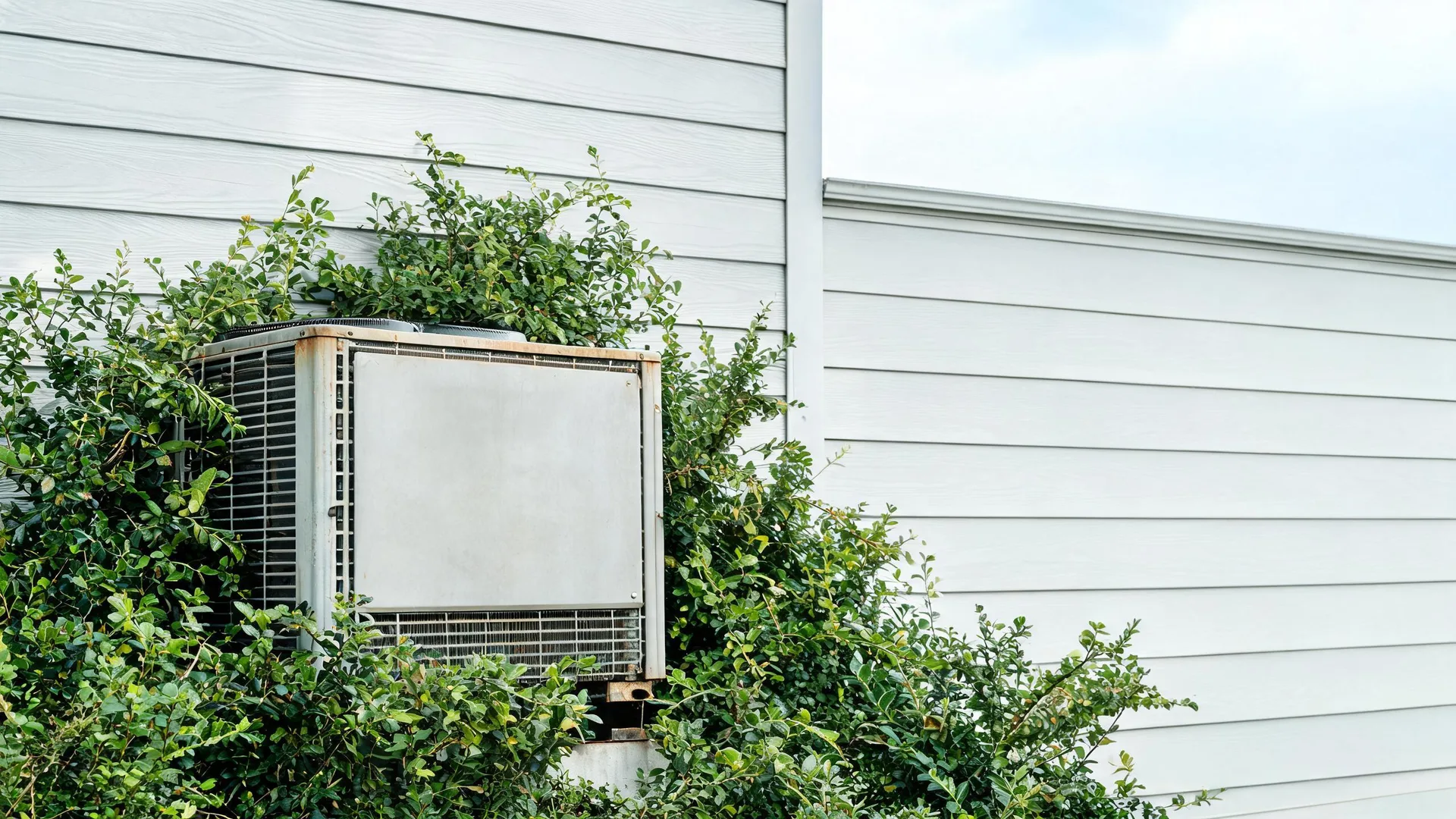
An outdoor air conditioning condenser unit mounted on a concrete pad surrounded by gravel, photographed against a partly cloudy blue sky.

What tells you the system needs a repair

An air conditioner gives you warning before it quits outright. Warm air from the vents when the thermostat is set low enough to run is the first one, and it usually means the system is low on refrigerant or the compressor is struggling. Short cycling, where the unit kicks on and off every few minutes instead of running a full cycle, wears down the compressor faster and points to a thermostat problem, a dirty coil, or a unit that was never sized right. Ice on the coil or the refrigerant lines means airflow is restricted somewhere, often a clogged filter or a failing blower motor, and running it iced up can damage the compressor for good. A musty smell points to mold in the ductwork or a clogged drain line. Water pooling near the indoor unit usually means that drain line is blocked and needs clearing before it backs up further. Grinding, squealing or a hard metallic clatter means a motor bearing or a loose part, and it will not fix itself by running longer. Any of these is worth a call before the system stops instead of after.

A small problem spreads to parts that were fine

A refrigerant leak starves the compressor of the gas it needs to cool itself, and running it low lets heat build up inside until the compressor windings burn out. A failing capacitor makes the fan motor pull harder to start each cycle, and that extra strain wears down a motor that had nothing wrong with it to begin with. What started as one bad part can take a second one with it.

Running it longer doesn't buy you time

Ice on the coil gets worse the longer the system runs, not better, because the blocked airflow that caused it never clears on its own. A unit short cycling on a bad thermostat or dirty coil adds another hard start every few minutes, and hard starts are what wear out a compressor. Shutting it off and calling for a repair stops the damage where it is instead of letting it reach the next part.

Aerial view of a gray central air conditioning condenser unit on a concrete pad next to a house with vinyl siding.

A new air conditioner would save little on running costs in Kane County, so the repair decision comes down to the unit's condition.

  • A new one at the federal minimum, 13.4 SEER2$190 a year
  • An older air conditioner$200 a year

Estimates for a typical Kane County home, compared with an older unit built to the previous federal minimum, from EIA household energy data, Illinois fuel prices and NOAA climate normals. Your home will differ.

Repair makes sense when a part like a capacitor or contactor has failed.

Replacement makes sense when the compressor has failed or the system uses R-22 refrigerant, which is no longer made.

A diagnostic visit starts outside at the condenser, checking the capacitor, the contactor and the refrigerant charge before anything gets taken apart. A technician will run the system and check the pressures on the gauges, because low pressure points to a leak and high pressure points to an airflow problem or a failing fan. Inside, they check the coil for ice or buildup and the blower for weak airflow, then check the drain line since a clogged one backs up into the house. They'll also check the capacitor's output against what it's rated for, because a capacitor can test as working and still be too weak to start the compressor reliably. All of this gets done before anything is replaced, so the part that's actually failing gets fixed instead of the one that's easiest to reach.