Five months of real work
AC here runs May through September. Afternoon highs average 87°F in June, July and August. That's a normal summer for a central AC system, not an extreme one.
Takes about a minute. No obligation.
AC here runs May through September. Afternoon highs average 87°F in June, July and August. That's a normal summer for a central AC system, not an extreme one.
A system that sees a summer like this usually fails for ordinary reasons. A weak capacitor. A low charge. A dirty coil. A worn contactor. Find the part actually at fault and the repair is usually straightforward.

NOAA nClimDiv, 1991–2020 normals
AC here starts running in May.
May is when a weak part from last summer finally gives out.




A struggling AC doesn't fail quietly. A weak capacitor makes the compressor strain to start. A low charge makes it run longer to reach the same temperature. A dirty coil does the same. All of it shows up on the meter at 15.87 cents a kWh, every day the system runs. Waiting until it quits outright just means paying that extra cost longer before the repair happens anyway.
Nothing about this area is especially hard on it. It's most likely the usual problem with the usual fix.
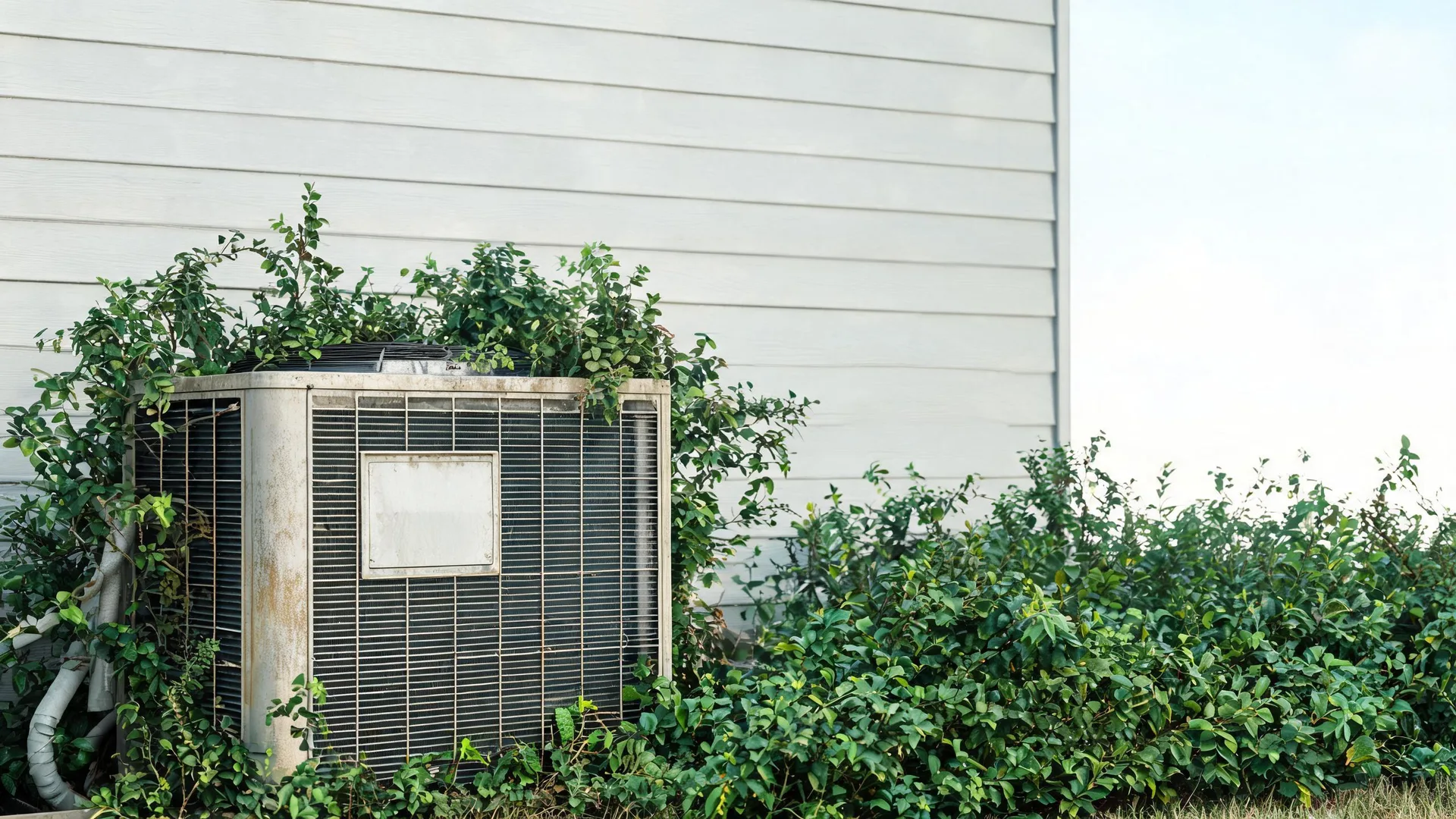
Find a contractorBefore anyone comes out, check the thermostat is set to cool and the setpoint is actually below room temperature. Go outside and look at the outdoor unit. If the fan isn't spinning and you don't hear a hum, check the breaker panel for a tripped breaker. If it's tripped, reset it once. If it trips again, leave it off and call someone. Check the air filter. A filter clogged with dust blocks airflow across the indoor coil, and that coil can ice over, which makes the whole system work harder for less cooling. If you can see ice on the indoor coil or on the refrigerant lines, turn the system off and let it thaw completely before anyone touches it. Check that the outdoor unit isn't buried in leaves, grass clippings or mulch, since the outdoor coil needs open air around it to shed heat. Look at the drain line near the indoor unit for standing water or a musty smell, a sign the condensate line is clogged and the system may be shutting itself down to protect against a flood. None of this tells you which part has failed, but it rules out the easy stuff and gives the tech a clearer starting point.
An AC doesn't fail all at once. One part gives out, usually the capacitor, the contactor or the charge, and the rest of the system is still fine. The compressor and the fan motors are built to outlast the small parts that control them.
A hard click with no start points at the capacitor or the contactor. Warm air with the fan running points at the charge or a blocked coil. Short cycling points at the contactor or the thermostat. Telling the tech what it's actually doing narrows down the search before they even open the cabinet.
Estimates for a typical Clinton County home, compared with an older unit built to the previous federal minimum, from EIA household energy data, Illinois fuel prices and NOAA climate normals. Your home will differ.
Repair makes sense when a part like a capacitor or contactor has failed.
Replacement makes sense when the compressor has failed or the system uses R-22 refrigerant, which is no longer made.
Most of the time a failing AC is worth fixing. The compressor is the expensive part, and it's also the part that fails least, since the parts that wear out sit ahead of it and usually give out first. A capacitor or a contactor costs little next to a compressor and takes little time to swap. Replacement starts to make sense when the compressor itself is the problem, or when the system is old enough that one worn part is really a sign the rest are close behind it. Short of that, a repaired system runs the same as it did before the part failed. A tech who's seen the symptom before can usually tell you which case you're in before they even quote the fix.