June is when weak parts fail
Cooling in Knox County starts up in June. A capacitor or contactor that was already marginal often won't make it through that first real hot stretch.
Takes about a minute. No obligation.
Cooling in Knox County starts up in June. A capacitor or contactor that was already marginal often won't make it through that first real hot stretch.
If your AC struggled last August, that same problem is still there. Having it looked at in May means it gets fixed before the first hot day, not during it.

NOAA nClimDiv, 1991–2020 normals
Galesburg gets three months of real cooling, June through August, with afternoon highs averaging 83 degrees.
Three months like that isn't hard on an air conditioner. When one breaks down here, a worn part is almost always why.



Half the homes in Knox County were built in 1957 or earlier. If your air conditioner is the one that came with the house, the worn part behind this repair might not be the only thing close to giving out. Fixing the capacitor or contactor is still the right call. But it's worth asking the contractor how much life is left in the rest of the system before you spend much more on it.
Electricity here runs 15.87 cents per kilowatt-hour. A worn capacitor or contactor won't stop the system from running. It just makes it run harder and longer to do the same job, and you pay for that every month it goes unfixed.
Find a contractor
If this unit is original to the house, ask the contractor straight out how many years it has left before you agree to anything beyond the repair in front of you. A tech working on it today can see things you can't from outside the cabinet. What the coil looks like. Whether the compressor sounds right. What shape the refrigerant lines are in. That's worth more than a guess based on the unit's age alone.
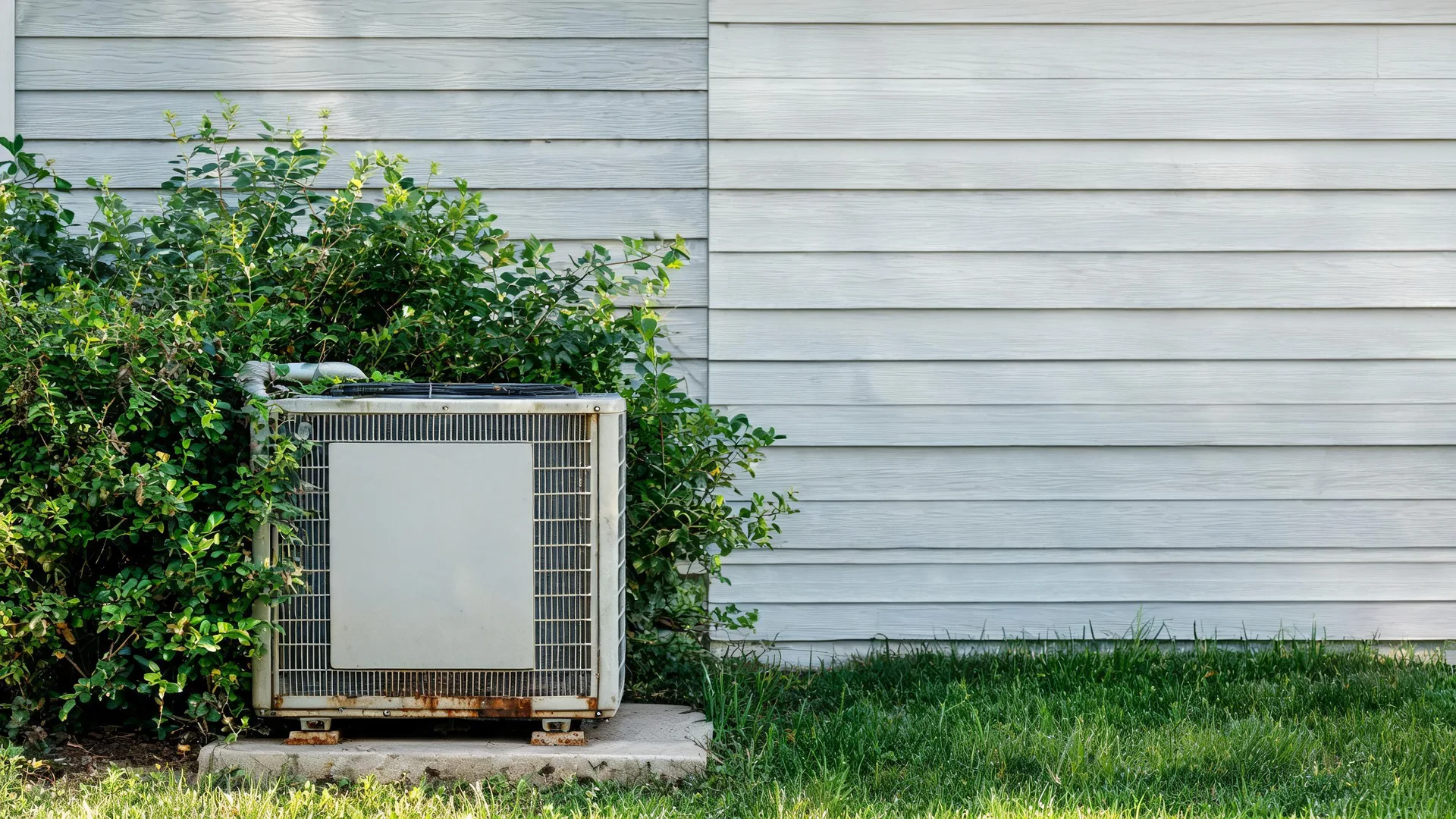
An air conditioner that runs but never gets the house cold is usually short on refrigerant or losing the fight against a dirty outdoor coil. Either way the system is working without doing the job, and that strain is what takes out the compressor next.
Grinding, squealing or a hard clunk when the unit starts are not things an air conditioner is supposed to do quietly in the background. Those sounds come from the fan motor, the compressor or a loose part inside the cabinet, and they get worse, not better, the longer the unit keeps running.
Estimates for a typical Knox County home, compared with an older unit built to the previous federal minimum, from EIA household energy data, Illinois fuel prices and NOAA climate normals. Your home will differ.
Repair makes sense when a part like a capacitor or contactor has failed.
Replacement makes sense when the compressor has failed or the system uses R-22 refrigerant, which is no longer made.
A diagnostic starts outside at the unit itself. The tech checks for voltage at the contactor, tests the capacitor's output against its rating, and watches how the compressor sounds and acts when it kicks on. Low refrigerant shows up as a difference between the temperature of the air going into the system and the air coming out of it, so that gets measured too. Indoors, the evaporator coil gets a look for ice or grime, and the airflow across it gets checked, since a coil that can't move enough air will never cool the house right no matter what shape the refrigerant charge is in. None of this takes guesswork. A capacitor either holds its rating or it doesn't, and a refrigerant charge either matches the system's specs or it's low.