




Three lit brick homes on a tree-lined residential street photographed at dusk.

AC Repair in Joliet, IL

Tell us about the job

Takes about a minute. No obligation.

RepairCentral ACWill County, IL
Step 1 of 2

What ZIP code is the job in?

Will County saw 346 severe weather events between 2015 and 2024. Most of that was wind, 202 events, with 89 hail events and 33 tornadoes in the same stretch. Hail dents coil fins and bends the fan cage. Wind throws branches and debris into the outdoor unit. A unit can take a hit like that and still start up and blow cold air, with the damage sitting inside the cabinet where you won't see it. If a storm has come through recently, that's worth knowing about before the next one does more to an already weakened coil or fan.

3 months
June through August, your air conditioner is on duty
83°F
the average summer afternoon it cools against
89 hail events
in ten years, and hail bends the fins on outdoor coils
202 wind events
in ten years, and wind drives debris into outdoor units
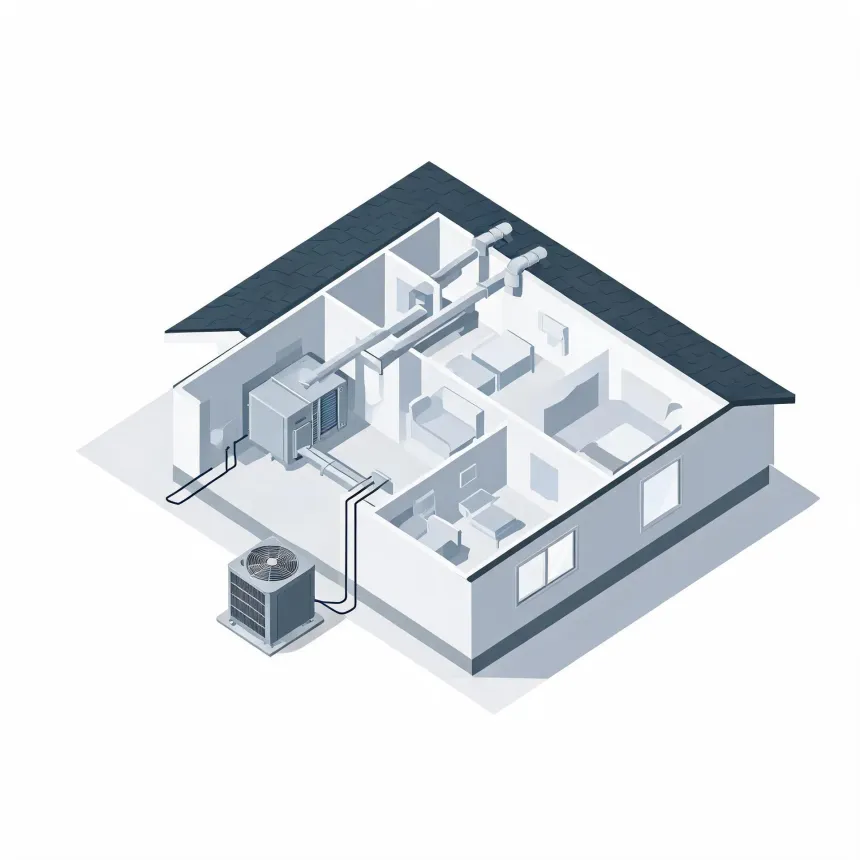
Isometric cutaway illustration of a single-story house showing interior rooms, ceiling ductwork, an indoor air handler, and an outdoor condenser unit connected by lines, in gray and white tones on a white background.
Your air conditioner works hardest from June through August.

NOAA nClimDiv, 1991–2020 normals

Half the homes in Will County were built in 1992 or later.

A system that came with a newer house still has working life in it, and that's worth repairing.

Three months of hard running, with storms on top

Cooling runs June through August
Summer afternoons average 83°F
202 damaging wind events from 2015 to 2024

Cooling here runs June through August, just three months, but they're the three hardest months on the system. May is when a weak part is still weak, not yet dead. A capacitor that's been losing strength all year, a contactor with pitted points, a fan motor running hotter than it should, these tend to get through the mild days and then give out once the system has to run flat out. That first real stretch of heat in June is usually what finds the part that was already marginal. Getting the unit looked at in May, before it's running every day, catches that weak part while it's a simple fix instead of a no-cool call once summer is underway.

After a storm, have the outdoor unit checked even if it still runs

If hail or a branch caught the outdoor unit this year, the unit can still run and still be hiding a dented coil or a bent fan cage. Have it checked now, even if it's cooling fine.

Find a contractor
A gray residential air conditioner condenser unit mounted on a concrete pad in an open grass field.

Three months, and this is what it asks of the unit

The afternoon high averages 83°F in June, July and August, and that's the stretch this unit has to answer to. It only gets three months to do its work, so there's no easing into the load the way a furnace eases into fall. When something's already marginal, running flat out most of the day is what brings it down. If your AC has been short cycling, blowing warm, or tripping the breaker, that's worth having looked at rather than waited out. A system that's struggling in a mild week usually isn't going to hold up through August.

A small fault turns into a bigger repair

A refrigerant leak starts small. Run the system low on charge and the compressor pulls harder to do the same job, and it's the compressor that's expensive to replace, not the leak that caused it. A failing capacitor makes the compressor and fan motor draw more current trying to start. Keep running on a bad capacitor and you're asking those motors to absorb the strain it used to handle. What would have been a part swap turns into a motor or compressor job.

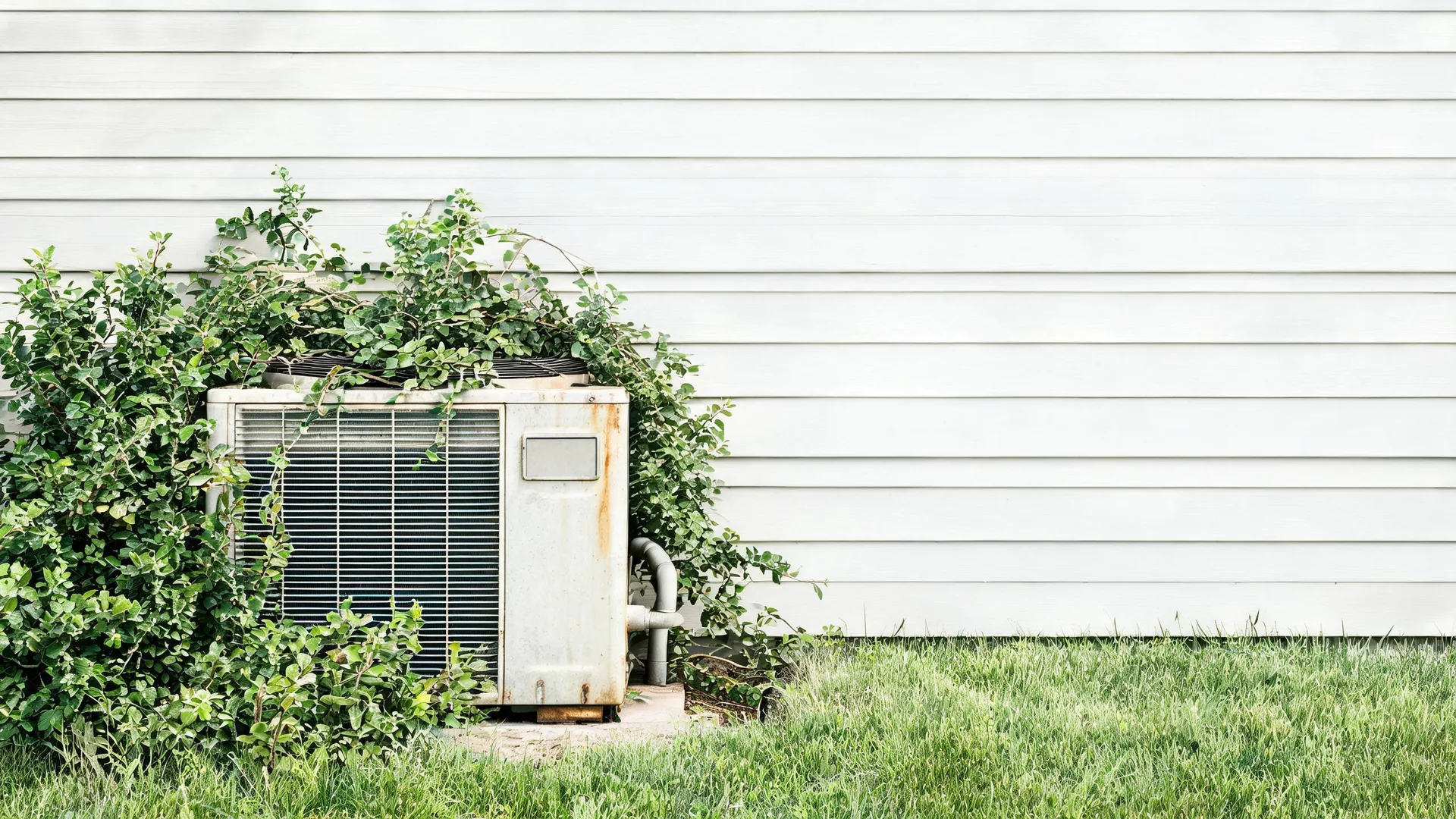
Some signs mean shut it off now

A breaker that trips once might be a fluke. A breaker that trips every time you restart the system is telling you something downstream is drawing too much current, and forcing it back on risks the compressor. Ice on the refrigerant line, a burning smell, or a grinding fan motor are the same kind of warning. Those aren't cues to wait and see if it clears up on its own. Shutting the system off and getting it looked at protects the parts that are still working.

Overhead view of an air conditioning condenser unit on a concrete pad next to a house with asphalt shingle roofing and vinyl siding.

A new air conditioner would save little on running costs in Will County, so the repair decision comes down to the unit's condition.

  • A new one at the federal minimum, 13.4 SEER2$220 a year
  • An older air conditioner$230 a year

Estimates for a typical Will County home, compared with an older unit built to the previous federal minimum, from EIA household energy data, Illinois fuel prices and NOAA climate normals. Your home will differ.

Repair makes sense when a part like a capacitor or contactor has failed.

Replacement makes sense when the compressor has failed or the system uses R-22 refrigerant, which is no longer made.

A repair makes sense when the part that failed is one part and the rest of the system is carrying its load the way it should. A capacitor, a contactor, a fan motor, a blower wheel, these get replaced on their own all the time and the system runs like nothing happened. Replacement starts to make more sense when the compressor is the thing failing, because that's the one part that doesn't get swapped out cheap or easy, and a system that's lost its compressor has lost the most expensive thing in the cabinet. Age matters less than what's actually broken. A unit that's been dependable for years and throws one bad part is a repair. A unit that's already had a few different parts fail in different years is telling you the whole system is wearing down at once, not that it had bad luck a few times. The question worth asking isn't how old the unit is, it's whether this failure is the first one or the latest one.