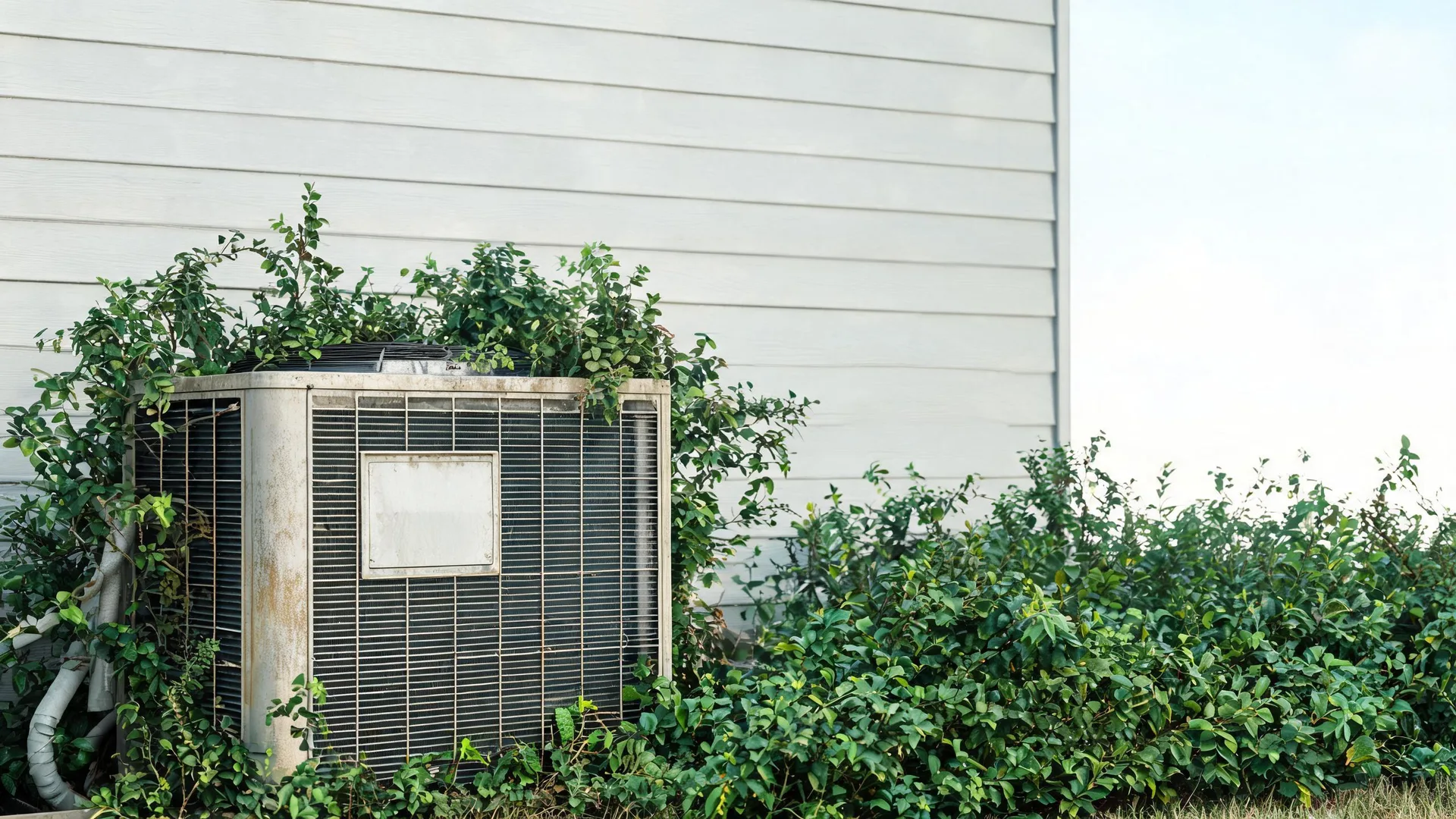
Aerial view of a residential air conditioning condenser unit mounted on a concrete pad next to a house with vinyl siding and a sliding glass door.

AC Repair in Kewanee, IL

Tell us about the job

Takes about a minute. No obligation.

RepairCentral ACHenry County, IL
Step 1 of 2

What ZIP code is the job in?

June is when weak parts fail

Cooling in Kewanee runs June through August. The first hot stretch in June puts load on a system that sat idle since last summer, and whatever was already weak, a capacitor, a contactor, a low charge, tends to give out right then.


May is the time to catch it first

If your AC struggled last August, that same part is still weak. Having it looked at in May means it gets fixed before the first real heat, not during it.

3 months
June through August, your air conditioner is on duty
83°F
the average summer afternoon it cools against
80 hail events
in ten years, and hail bends the fins on outdoor coils
103 wind events
in ten years, and wind drives debris into outdoor units
Isometric illustration of a cutaway house showing interior ductwork, an indoor air handler and furniture, connected by lines to an outdoor condenser unit on a pad.
Your air conditioner works hardest from June through August.

NOAA nClimDiv, 1991–2020 normals

A capacitor fails, a contactor pits and sticks, a fan motor seizes up. These are the parts that give out most often.

A dead capacitor and a failing compressor can look the same from the thermostat, both leave you with no cold air. One is a quick fix. The other is a much bigger job.

Half the homes here were built by 1961, and some AC units are original to the house

Half the homes here were built by 1961
Cooling runs June through August
Summer afternoons average 83°F
A bad part costs you every month it runsIllinois electricity ran 15.87 cents per kilowatthour in 2024, and a weak part makes the unit run longer to do the same job.

Henry County gets its share of rough weather, with damaging wind hitting 103 times and 80 hail events over the past decade. None of that is unusual for this part of Illinois, and none of it is what usually takes out an AC unit here. Wind and hail hit the roof and the house before they touch a condenser sitting low in the yard. When a system quits in Kewanee, it's almost always a part that wore out on its own, not storm damage. That changes what's worth checking first.

Before you fix it, find out how much life it has left

If your AC came with the house, ask about its age before paying for a repair. A capacitor or contactor is worth fixing on any unit. A compressor job is a different question if the system is old enough to be near the end anyway.

Find a contractor
A man in a dark long-sleeve shirt and work pants, seen from behind, climbs porch steps toward a teal door while carrying a worn canvas and leather tool bag, with a potted shrub beside the entry.
A gray metal air conditioning condenser unit mounted on a concrete pad in a flat grassy field under a partly cloudy sky.

What a tech actually checks

A diagnostic starts outside, at the condenser, before anyone touches the thermostat. The tech checks the capacitor first since it's the part most likely to fail and the quickest to test. From there it's the contactor, checking for pitting or a coil that won't pull in, then the fan motor to see if it spins freely or drags. Refrigerant pressure gets checked too, because a system low on charge will run long and cool poorly without ever tripping a breaker. Inside, the tech checks the air handler, the coil for ice or dirt, and airflow through the return. Most of this gets answered with gauges and a multimeter, not guesswork. By the time the panel goes back on, the failed part has a name.

A struggling compressor gets hotter the longer it runs

A compressor low on charge or starting on a weak capacitor draws more current than it should. That extra heat builds up in the windings with every cycle. Run it for a week like that and a repair can turn into a full replacement.

A frozen coil melts, then freezes again, each time doing damage

Low airflow or low charge lets the evaporator coil ice over. Shutting the system off lets the ice melt, but if the cause isn't fixed, it freezes right back up next cycle. Meltwater that should drain away can instead land on the coil, the pan, or the floor below it.

Overhead view of an air conditioning condenser unit on a concrete pad next to a house with asphalt shingle roofing and vinyl siding.

A new air conditioner would save little on running costs in Henry County, so the repair decision comes down to the unit's condition.

  • A new one at the federal minimum, 13.4 SEER2$220 a year
  • An older air conditioner$240 a year

Estimates for a typical Henry County home, compared with an older unit built to the previous federal minimum, from EIA household energy data, Illinois fuel prices and NOAA climate normals. Your home will differ.

Repair makes sense when a part like a capacitor or contactor has failed.

Replacement makes sense when the compressor has failed or the system uses R-22 refrigerant, which is no longer made.

Most of the time the AC tells you something is wrong before it quits outright. Warm air coming through the vents when the thermostat is set low usually points to a refrigerant leak or a compressor that isn't pulling its weight. A clicking sound at the outdoor unit when it tries to start is often a contactor or capacitor that can't get the compressor going. Short cycling, where it turns on and off every few minutes instead of running a full cycle, points to a different problem than a unit that runs constantly and still can't keep up. Water pooling near the indoor unit means a clogged drain line or a coil that iced over and melted. None of these mean the same thing, so what you notice first is usually the best clue to what's actually failing.