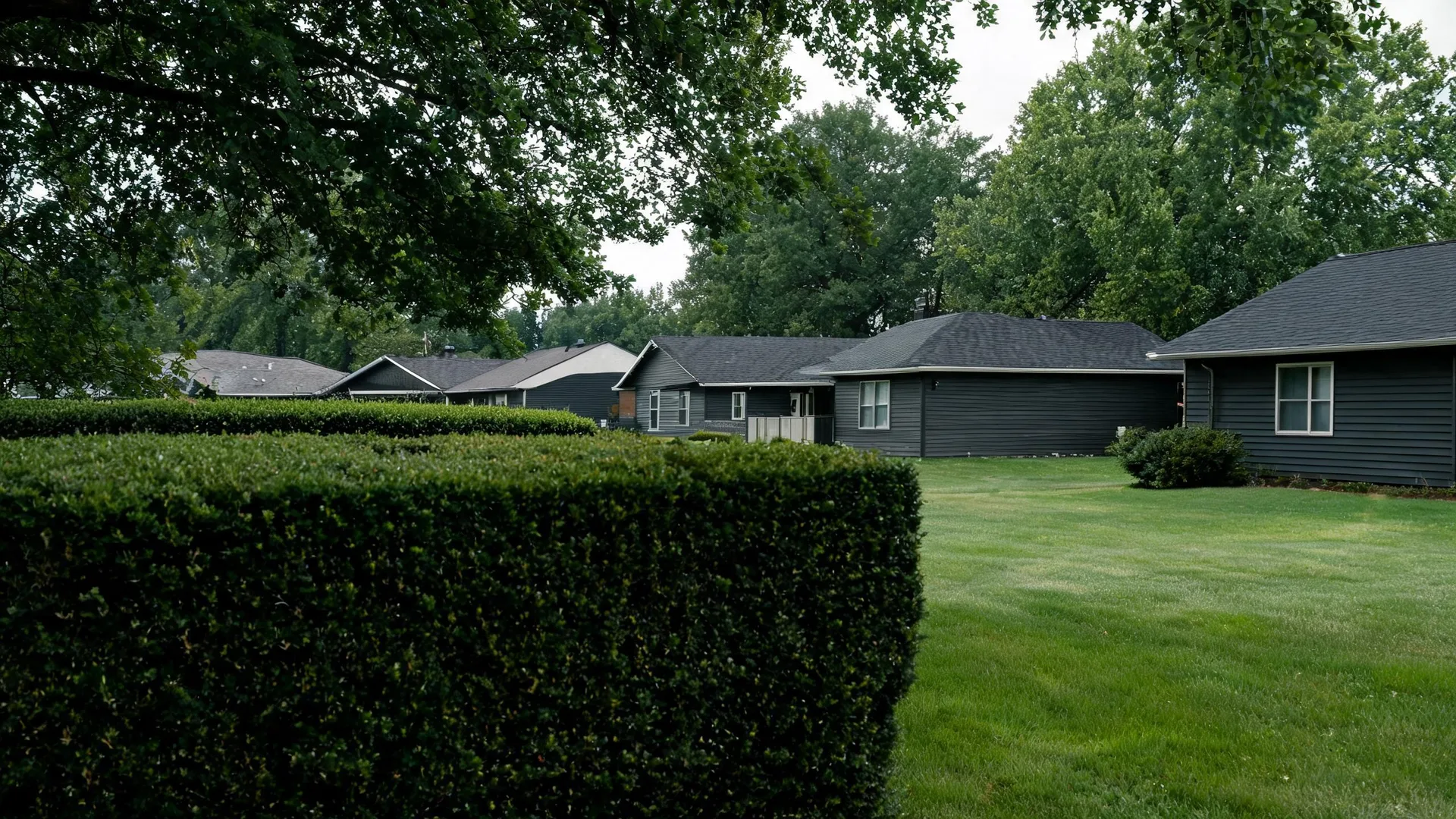







A trimmed hedge borders a mown lawn in front of single-story houses with dark siding and shingled roofs, surrounded by large leafy trees under an overcast sky.

AC Repair in Marion, IL

Tell us about the job

Takes about a minute. No obligation.

RepairCentral ACWilliamson County, IL
Step 1 of 2

What ZIP code is the job in?

April is the month to get a weak system looked at here. Cooling runs May through September in Williamson County, and the first warm stretch in May is when a system that was already struggling shows it. A capacitor that was marginal last September does not get better sitting idle all winter. Same with a low charge or a cracked contactor. Getting it checked before May means finding that weak part before it fails on the first hot day.

5 months
May through September, your air conditioner is on duty
87°F
the average summer afternoon it cools against
39 hail events
in ten years, and hail bends the fins on outdoor coils
88 wind events
in ten years, and wind drives debris into outdoor units
Isometric line illustration of a cutaway house showing interior rooms, ceiling ductwork connected to an indoor air handler, and an outdoor condenser unit linked by refrigerant lines.
Your air conditioner works hardest from June through August.

NOAA nClimDiv, 1991–2020 normals

A compressor straining against a low charge still runs, right up until the point it burns out the windings.

Shut it down when something sounds wrong, because a repair now beats a replacement later.

Half the homes in Williamson County are younger than that, so the AC in yours is probably worth fixing

Half the homes here were built by 1981
Cooling runs May through September
Summer afternoons average 87°F
Marion weather and your AC88 damaging wind events in Williamson County between 2015 and 2024, nothing out of the ordinary for this part of Illinois

Illinois runs 15.87 cents per kilowatthour, and a struggling AC does not use less power, it uses more. A low charge makes the compressor work harder for the same cooling. A dirty coil does the same. The unit runs longer to hit the same temperature, sometimes never gets there, and the meter keeps spinning either way. None of that shows up as a strange noise or a smell, just a bill that climbs for no reason you can see. A tech can find the part driving it up and fix that one thing instead of you paying for it all summer.

Get the real cause fixed, not replaced

If your AC came with the house, it's probably on the newer side for this county. That's a system worth repairing, not writing off. Have a tech track down the actual part causing trouble and fix that.

Find a contractor
A man seen from behind carrying a worn canvas tool bag walks up concrete steps toward a dark teal front door of a house with gray horizontal siding, beside a shrub in a blue ceramic pot.
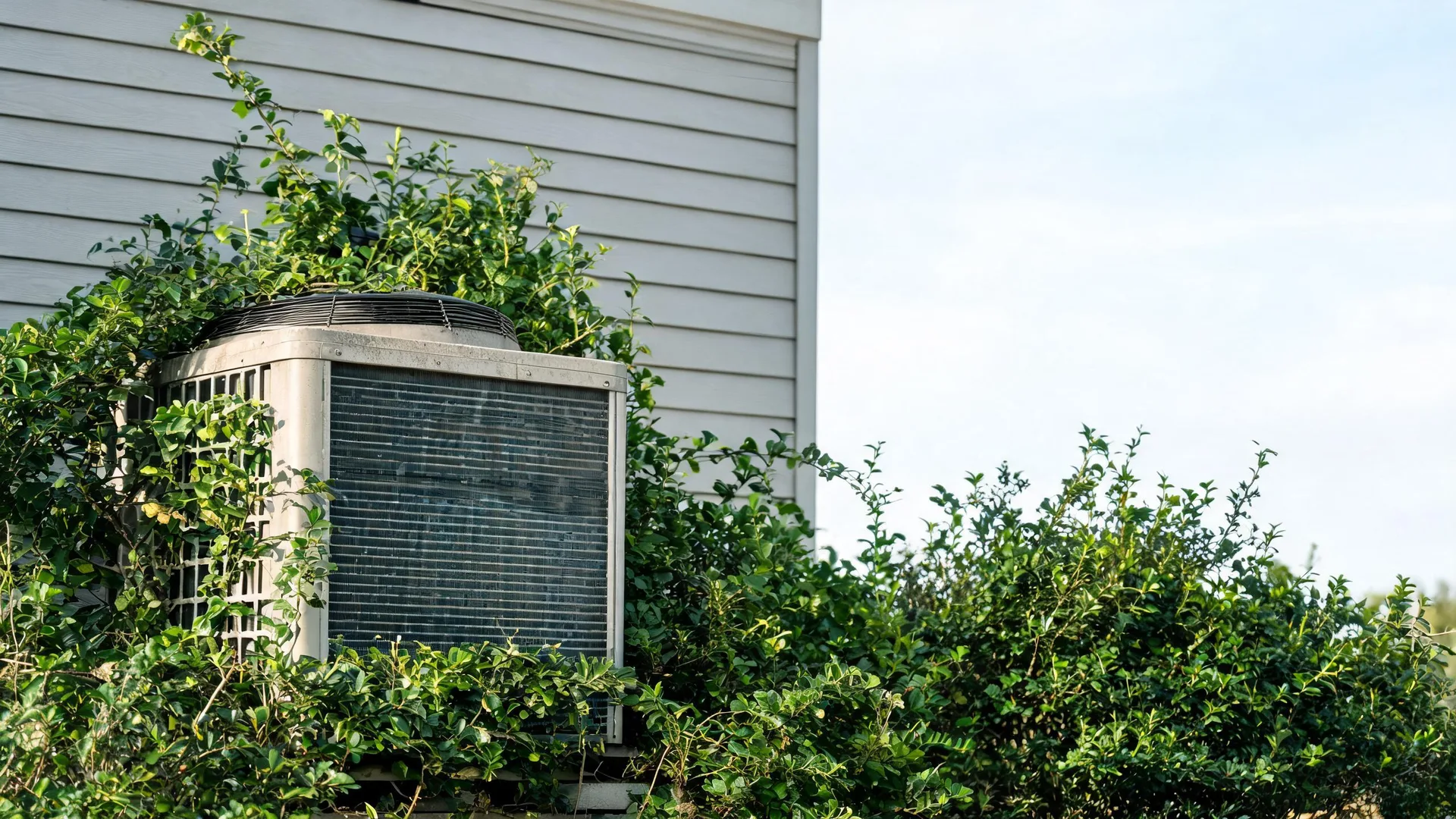
A gray metal air conditioning condenser unit mounted on a concrete pad in a flat grassy field under a partly cloudy sky.

What a failing AC sounds and feels like before it quits

Warm air from the vents is usually the first thing anyone notices, not a noise or a smell. The system runs, the blower pushes air, but the air is not as cold as it should be. Short cycling is another early sign. The unit kicks on, runs a few minutes, shuts off, then starts again before the house has cooled. That pattern wears on the compressor every time it restarts. Ice on the refrigerant line means something is already wrong. Either airflow across the indoor coil is blocked or the charge is low, and running it iced up only makes the damage worse. A capacitor on its way out sounds like a hum from the outdoor unit with the fan not turning, or a slow start where the fan spins up sluggish instead of catching right away. None of these fix themselves with time. They get worse one degree and one cycle at a time until the part that was struggling finally quits.

Check the filter first

A clogged filter starves the indoor coil of airflow, and a starved coil can ice over even on a hot day. Pull the filter and hold it up to a light. If you cannot see through it, that alone could be the whole problem. It takes a minute to check and it rules out the most common cause before anything else.

Check the thermostat and the breaker

Make sure the thermostat is set to cool and set below room temperature, not just on. Check the breaker for the outdoor unit and the indoor air handler, since a tripped breaker on either one will shut the whole system down. If the outdoor unit is not running at all, this is where to look before assuming the worst.

Overhead view of a gray residential air conditioning condenser unit mounted on a concrete pad beside a house with asphalt shingle roofing.

A new air conditioner would cut about $30 a year off cooling for a typical Williamson County home.

  • A new one at the federal minimum, 13.4 SEER2$330 a year
  • An older air conditioner$360 a year

Estimates for a typical Williamson County home, compared with an older unit built to the previous federal minimum, from EIA household energy data, Illinois fuel prices and NOAA climate normals. Your home will differ.

Repair makes sense when a part like a capacitor or contactor has failed.

Replacement makes sense when the compressor has failed or the system uses R-22 refrigerant, which is no longer made.

A tech weighing repair against replacement is really asking one question. Is the rest of the system still good, or is this part the first of several. A failed capacitor on a unit that has otherwise run fine is an easy call, swap it and move on. A compressor failing on a unit that has already needed a few repairs is a different conversation, because the compressor is most of what the unit is worth. Age matters less than condition. A unit that has been maintained, with clean coils and a charge that gets checked, holds up longer than one that has not, regardless of how long it has been running. The honest version of this conversation looks at what just broke, what else is showing wear, and whether another repair is likely to follow soon after. If the answer is probably not, fix the part in front of you.