






A nighttime view of a tree-lined residential street with illuminated two-story brick houses and street lamps.

AC Repair in Mount Vernon, IL

Tell us about the job

Takes about a minute. No obligation.

RepairCentral ACJefferson County, IL
Step 1 of 2

What ZIP code is the job in?

Summers here run May through September, with afternoon highs averaging 86 in June, July and August. That's a normal stretch for an air conditioner to work through, not an extreme one. Your AC isn't fighting anything unusual in Mount Vernon, so when it breaks down it's usually a straightforward cause. A weak capacitor, a dirty coil, a low charge, a clogged filter choking airflow. Wind is the one thing worth a second look, since damaging wind has hit the area 71 times over the past decade, enough to knock an outdoor unit out of alignment or loosen a connection. Either way, the fix is usually about finding which common problem you've got, not dealing with something rare.

5 months
May through September, your air conditioner is on duty
86°F
the average summer afternoon it cools against
15 hail events
in ten years, and hail bends the fins on outdoor coils
71 wind events
in ten years, and wind drives debris into outdoor units
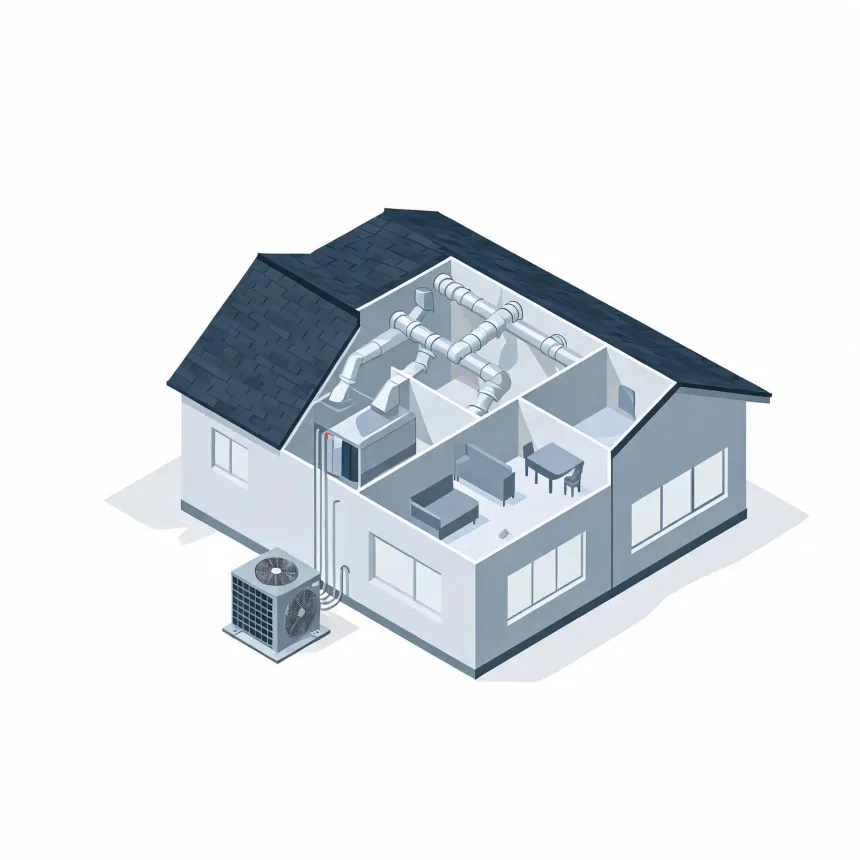
Isometric illustration of a cutaway single-story house showing attic ductwork, an indoor air handler, interior rooms with furniture, and an outdoor condenser unit connected by lines, on a white background.
Your air conditioner works hardest from June through August.

NOAA nClimDiv, 1991–2020 normals

AC runs May through September in Jefferson County.

April is the month to get a weak unit looked at, before that first hot stretch finds the problem.

A struggling AC runs up a 15.87 cent bill every hour it's working against the problem

Power costs 15.87 cents a kWh statewide
Climate zone 4A
Cooling runs May through September
Your home's age isn't the problemHalf the homes here were built in 1977 or earlier, half since. Neither age points to anything unusual.

A capacitor on its way out or a coil caked with dirt makes the compressor work harder for the same cooling. That extra draw shows up on the meter at 15.87 cents a kilowatt-hour, every hour the unit runs, which in Mount Vernon come summer is most of the day. Letting it ride until the problem gets worse just means paying more for less cool air in the meantime. A technician can usually spot the cause in one visit and get the unit back to pulling its normal load.

Get the usual fix

Nothing about this area is especially hard on it. It's most likely the usual problem with the usual fix.

Find a contractor
A man in a cap, navy long-sleeved shirt and tan work pants carries a worn canvas tool bag up porch steps toward a teal front door, with a potted shrub beside the entry.
A gray metal air conditioning condenser unit mounted on a concrete pad in a flat grassy field under a partly cloudy sky.

Keep running it and the small problem becomes the big one

A capacitor that's starting to go won't just quit. It keeps pushing the compressor through a harder start every cycle, and each hard start wears it down further. A low charge works the same way. The compressor runs hotter trying to make up for the missing refrigerant, and heat is what shortens a compressor's life. A dirty coil makes the system move less heat per cycle, so it runs longer to reach the same temperature, and that extra runtime is what turns a worn part into a failed compressor. None of this gets better by letting the unit keep running. The part doesn't recover on its own. It just takes more cycles of strain before someone looks at it.

What you'll notice first

The air from the vents feels warm or barely cool, or a room that used to cool down fast now takes a lot longer. Some units start cycling on and off in short bursts instead of running a steady stretch. Others make a new sound. A hum when the outdoor fan tries to start. A click that repeats without the compressor kicking in. A rattle that wasn't there before. Any of these means something inside is already struggling, not about to struggle.

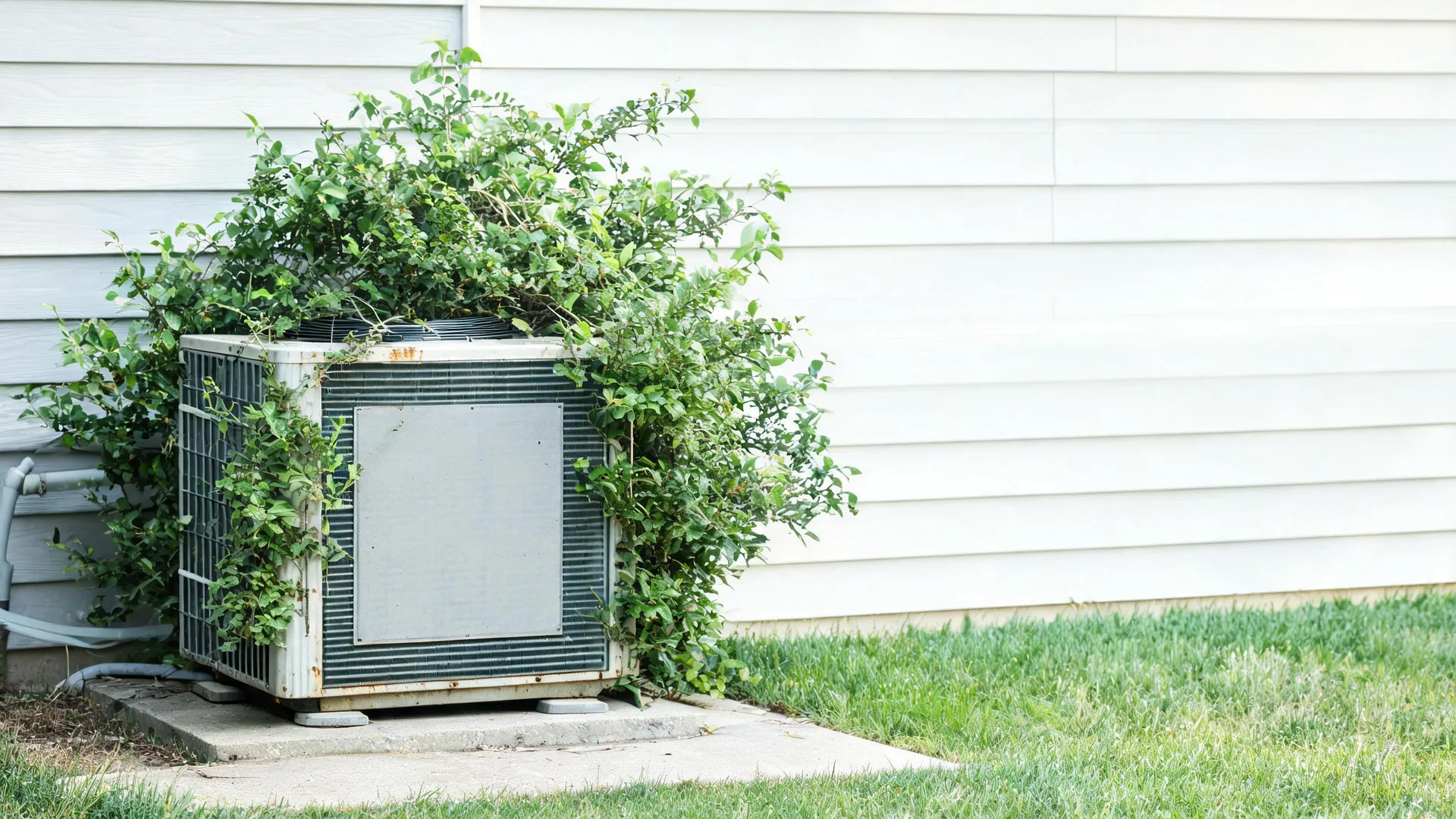
When it's worth a same-day call

Water pooling near the indoor unit, a breaker that trips more than once, or a burning smell from the vents are not wait-and-see signs. Those point to a clogged drain line, an electrical fault, or a motor under strain, and running the system in that state risks turning a repair into a replacement. A unit that's just cooling poorly can usually wait for a scheduled visit. A unit doing any of these things can't.

An outdoor air conditioning condenser unit positioned beside a blue-sided house at sunset.

A new air conditioner would save little on running costs in Jefferson County, so the repair decision comes down to the unit's condition.

  • A new one at the federal minimum, 13.4 SEER2$320 a year
  • An older air conditioner$340 a year

Estimates for a typical Jefferson County home, compared with an older unit built to the previous federal minimum, from EIA household energy data, Illinois fuel prices and NOAA climate normals. Your home will differ.

Repair makes sense when a part like a capacitor or contactor has failed.

Replacement makes sense when the compressor has failed or the system uses R-22 refrigerant, which is no longer made.

Most of the time a failing AC is a repair, not a replacement. A capacitor, a contactor, a low charge, a blower motor, these get fixed on their own and the unit runs like it used to. What changes the math is age combined with the failure. A compressor going out on an older unit is a different conversation than a capacitor going out on one that still has years left, because the compressor is most of what the unit is worth. Refrigerant type matters too. Older systems use a refrigerant that's being phased out, and if yours needs a recharge, that refrigerant is harder to find and costs more than the kind newer systems use. A technician looking at the unit can tell you which situation you're in. If they're recommending replacement, ask what failed and why that failure changes the answer. A straight answer names the part and explains the cost of replacing it, not just a general sense that the unit is old.