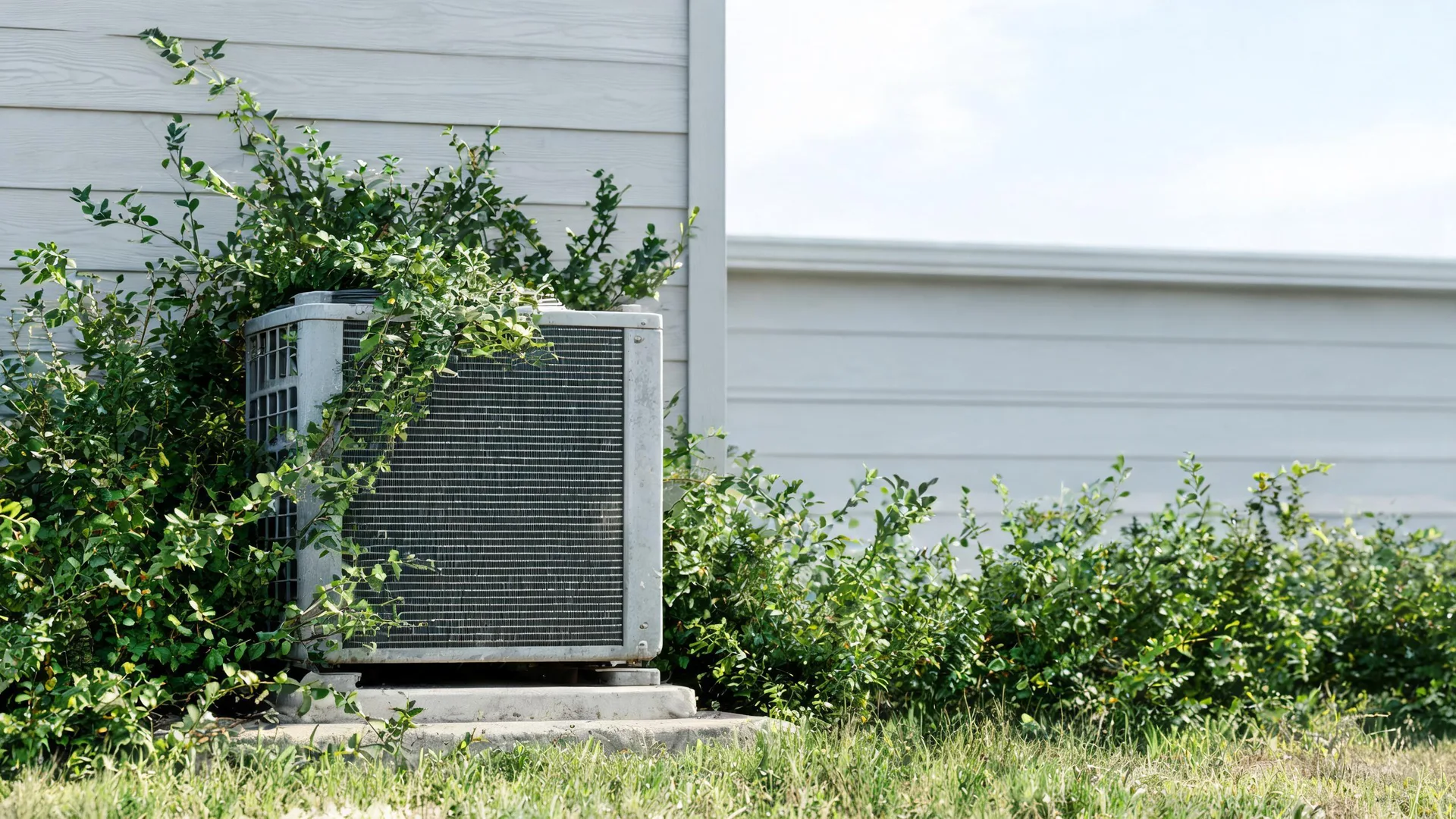
An outdoor air conditioning condenser unit on a concrete pad next to the gray vinyl siding of a residential home.

AC Repair in Peoria, IL

Tell us about the job

Takes about a minute. No obligation.

RepairCentral ACPeoria County, IL
Step 1 of 2

What ZIP code is the job in?

Warm air or short cycling means something's wrong now

An AC blowing air that isn't cold, or one that shuts off and restarts every few minutes, has a problem that won't fix itself. A failing capacitor, a low refrigerant charge, or a dirty condenser coil can all cause this, and each one gets worse the longer it runs that way.


A noisy or leaking unit needs a look before it quits

Grinding or squealing from the outdoor unit usually means a motor bearing is going out. Water pooling near the indoor unit points to a clogged condensate line. Neither stops the system right away, but both lead to a breakdown if nobody checks them.

4 months
June through September, your air conditioner is on duty
84°F
the average summer afternoon it cools against
106 hail events
in ten years, and hail bends the fins on outdoor coils
147 wind events
in ten years, and wind drives debris into outdoor units
Isometric line illustration of a cutaway house showing interior rooms with furniture, ceiling ductwork, an indoor air handler, and an outdoor condenser unit connected by lines.
Your air conditioner works hardest from June through August.

NOAA nClimDiv, 1991–2020 normals

An aging compressor is the one part that usually decides the question for you.

If the compressor is failing, repair costs stack up fast and replacement starts making more sense.

Half the homes in Peoria were built by 1966, and the AC inside them is aging too

Half the homes here were built by 1966
Cooling runs June through September
Summer afternoons average 84°F
Cooling starts in June hereMay is the month to get a weak AC looked at, before the first hot week finds the part that was already failing.

Electricity in Illinois ran 15.87 cents per kilowatt-hour in 2024, and a struggling AC uses more of it than a healthy one. A low refrigerant charge makes the compressor run longer to get the same cooling. A dirty condenser coil does the same thing, because the system can't shed heat as fast as it should. Either way, you're paying for the extra runtime whether or not the house actually gets cooler. The longer a problem like that sits, the more it costs you before it ever gets fixed.

If this storm season got to your AC, don't wait for it to fail

Peoria County logged 280 severe weather events over the past decade, including 147 damaging wind events and 106 hail events. Hail dents coils and fan blades. Wind throws debris into the outdoor unit. A system that survived a storm can still be running on a damaged coil or a bent fan, and it won't announce that until it quits. Have it checked if it took a hit, even if it still blows cold.

Find a contractor
A gray residential air conditioner condenser unit mounted on a concrete pad in an open grass field.

How old is the unit outside your window

A system that's been running since the house was new has put in a lot of hours by now. If yours is one of them, ask the tech how much life is left in it before you agree to a repair. Have them look at the compressor specifically. That's the part that tells you whether you're buying time or buying trouble.

Check the simple things first

Check that the thermostat is set to cool and set below room temperature, and swap the batteries if it uses them. Look at the breaker panel for a tripped breaker on the AC circuit. Pull the air filter and hold it up to a light. If you can't see light through it, that alone can starve the system of airflow and cause warm air or icing.

Look at the outdoor unit before anyone comes out

Walk outside and look at the condenser. Clear away leaves, grass clippings or anything piled against it, and check that the fan on top isn't bent or jammed. If you see ice on the refrigerant lines, shut the system off at the thermostat and let it thaw instead of running it, since running it iced up can damage the compressor.

An outdoor central air conditioning unit mounted on a concrete pad beside a blue-sided house at sunset.

A new air conditioner would save little on running costs in Peoria County, so the repair decision comes down to the unit's condition.

  • A new one at the federal minimum, 13.4 SEER2$250 a year
  • An older air conditioner$270 a year

Estimates for a typical Peoria County home, compared with an older unit built to the previous federal minimum, from EIA household energy data, Illinois fuel prices and NOAA climate normals. Your home will differ.

Repair makes sense when a part like a capacitor or contactor has failed.

Replacement makes sense when the compressor has failed or the system uses R-22 refrigerant, which is no longer made.

A diagnostic visit starts with what the system is doing right now, not with a panel coming off. The tech checks what the thermostat is calling for against what's actually coming out of the vents. Gauges go on the refrigerant lines to see whether the charge is low and whether the compressor is pulling the way it should. An amp reading on the compressor and fan motor can catch a part that's drawing more than it should before it fails outright. The capacitor gets checked too, since a weak one will still start the system most days right up until it doesn't. Airflow matters as much as refrigerant does. A coil that's icing or a house that won't cool evenly can trace back to a blocked filter or a duct problem rather than the unit itself. By the end you should know which part is failing and why, not just that something is wrong.