





Aerial view of a gray central air conditioning condenser unit on a concrete pad next to a house with vinyl siding.

AC Repair in Pontiac, IL

Tell us about the job

Takes about a minute. No obligation.

RepairCentral ACLivingston County, IL
Step 1 of 2

What ZIP code is the job in?

Pontiac summers run about three months, June through August, with afternoon highs averaging 83. That's a normal cooling load. It doesn't push a system any harder than it's built for. So when an AC quits or runs weak here, it's usually one of the usual causes. A weak capacitor. A low refrigerant charge. A dirty coil or a clogged filter choking airflow. The fix is finding which one it actually is instead of guessing. A straight diagnosis gets you to the real problem faster than swapping parts hoping one of them was it.

3 months
June through August, your air conditioner is on duty
83°F
the average summer afternoon it cools against
20 hail events
in ten years, and hail bends the fins on outdoor coils
62 wind events
in ten years, and wind drives debris into outdoor units
Isometric 3D cutaway render of a house with dark siding showing interior rooms, ductwork and an air handler, connected by lines to an outdoor condenser unit on a white background.
Your air conditioner works hardest from June through August.

NOAA nClimDiv, 1991–2020 normals

A capacitor weak enough to struggle still lets the compressor start, so the system looks like it's working.

Every cycle it starts on a weak capacitor pulls harder on the compressor, and that's the part replacing it is meant to protect.

At 15.87 cents a kWh, a struggling AC runs up your bill every summer

Power costs 15.87 cents a kWh statewide
Cooling runs June through August
Summer afternoons average 83°F

Half the homes in Livingston County were built in 1961 or earlier. If your AC came with a house that old, it's had a long run already. Older systems don't fail because of anything the county did to them. They fail because parts wear out on a schedule, and a compressor or coil from decades back is a lot closer to that schedule than one installed five years ago. A repair can still be the right call. But it's worth asking the contractor how much life is likely left in the unit before you put money into it.

A weak AC costs you every day it runs like this

A capacitor or low charge won't fix itself, and every week it runs weak at 15.87 cents a kWh adds to the bill. Get the diagnosis now, while it's one bad part instead of a compressor that's had enough.

Find a contractor
A gray residential air conditioner condenser unit mounted on a concrete pad in an open grass field.

Check the data plate before you decide

The data plate on the cabinet has the install date or the manufacture date on it. That's worth a look before the contractor leaves, especially if the unit came with the house. A unit with a few years left is worth repairing without a second thought. One already near where compressors and coils tend to give out is worth knowing about before you spend on it.

What you'll notice first

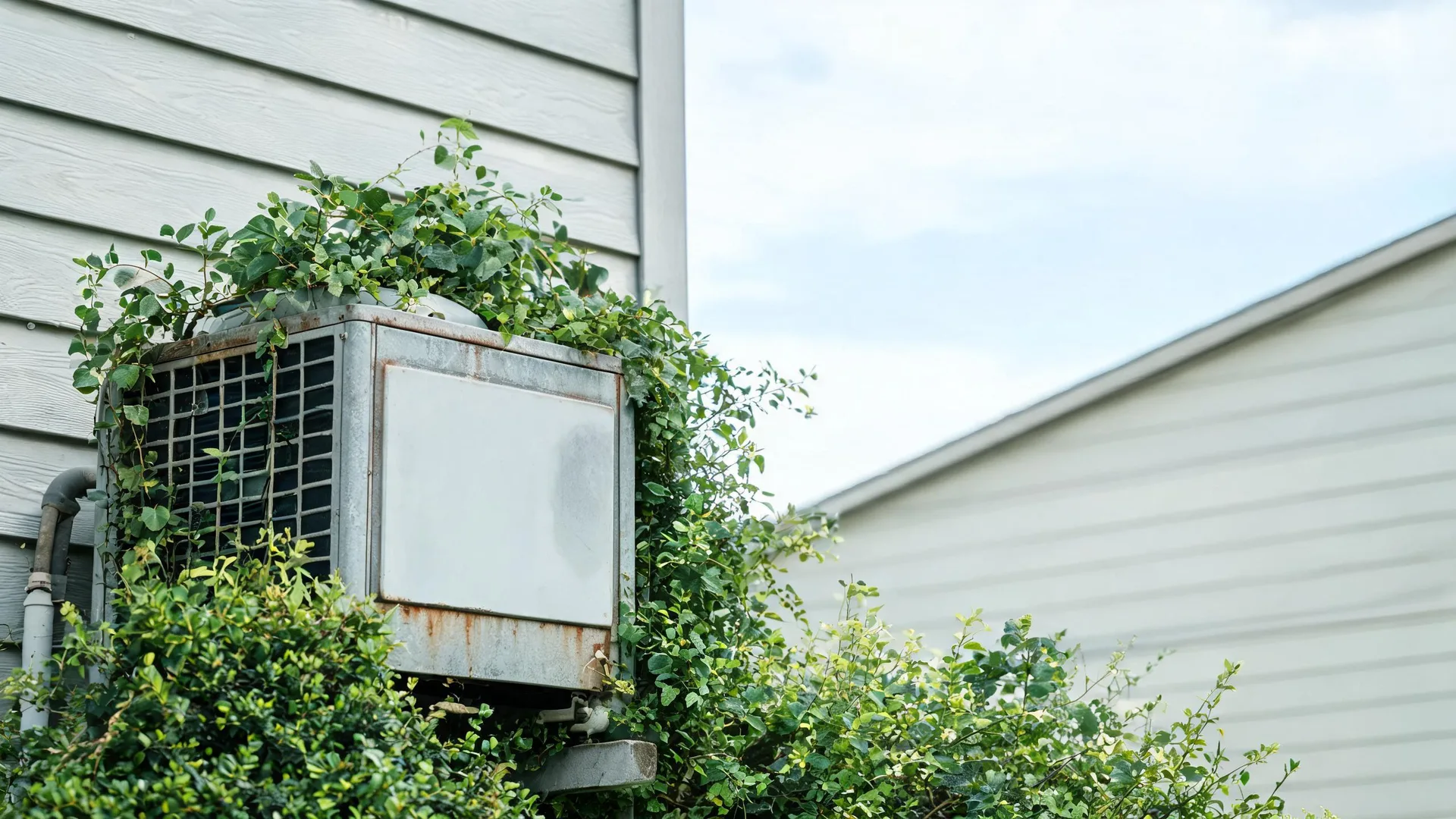
The air coming out feels warm or barely moving. The system cycles on and off faster than it used to, or it runs without the house ever catching up. Sometimes there's a smell when it kicks on, or a new noise, a click that repeats, a hum that wasn't there before. These signs show up before anyone pulls a cover off.

Why it's worth a call now

A weak capacitor keeps weakening. It doesn't recover on its own. A coil losing airflow to dust stays dirty until someone cleans it, and a refrigerant leak doesn't seal itself back up. Left alone, the compressor ends up working harder to do the same job, and that's the part nobody wants to replace.

An outdoor air conditioning condenser unit on a concrete pad next to the gray vinyl siding of a residential home.

A new air conditioner would save little on running costs in Livingston County, so the repair decision comes down to the unit's condition.

  • A new one at the federal minimum, 13.4 SEER2$230 a year
  • An older air conditioner$250 a year

Estimates for a typical Livingston County home, compared with an older unit built to the previous federal minimum, from EIA household energy data, Illinois fuel prices and NOAA climate normals. Your home will differ.

Repair makes sense when a part like a capacitor or contactor has failed.

Replacement makes sense when the compressor has failed or the system uses R-22 refrigerant, which is no longer made.

A diagnostic visit starts outside, at the condenser, checking that the fan spins freely and the coil isn't caked in dirt or grass clippings. From there it's a set of readings. The capacitor gets tested under load, since a weak one can still show voltage sitting still and only fail once it has to do work. Refrigerant pressures get checked against what the system is supposed to run at, not just whether gas is present. Inside, the filter and the indoor coil get a look too, since restricted airflow can mimic a refrigerant problem and send someone chasing the wrong fix. Electrical connections get checked for corrosion or a loose spot, because a connection heating up under load will eventually fail there and nowhere else. Going through it in order matters because a few of these causes can look identical from the thermostat, and only the readings tell them apart.