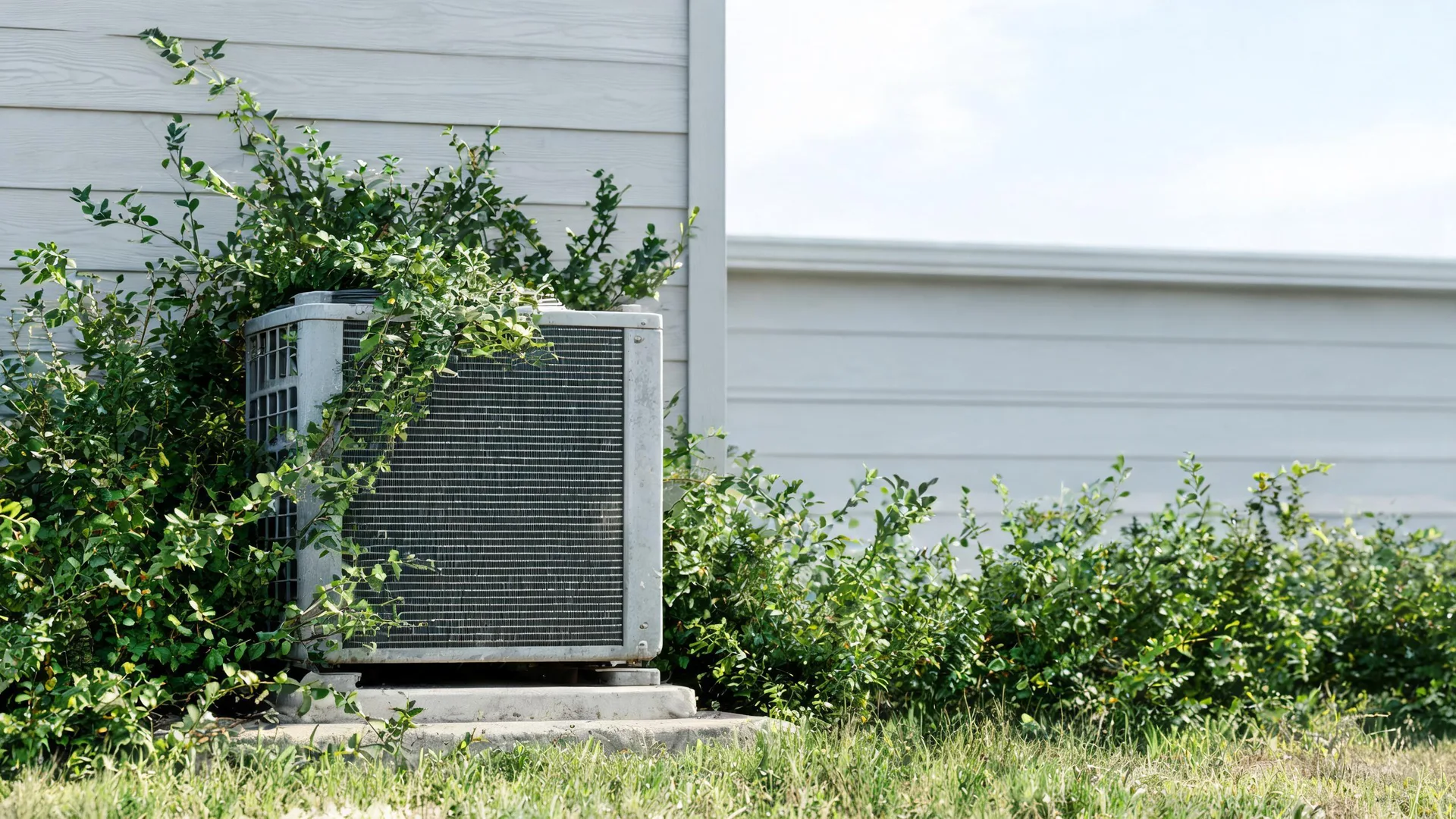
Aerial view of a gray central air conditioning condenser unit on a concrete pad next to a house with vinyl siding.

AC Repair in Princeton, IL

Tell us about the job

Takes about a minute. No obligation.

RepairCentral ACBureau County, IL
Step 1 of 2

What ZIP code is the job in?

Three months of real work

AC units in Princeton run from June through August, with afternoon highs averaging 83°F. That is a normal cooling load, not a punishing one. A unit struggling after a summer like that is usually dealing with a worn part, not a climate problem.

So look for the usual cause

When a system acts up here, the fix is almost always something a tech sees all the time. A weak capacitor. A low charge. A clogged filter choking airflow. Find which one it is and the repair is straightforward.

3 months
June through August, your air conditioner is on duty
83°F
the average summer afternoon it cools against
46 hail events
in ten years, and hail bends the fins on outdoor coils
72 wind events
in ten years, and wind drives debris into outdoor units
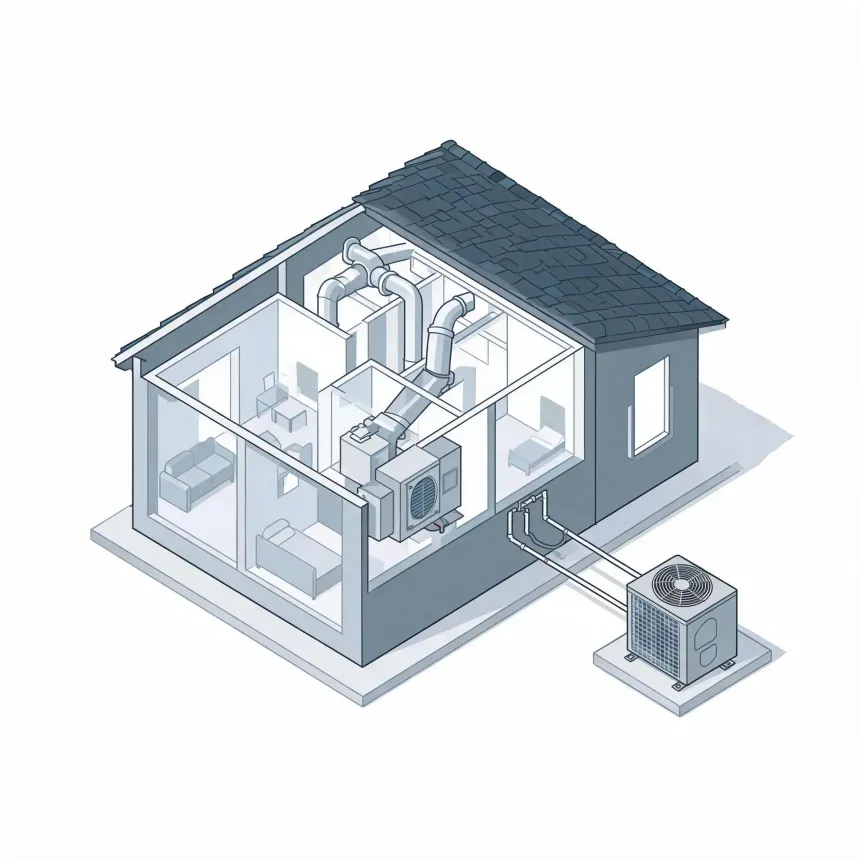
Isometric cutaway illustration of a small house showing interior rooms with furniture, an indoor air handler with ducts in the attic space, and refrigerant lines running to an outdoor condenser unit on a pad.
Your air conditioner works hardest from June through August.

NOAA nClimDiv, 1991–2020 normals

June is when AC units in Princeton go back to work after sitting most of the year.

A weak part that made it through last August can give out in the first hot week of June.

Half the homes here were built by 1958, old enough that the AC is not original

Half the homes here were built by 1958
Cooling runs June through August
Summer afternoons average 83°F
Electricity here runs 15.87 cents a kilowatt-hourA struggling AC burns more of it every day you wait.

An AC unit rarely fails all at once. Most of the time a part wears down, works harder to cover for it, and finally gives out. That is why age matters more than any single symptom when you are deciding whether to repair or replace. A compressor or coil near the end of its life can be patched this time, but the next failure is already waiting behind it. If the repair is minor and the rest of the system is sound, fixing it is the right call. If a tech finds the same unit needs a second major part inside of a year, that pattern is telling you something the first repair couldn't.

A struggling AC costs more here every month it keeps running that way

A bad capacitor or a low charge makes the compressor work harder to do the same job, and at 15.87 cents a kilowatt-hour that extra draw shows up on the bill every month it runs. Fixing the part stops the waste along with the noise.

Find a contractor
A man in a cap, dark blue work shirt and brown pants climbs porch steps toward a teal front door, carrying a canvas tool bag with tools in its side pockets, beside a potted shrub.
A gray residential air conditioner condenser unit mounted on a concrete pad in an open grass field.

Worth asking before you pay for the repair

A tech who finds a system that came with the house isn't just fixing today's part. Ask what else in the unit is close behind it. That answer, more than the repair itself, is what should decide whether this is worth doing again next year.

What the sound tells you

A click that repeats without the compressor starting usually points to a failing capacitor. A hard rattle means something loose is hitting the fan blade or the cabinet. Hissing near the indoor unit can mean a refrigerant leak. Each sound points somewhere different, so tell the tech exactly what you're hearing and when it happens.

Warm air doesn't always mean dead compressor

If air is blowing but it's not cold, check the filter first. A clogged filter starves the coil of airflow and can freeze it solid, and a frozen coil will push warm air until it thaws. Only after the filter and the coil are clear does warm air point to a low charge or a failing compressor.

An outdoor air conditioning condenser unit on a concrete pad next to the gray vinyl siding of a residential home.

A new air conditioner would save little on running costs in Bureau County, so the repair decision comes down to the unit's condition.

  • A new one at the federal minimum, 13.4 SEER2$210 a year
  • An older air conditioner$230 a year

Estimates for a typical Bureau County home, compared with an older unit built to the previous federal minimum, from EIA household energy data, Illinois fuel prices and NOAA climate normals. Your home will differ.

Repair makes sense when a part like a capacitor or contactor has failed.

Replacement makes sense when the compressor has failed or the system uses R-22 refrigerant, which is no longer made.

A diagnostic visit starts before any panel comes off. A tech asks what the system is doing, when it started, and whether anything changed right before it did. Then comes the gauges and the meter. Refrigerant pressure gets checked, the capacitor gets tested, and the amp draw on the compressor and fan motor gets read. Airflow gets checked at the filter, the coil and the vents, since a problem at one spot can look like a problem somewhere else. Electrical connections get checked too, since a loose or corroded one can mimic a failing part. By the end the tech isn't guessing which part is bad. They've ruled out everything else.