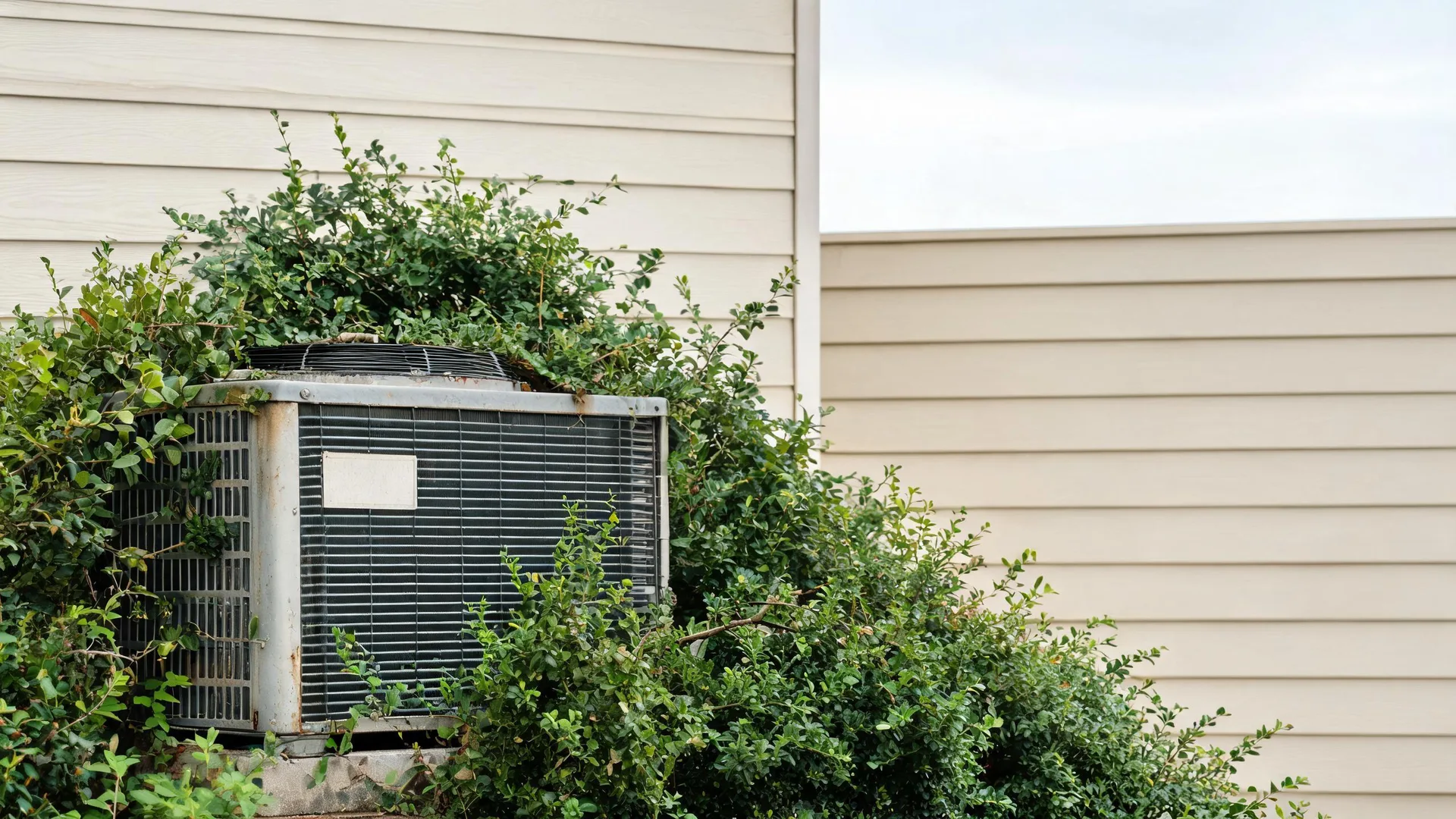
June is when weak parts fail
Cooling in Adams County starts in June after sitting idle since May. A capacitor or contactor that was already marginal often doesn't make it through the first real stretch of heat.
Takes about a minute. No obligation.
Cooling in Adams County starts in June after sitting idle since May. A capacitor or contactor that was already marginal often doesn't make it through the first real stretch of heat.
A system that struggles in the first weeks of June usually has the same problem through September. Having it diagnosed now means it gets fixed once instead of limping through a four-month season.
NOAA nClimDiv, 1991–2020 normals
A capacitor weakens slowly over years before it finally gives out.
The compressor is what shows the strain first, once it has to work hard against real heat.




Adams County doesn't put any unusual strain on an AC system. Summers here run about four months, June through September, with afternoon highs averaging 85. That's a normal cooling load, not a heavy one. Hail is worth knowing about, since the county sees it often enough that a dented coil or bent fins can be the reason behind a sudden airflow problem. Outside of that kind of damage, a system acting up here is almost always wearing out the way any AC does, not fighting the climate.
If your AC came with the house, get a real diagnosis before you decide anything. A tech can tell you whether this is a capacitor or contactor doing what parts do after years of running, or the compressor itself giving out. That answer is what tells you whether to repair it or start pricing a replacement.
Find a contractor
A system that's running fine doesn't get looked at, so the first sign of trouble is usually the one the homeowner notices directly. Warm air coming from the vents when the thermostat is set low. The unit short cycling, turning off and on every few minutes instead of running a full cycle. A hum at the outdoor unit when it should be running but the fan isn't turning. Ice on the refrigerant line or the indoor coil, which means airflow or refrigerant is off even though the symptom looks like the opposite problem. A sound that wasn't there before, a rattle, a squeal, a hard clunk when it starts. None of these fix themselves. A system making noise or icing up and left alone usually ends up costing more to fix than it would have at the first sign, because the part under strain keeps straining until something around it gives out too.
A system low on charge still runs, but the compressor pulls harder to make up for it. Keep running it that way and the compressor is what pays for it, not the leak.
Weak airflow across the indoor coil lets it get too cold and ice over. Once it's iced, even less air gets through, so the ice builds faster. Left running, it can push liquid refrigerant back to the compressor, which isn't built to handle it.
Estimates for a typical Adams County home, compared with an older unit built to the previous federal minimum, from EIA household energy data, Illinois fuel prices and NOAA climate normals. Your home will differ.
Repair makes sense when a part like a capacitor or contactor has failed.
Replacement makes sense when the compressor has failed or the system uses R-22 refrigerant, which is no longer made.
A diagnostic visit starts with the complaint, not the unit. The tech wants to know what the system is doing, when it started, and whether it's constant or only under certain conditions. From there it's gauges and a meter. Refrigerant pressure, the capacitor's output, the amp draw on the compressor, the temperature split between the air going in and the air coming out of the vents. Each reading rules something out or points at something specific. A low pressure reading means a leak somewhere in the line, not a guess about one. A weak capacitor shows up as a number below what it's rated for, plain on the meter. The tech isn't replacing parts to see what helps. They're reading what the system tells them and fixing what the readings point to.