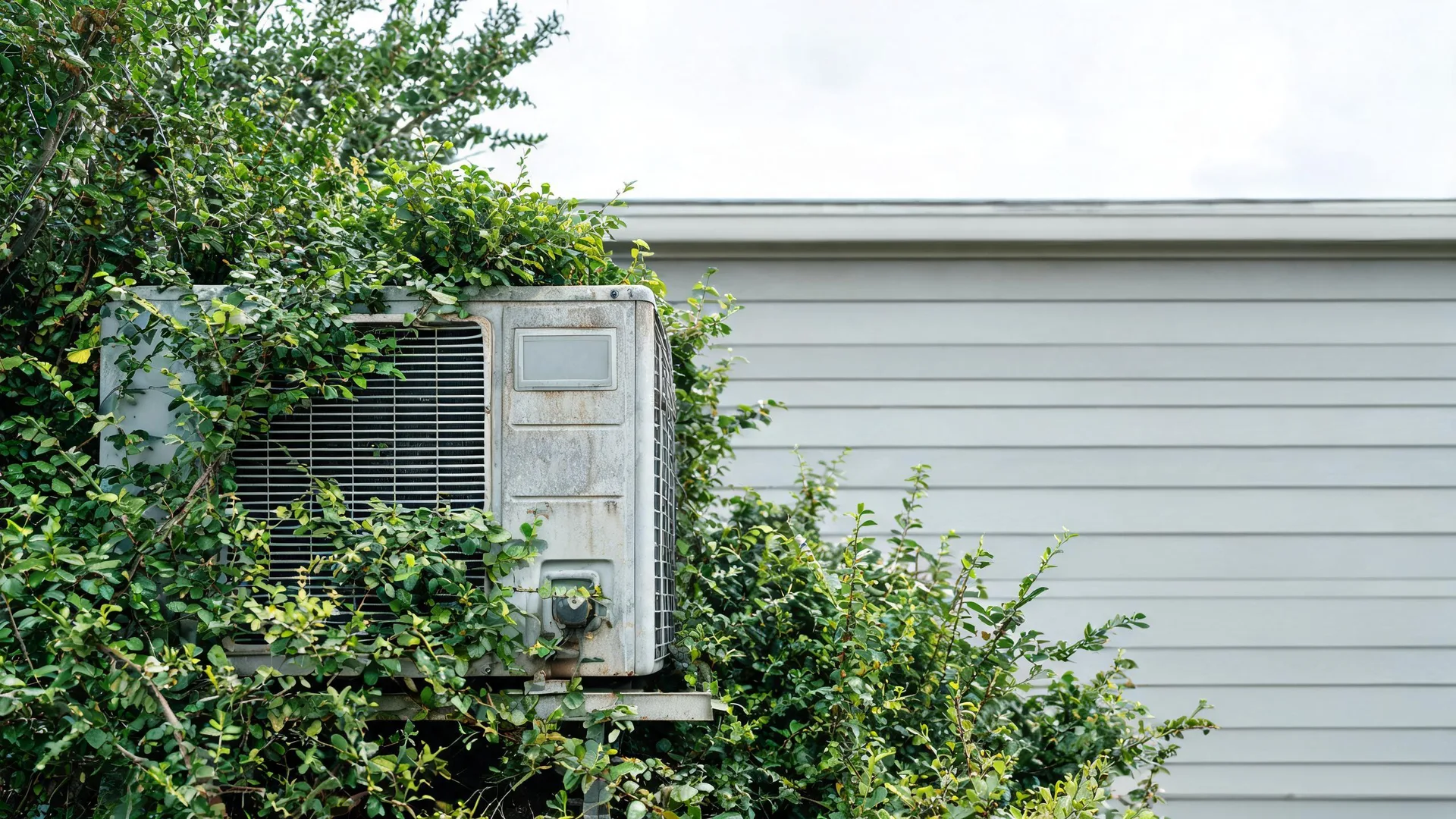
An outdoor air conditioning condenser unit positioned beside a blue-sided house at sunset.

AC Repair in Rochelle, IL

Tell us about the job

Takes about a minute. No obligation.

RepairCentral ACOgle County, IL
Step 1 of 2

What ZIP code is the job in?

Three months of real work

Air conditioners in Rochelle run from June through August, with afternoon highs averaging 82°F. That is a short season compared to a lot of the country, and it means your system spends most of the year resting, not straining.


A broken AC is usually fixable

A unit that only works hard for a quarter of the year tends to hold up well, so when yours breaks down the cause is more likely a worn part or something that got missed, not a system run into the ground. That makes a repair worth looking into before anyone talks about replacing it.

3 months
June through August, your air conditioner is on duty
82°F
the average summer afternoon it cools against
18 hail events
in ten years, and hail bends the fins on outdoor coils
76 wind events
in ten years, and wind drives debris into outdoor units
Isometric cutaway illustration of a single-story house with a dark shingled roof, showing interior rooms with ductwork and an indoor air handler connected to an outdoor condenser unit beside the building.
Your air conditioner works hardest from June through August.

NOAA nClimDiv, 1991–2020 normals

AC runs here from June through August.

May is when a weak capacitor or low charge still holds, right up until that first hot week asks more of it.

A normal summer load, so a broken AC points to one bad part

Power costs 15.87 cents a kWh statewide
Climate zone 5A
Cooling runs June through August

Half the homes in Ogle County were built in 1972 or earlier. If yours is one of them, the age of the house doesn't tell you the age of the AC, since units get swapped out long before a home does. But if your system did come with the house, or you know it's old, that's worth factoring in alongside whatever the tech finds. A light season like this one doesn't wear a unit out, so an old system can still be running on its original parts. Ask how much life is left in it before you decide whether this repair is the right move.

The weather here isn't why your AC quit

Ogle County has seen 76 damaging wind events and 18 hail events over the past ten years. Both hit the outside of a house, the roof and siding, not what's inside the AC unit. A capacitor or a refrigerant charge doesn't know the difference between a calm summer and a stormy one. So if your AC quit, the weather almost certainly isn't why. Something inside the system failed, and that's what a tech needs to find.

Find a contractor
A man in a navy cap and jacket, tan work pants and boots, seen from behind carrying a worn canvas tool bag as he climbs porch steps toward a dark teal front door.
A gray residential air conditioning condenser unit mounted on a concrete pad outdoors, surrounded by green grass under a partly cloudy blue sky.

It's June through August or it's nothing

Once something's off, get it looked at rather than waiting to see if it holds. A system that only works hard three months a year doesn't develop problems from the heat itself, so a bad capacitor or a low charge found in June won't fix itself by August. Letting a struggling AC keep running through its one real season of work is how a small part failure turns into a bigger one, since the compressor and other parts keep working harder to make up for it.

The capacitor goes first

The capacitor gives the compressor and fan motor the jolt they need to start. It sits near the hottest part of the system and it's usually the first thing to wear out. A weak one still starts the unit most days, then fails to start it on the one day that matters most. A tech can test it in minutes.

A slow leak is different from a break

Refrigerant doesn't get used up, so a low charge almost always means there's a leak somewhere in the coil or the line set. A small leak can run for a long time before the system stops cooling well, which is why low refrigerant often shows up as weak cooling before it shows up as no cooling at all. Finding the leak matters as much as adding refrigerant back.

Overhead view of an outdoor AC condenser unit on a concrete pad next to a house with a dark shingle roof.

A new air conditioner would save little on running costs in Ogle County, so the repair decision comes down to the unit's condition.

  • A new one at the federal minimum, 13.4 SEER2$190 a year
  • An older air conditioner$200 a year

Estimates for a typical Ogle County home, compared with an older unit built to the previous federal minimum, from EIA household energy data, Illinois fuel prices and NOAA climate normals. Your home will differ.

Repair makes sense when a part like a capacitor or contactor has failed.

Replacement makes sense when the compressor has failed or the system uses R-22 refrigerant, which is no longer made.

A tech weighing repair against replacement is looking at the compressor more than anything else. That's the expensive part, and it's the one that decides the math. A failed capacitor, a bad run of refrigerant, a blown fan motor are all normal wear, and fixing them brings the system back to where it was. A failing compressor is different. Once it's drawing hard or losing capacity, nothing short of replacing it fixes that, and a new compressor on an old system often costs close to a new system outright. So the real question isn't how bad this breakdown is, it's whether the compressor is the thing that broke.