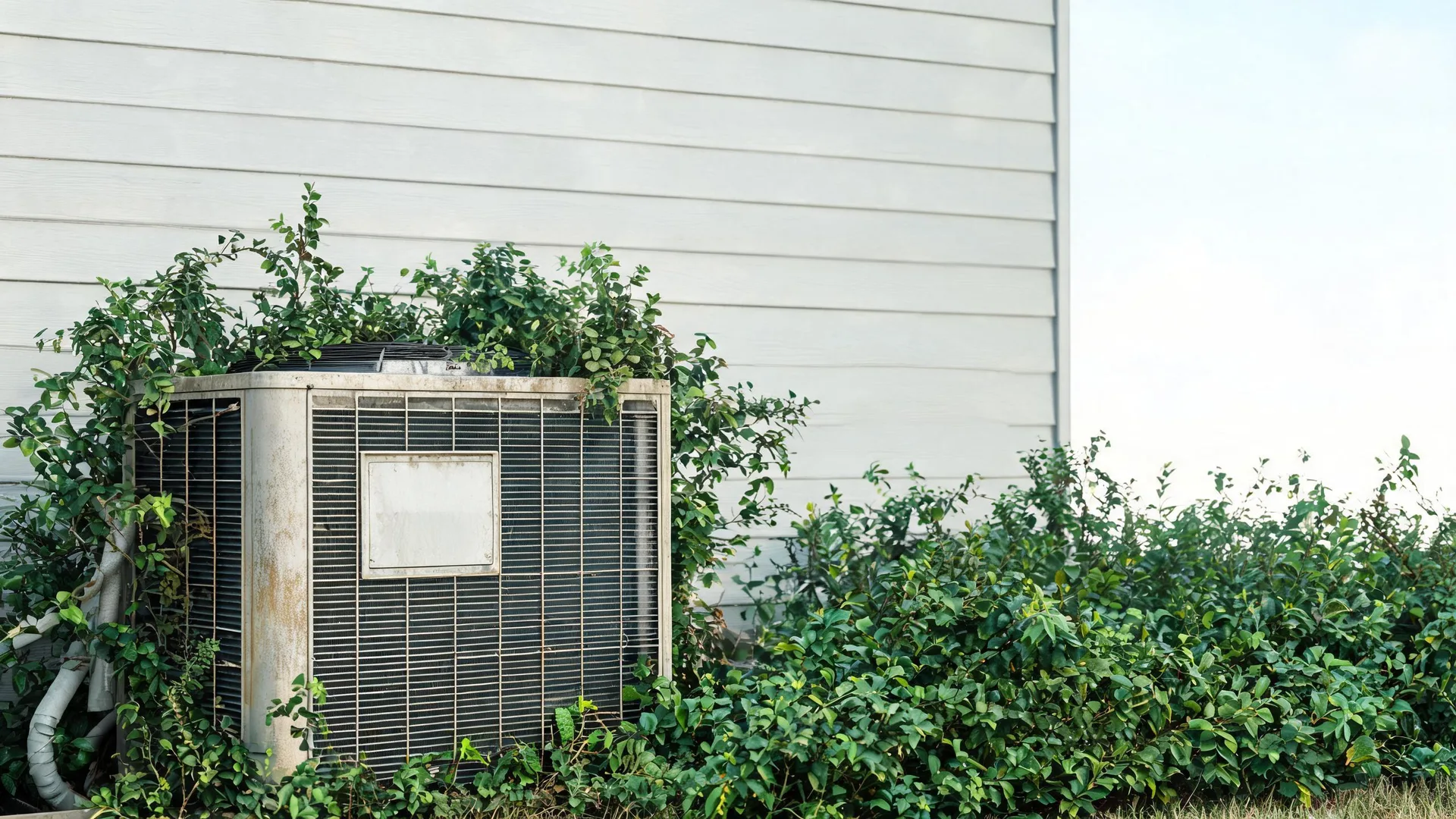
June is when weak parts fail
Cooling in Whiteside County runs June through August. The first hot stretch puts load on a system that sat idle since last summer, and a capacitor or contactor that was already marginal gives out right then.
Takes about a minute. No obligation.
Cooling in Whiteside County runs June through August. The first hot stretch puts load on a system that sat idle since last summer, and a capacitor or contactor that was already marginal gives out right then.
A system that struggled last August will likely show the same signs again. Having it looked at in May, before the first real heat hits, means a weak part gets found before it fails on the first hot day.

NOAA nClimDiv, 1991–2020 normals
Summer in Whiteside County runs about three months, June through August, with afternoon highs averaging 83.
A system here is carrying a normal cooling load, so a breakdown usually comes down to a worn part, not the weather.




A capacitor that's weak or a charge that's low makes the compressor work harder to do the same job. That extra draw shows up on the bill whether or not you've called anyone about it. Waiting a few weeks to see if it gets better just means a few more weeks of paying for the same problem. Get the actual cause found and fixed, and the system goes back to running the way it should.
If your AC is original to an older house, a repair call is a reasonable time to ask the contractor straight out how many years it's likely got left. That answer should factor into whether this repair is worth paying for.
Find a contractor
Before anyone comes out, there are a few things worth checking yourself. Go to the thermostat first. Make sure it's set to cool and set below room temperature, and change the batteries if it uses them. Next, check the breaker panel for a tripped breaker. If the outdoor unit isn't running at all, a tripped breaker is often why. Look at the air filter. A filter clogged with dust chokes airflow and can cause the whole system to ice up, and a dirty filter is something you can pull and look at yourself. While you're at it, walk outside and look at the condenser. Clear away any leaves, grass clippings or debris stuck against the fins, and make sure nothing is blocking airflow around the unit. If you see ice on the refrigerant lines or on the indoor coil, turn the system off and let it thaw completely before anyone touches it, running it iced up can damage the compressor. None of this tells you exactly what's wrong, but it rules out the simple stuff before you pay anyone to find it.
An older compressor and a newer one fail the same way, from the same worn parts. What changes is whether the repair is worth paying for. A system near the end of its working life can still take a new capacitor and run fine for a while, but if the compressor itself is what's failing, that's a harder repair to justify than a swapped part.
One failed capacitor is a part wearing out on its own schedule. A system that needs a service call every summer is a system that's done absorbing wear the way it used to. Each repair buys it more time, but when the time between calls keeps shrinking, that pattern is worth paying attention to on its own, apart from whatever broke this time.
Estimates for a typical Whiteside County home, compared with an older unit built to the previous federal minimum, from EIA household energy data, Illinois fuel prices and NOAA climate normals. Your home will differ.
Repair makes sense when a part like a capacitor or contactor has failed.
Replacement makes sense when the compressor has failed or the system uses R-22 refrigerant, which is no longer made.
A diagnostic call starts with the complaint, not the unit. The tech wants to know what the system was doing before it quit, whether it was blowing warm air, cycling fast, or just silent. Then it's gauges on the lines to check refrigerant pressure, and a meter on the electrical side to test the capacitor and contactor. Airflow gets checked too, since a return that's blocked or a coil caked with dust shows up on the gauges as something it isn't. Only once those readings come back does the actual part get named. Guessing before that just means paying for a part that was never the problem.