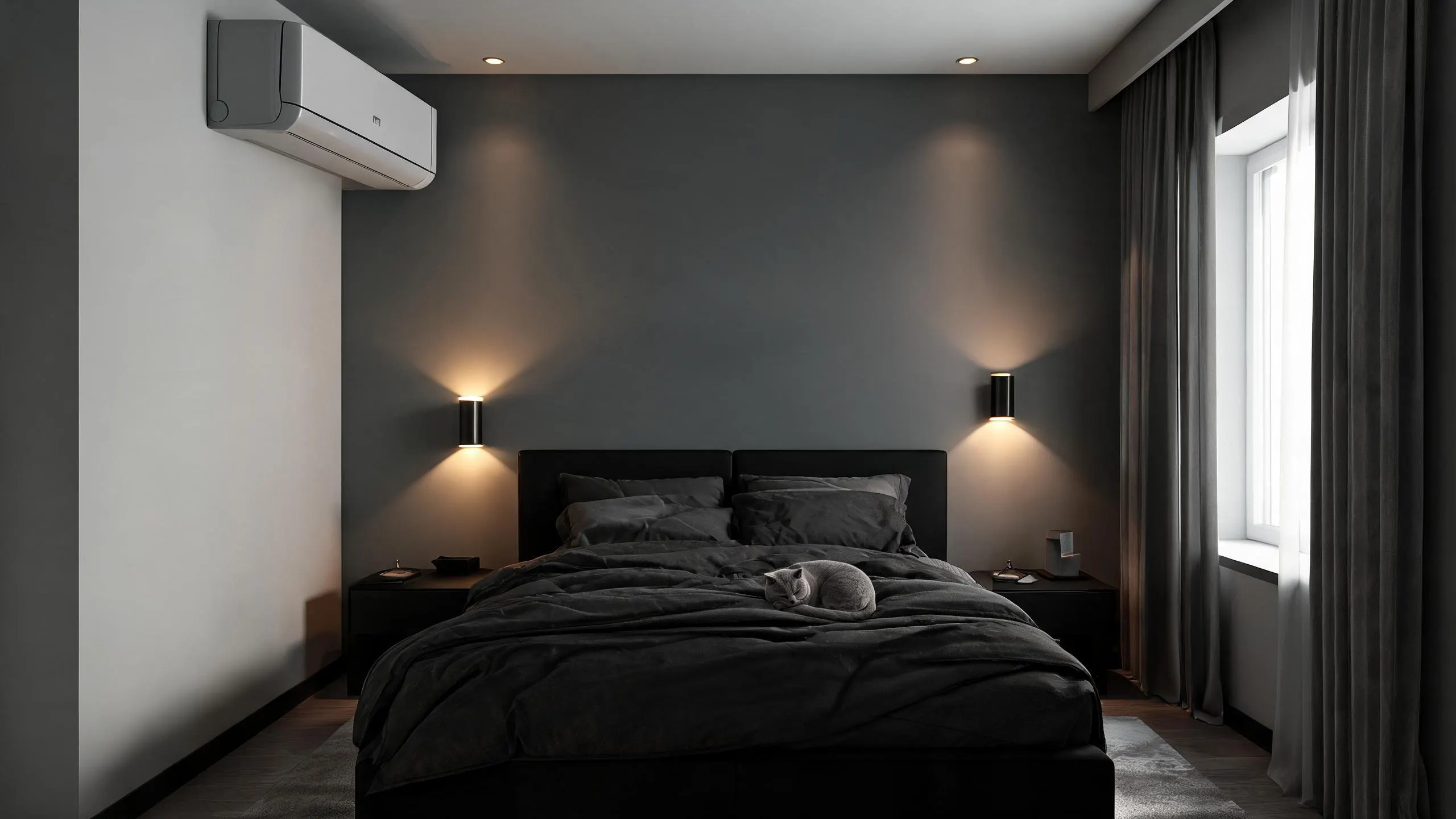




A minimalist bedroom with dark grey walls, a large bed with charcoal bedding, a sleeping cat, two warm-toned wall sconces, and a wall-mounted air conditioning unit.

Mini Split Installation in Belleville, IL

Tell us about the job

Takes about a minute. No obligation.

New system or replacementMini-splitSt. Clair County, IL
Step 1 of 2

What ZIP code is the job in?

Electricity in St. Clair County runs 17.65 cents per kilowatt-hour on average. That's higher than most of the country pays. A mini-split that's sized right and installed well uses less power to move the same heat, and on a bill like that, every kilowatt-hour it doesn't use is money back in your pocket. One that's oversized or poorly matched to the space runs longer than it should and costs you for it, month after month. The install matters here as much as the equipment does.

7 months
October through April, your system heats
5 months
May through September, it cools
26°F
the average winter night it heats against
87°F
the average summer afternoon it cools against
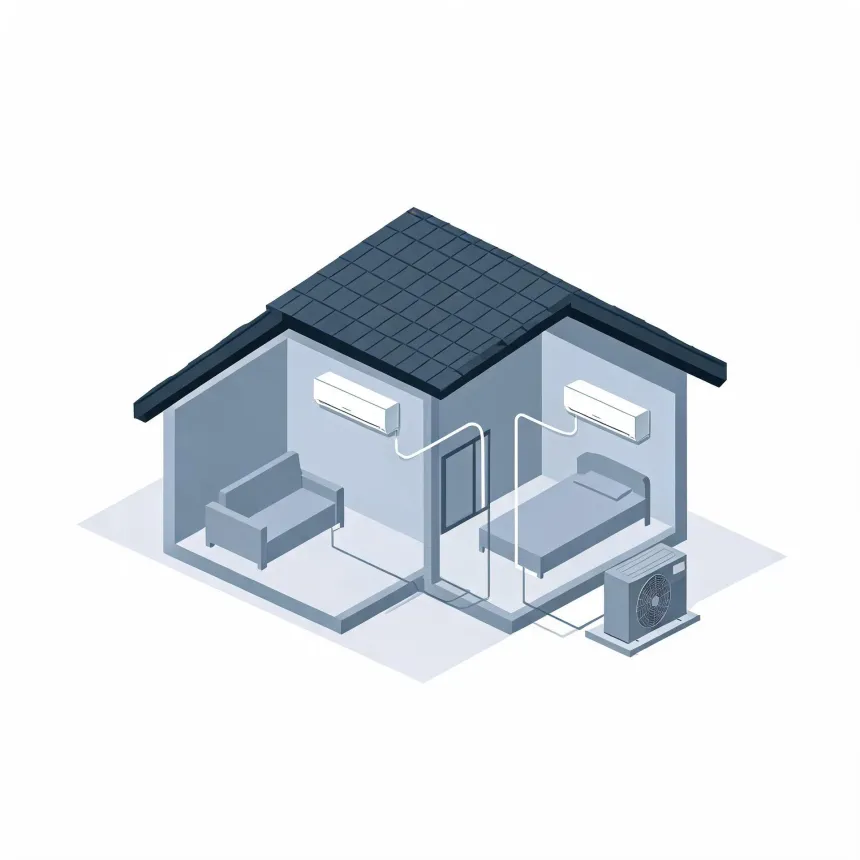
Isometric illustration of a cutaway house with two rooms, showing two wall-mounted indoor air conditioning units connected by lines to a single outdoor condenser unit outside the building.
Your system heats October through April and cools May through September.

NOAA nClimDiv, 1991–2020 normals

May starts cooling season in St. Clair County.

Get the mini-split installed before April runs out and you're not waiting on a contractor in the first hot week.

Most houses in Belleville heat with gas, which is why a mini-split usually joins the system instead of replacing it

60.6% of homes heat with gas
Cooling runs May through September
Summer afternoons average 87°F

St. Clair County falls under zone 4A, a mixed climate that asks real work of both the heating and cooling side of a system. Any mini-split installed here has to meet the federal minimum for split-system heat pumps: at least 14.3 Btu of cooling for every watt-hour it draws, and at least 7.5 Btu of heat for every watt-hour in winter. That standard applies to the unit itself, not to ductless systems as a separate category, so the mini-splits sold today are built to clear that bar. A system that meets it is also eligible for the federal tax credit on qualifying heat pumps. The standard sets the floor. Where you land above it is what shows up on the bill.

Right-size it now, and the bill shows it later

Get the sizing right and the unit uses less power to do the same job, month after month. That shows up on the bill every time power costs what it does here. Getting it sized and installed correctly from the start is what makes that happen, not something you fix later.

Find a contractor
A white mini-split air conditioner outdoor condenser unit mounted on metal brackets against a beige stucco exterior wall, with a blue sky and scattered clouds in the background.

Five months of hard running, every year

Cooling runs about five months here, May through September. For three of those months the afternoon high averages 87°F, and the dew point averages 66°F, which is heavier than most of the country deals with. That's the harder kind of load for a system to meet, since it's pulling moisture out of the air as much as it's cooling it. The outdoor unit also sits through whatever the weather brings. Damaging wind has hit St. Clair County 84 times between 2015 and 2024, and the county has seen 43 hail events in that same stretch. A system running that long each year, against that kind of heat and weather, wears sooner than one in a milder place. Small problems show up earlier too, so what looks fine in year one is worth a real check a few years in.

Where the line set runs matters

The indoor and outdoor units connect through a line set carrying refrigerant, plus a drain line for condensation and a power whip. A short, straight run between the two costs less to install than one that has to snake through a wall, around a floor joist, or up two stories. Every extra foot of line set has to be charged with the right amount of refrigerant, and every bend adds a fitting that's a future leak point. The wall penetration itself takes time too, especially through brick or block instead of siding.
One head costs less than four

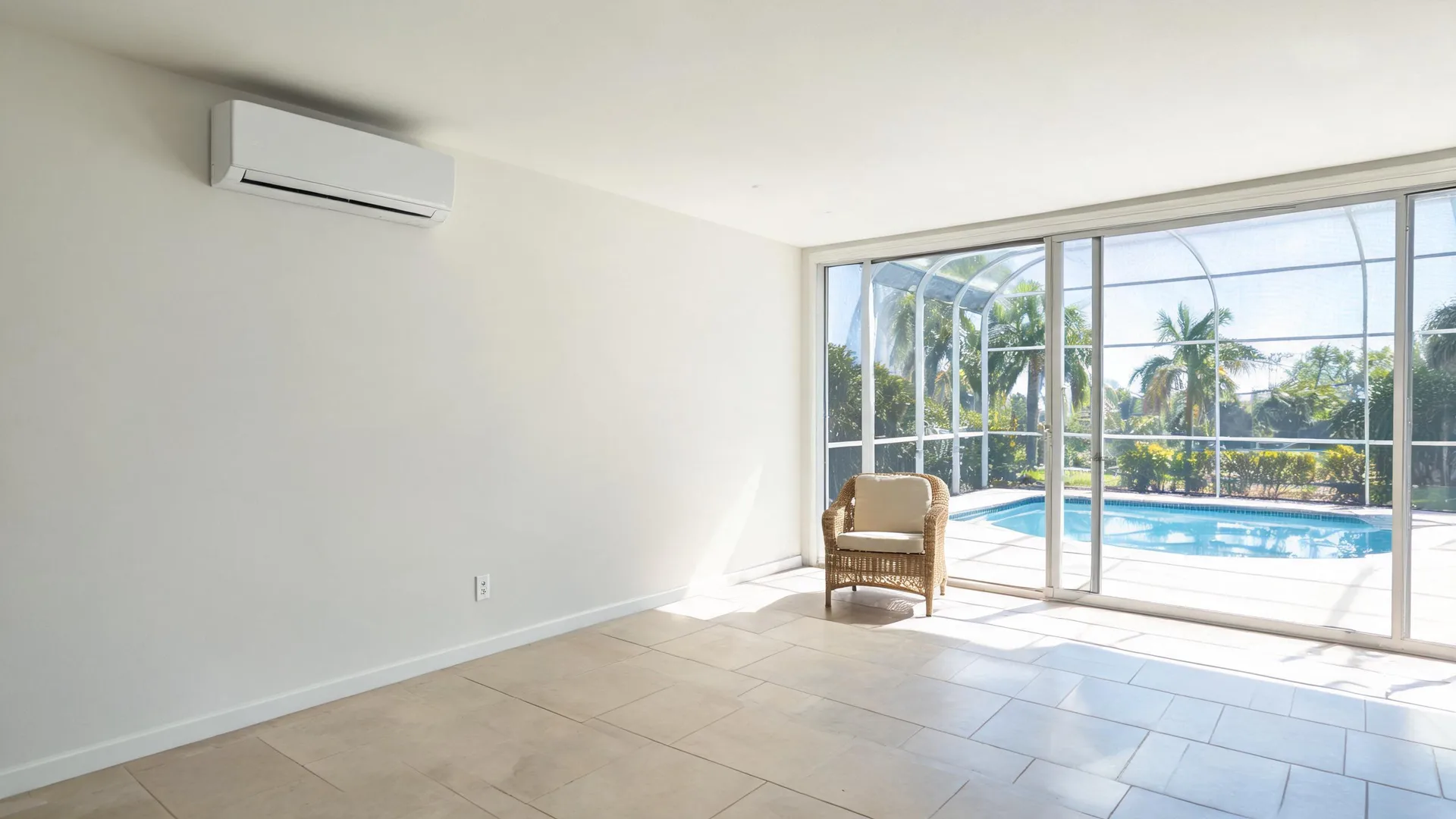
A single zone system, one outdoor unit paired with one indoor head, is the simplest version of this job. Add zones and you're adding indoor heads, more line set, and an outdoor unit with enough capacity to run all of them at once without short-cycling any single zone. Each indoor head also needs its own spot on a wall or ceiling with clearance around it and a path back to the outdoor unit. More zones means more decisions about where each head goes, not just more equipment to hang.

Taking out the old equipment is part of the job, not an afterthought. If a central system is being replaced in part, the old coil and refrigerant lines have to come out, and any refrigerant left in them gets recovered rather than vented, since that's how the law treats it. A window unit or old ductless head gets disconnected and hauled off. If the mini-split is going in alongside an existing furnace rather than replacing anything, there may be nothing to remove at all, just a new line set and head added to what's already there. Whoever does the install should tell you up front which of these applies, because it changes what happens on install day and what the crew shows up with.

Sizing this unit right matters more here than it would somewhere milder. A mini-split that's a size too big will still cool the house, but it shuts off and on too fast to pull the moisture out of the air, and with summers this muggy, that moisture is most of the job. One that's sized to the space runs longer, steadier cycles and actually dries the air while it cools it. This is also where it helps to ask what the installer is basing the size on. A load calculation for this house, not a guess based on square footage, is what sets the right number of Btu for each zone. Get that step right and the system spends the next five months working the way it should.