




A quiet suburban street at twilight featuring two-story brick homes with illuminated windows and large trees lining the sidewalk.

Mini Split Installation in Bloomington, IL

Tell us about the job

Takes about a minute. No obligation.

New system or replacementMini-splitMcLean County, IL
Step 1 of 2

What ZIP code is the job in?

A mini-split runs on electricity, and electricity here isn't cheap. Homes in McLean County paid an average of 17.61 cents per kilowatt-hour in 2025, more than most counties in the country pay. That rate applies every time the compressor kicks on, no matter the season. Summer here adds its own strain. The dew point averages 64°F across June, July and August, which is the kind of heavy, wet air that makes a system work harder to pull moisture out of a room. Put a costlier kilowatt-hour next to a system working that hard, and how efficiently it runs stops being a detail and starts showing up on the bill.

8 months
October through May, your system heats
4 months
June through September, it cools
20°F
the average winter night it heats against
84°F
the average summer afternoon it cools against
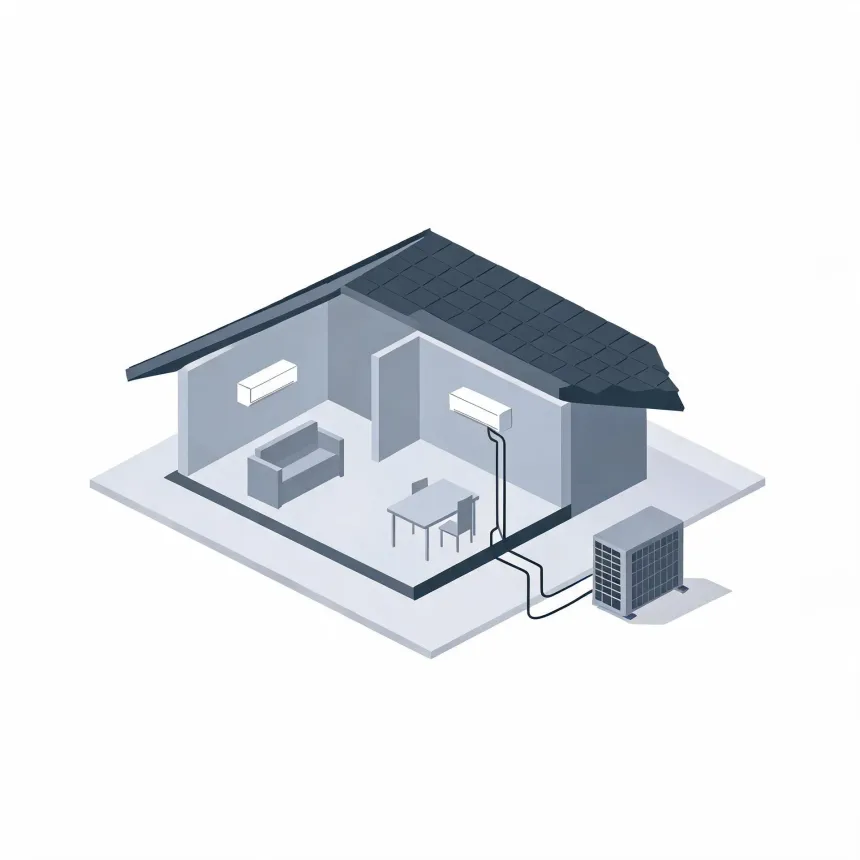
Isometric illustration of a cutaway house interior with sofa, table and chair, two wall-mounted indoor air conditioning units connected by lines to an outdoor condenser unit beside the building.
Your system heats October through May and cools June through September.

NOAA nClimDiv, 1991–2020 normals

Cooling in McLean County starts in June, so May is the month to get a mini-split installed.

Install it before June and the system is ready when the heat shows up, not after it's already working against you.

Most homes here already run on gas, and that changes what a mini-split is for

70.6% of homes heat with gas
Climate zone 5A
Power here costs 17.61 cents per kilowatt-hour

McLean County sits in climate zone 5A, a cool zone where heating counts for more than cooling. That puts a floor under what can go into a home here. Split-system heat pumps manufactured from January 2023 onward have to deliver at least 7.5 Btu of heat for every watt-hour of electricity over the winter, and remove at least 14.3 Btu of heat per watt-hour over the summer. A mini-split is a split system under that standard, so it has to clear both numbers regardless of brand or size. Anything on the market new has already been built to meet it. The federal tax credit for qualifying heat pumps is there on top of that, for homeowners who want to claim it.

Check the efficiency rating before you decide

A mini-split with a stronger efficiency rating costs more up front and less every month after. Power here runs higher than most places pay, so that difference keeps showing up on the bill long after installation is done. Ask what rating each option carries before deciding which one to install.

Find a contractor
A beige split-system air conditioner outdoor condenser unit mounted on metal wall brackets atop a stucco wall.

This runs longer than you'd think, just not as hard

A mini-split runs every time there's a load to meet, and it doesn't cycle the way a furnace or a central AC does. Instead of firing on full and shutting off, the compressor speeds up and slows down to hold the temperature steady, so it's quietly working for long stretches rather than in short bursts. That's good for comfort and good for the equipment, since fewer hard starts means less wear on the compressor over the years. But it also means the system is almost always doing something, even when the room feels like it's holding steady. Ask an installer how the unit behaves at partial load, not just at full output, since that's where it spends most of its time. A system that holds efficiency well when it's barely working will cost less to live with than one that only performs well when it's maxed out.

Where the system goes decides half the job

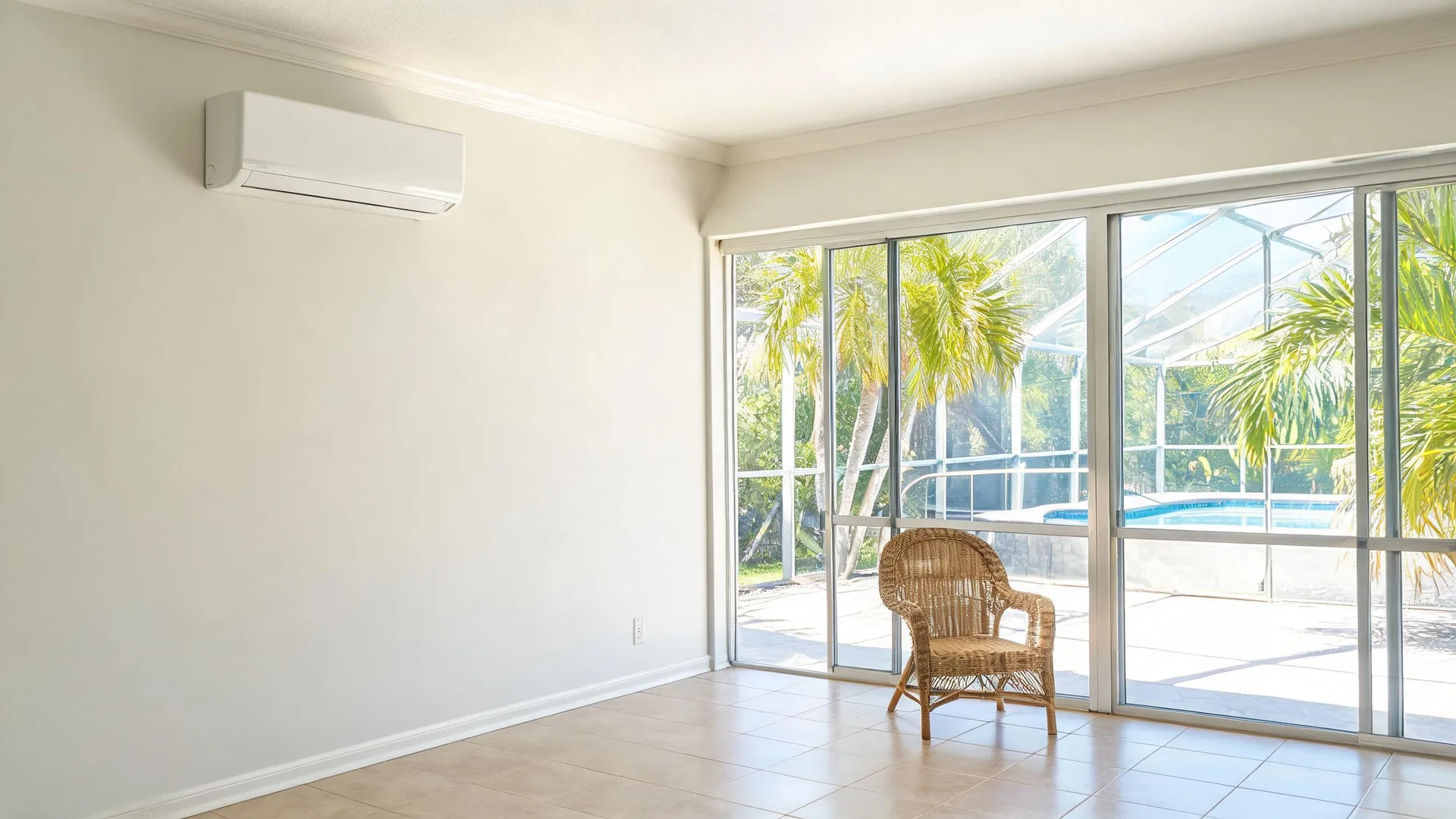
Every indoor head needs a clear shot through the wall to an outdoor unit, and the line set carrying refrigerant between them has a limit on how far it can run and how many turns it can take before the system loses capacity. A straight, short run between indoor and outdoor units is the easiest install there is. Add distance, add elevation between the two units, or route the line set around framing and corners, and the job takes more refrigerant, more line set, and more labor to do right.
The outdoor unit needs its own space to work

The outdoor unit pulls in air and has to be able to breathe on all sides, away from fences, shrubs, or anything that blocks airflow. It also needs a stable, level pad to sit on so the compressor isn't working at an angle. Where that unit can go, and what has to be built or cleared to put it there, is part of what decides how much work the install actually takes.

SEER2 and HSPF2 tell you how much heat a system moves for the electricity it uses, one rating for cooling and one for heating. The number is measured across a range of conditions, not just at full blast, because a mini-split spends most of its time running at partial speed rather than maxing out. Two units built for the same size room can still land far apart on the rating, since one may hold its efficiency steady as it throttles up and down while the other only hits its best numbers at full output. That rating also depends on upkeep after installation. A dirty filter, a dusty coil, or a refrigerant charge that has drifted off spec will all pull a system below the number on its label, no matter how good that number was on day one. Ask what rating a unit carries before buying it, and ask how it holds that rating once it is running in the room it is meant to heat and cool.

Installation starts with a walkthrough, not a drill. A tech looks at where the line set will run, where the outdoor unit will sit, and whether the wall backing the indoor head can hold its weight. Mounting the indoor unit comes next, then a hole gets bored through the wall for the line set, the drain line, and the power cable to pass through together. Once the lines connect to the outdoor unit, the system gets evacuated with a vacuum pump to pull out air and moisture before refrigerant ever enters it. That step matters more than it looks: any moisture left in the lines can freeze or corrode components once the system runs. After the charge is set and the lines are insulated, the tech powers it on, checks the temperature split between the air going in and the air coming out, and confirms the head is actually pulling the load it's sized for. A clean install leaves no refrigerant lines exposed to the sun and no drain line running uphill, since trapped condensate is one of the first things that causes trouble.