





A quiet suburban street at twilight featuring two-story brick homes with illuminated windows and large trees lining the sidewalk.

Mini Split Installation in Breese, IL

Tell us about the job

Takes about a minute. No obligation.

New system or replacementMini-splitClinton County, IL
Step 1 of 2

What ZIP code is the job in?

Electricity in Clinton County runs 16.06 cents per kilowatt-hour on average, higher than most of the country pays. A mini-split still draws power every hour it runs, even though it moves heat instead of burning fuel to make it. Summers here sit heavy, with a dew point near 67°F across June, July and August, so the system spends real effort pulling moisture out of the air, not just cooling it. That effort shows up on the meter every month. A unit sized right for the space does that work without wasting power on air it doesn't need to move.

7 months
October through April, your system heats
5 months
May through September, it cools
25°F
the average winter night it heats against
87°F
the average summer afternoon it cools against
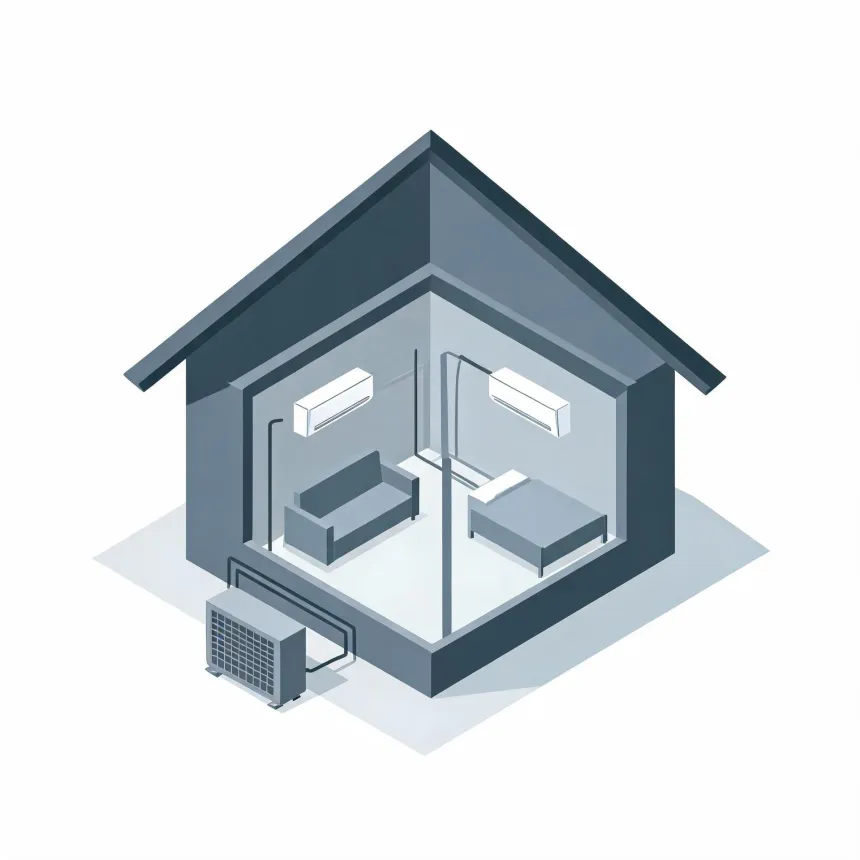
Isometric cutaway illustration of a small gray house showing two rooms, one with a sofa and one with a bed, each with a wall-mounted indoor air conditioning unit connected by line sets to an outdoor condenser unit on the ground outside.
Your system heats October through April and cools May through September.

NOAA nClimDiv, 1991–2020 normals

A mini-split's efficiency rating is measured at one set of conditions, not the ones it runs at most of the year.

Ask what the unit does at the temperatures this job actually sees, because two systems with the same rating can pull very different power once the weather turns extreme.

May is when this gets decided for you, or you decide it now

Cooling runs May through September
Climate zone 4A
Power here costs 16.06 cents per kilowatt-hour
What Heats This County Shows What This Job IsGas heats 52.4% of homes in Clinton County. A mini-split fits most of them as the cooling half, not a furnace replacement.

Clinton County falls under zone 4A, a mixed climate that pushes a system hard in both directions. Any mini-split heat pump installed here has to meet the federal minimum for that kind of equipment, built on or after January 1, 2023: at least 14.3 Btu of heat moved per watt-hour of power in summer, and at least 7.5 in winter. That's the floor, not a recommendation. It narrows what a contractor can legally put on your wall, and it's worth asking which models they're quoting clear that bar and by how much.

Get the system sized to cost less on every bill

Sizing and installing this correctly is what decides whether that per-kilowatt-hour rate works for you or against you. Get the quote now and ask what the unit draws at full load, not just at the rating.

Find a contractor
A beige split-system air conditioner outdoor condenser unit mounted on metal wall brackets atop a stucco wall.

The Rating Is a Starting Point, Not a Guarantee

The rating on the box comes from a lab test, run at a fixed indoor and outdoor temperature with the unit new and the filter clean. Every hour after that is on your wall, running in real weather, with a filter that gets dusty and a coil that picks up grime. None of that shows up on the label. What keeps the unit close to its rated efficiency is the stuff a lab doesn't test: a filter changed on schedule, a coil kept clear, refrigerant charge set right at install. Skip that upkeep and the same unit pulls more power to do the same job, no matter what number was printed on it.

The Size of the Job Depends on the Space

A mini-split installer has to work out how much heat a room gains and loses before picking equipment, counting windows, doorways and how the rooms connect. A single zone serving one room is a different job from a multi-zone system feeding several rooms off one outdoor unit. More indoor heads means more line sets, more wall penetrations and a bigger outdoor unit to drive all of them at once.
Where the Lines Run Matters as Much as the Unit

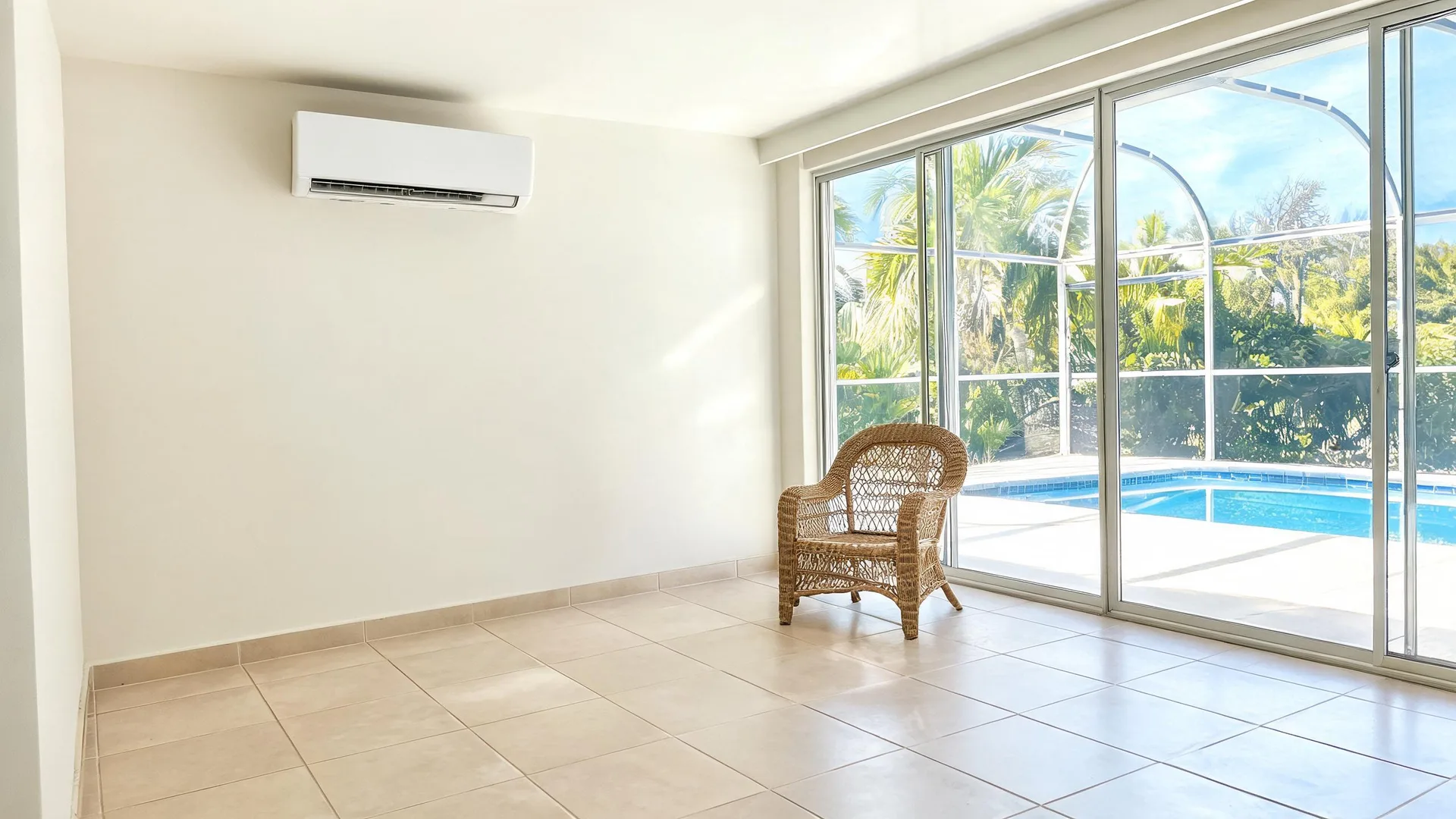
The refrigerant line set has to travel from the outdoor unit to each indoor head, and every wall it crosses, every stud bay it threads through, adds work. A short, straight run between an outdoor pad and an indoor head costs less labor than one that has to snake through a finished wall or up through multiple floors. The electrical work follows the same pattern: a dedicated circuit has to reach the outdoor unit, and the distance from the panel decides how much wire and conduit that takes.

If this is replacing window units or a ducted system that served the space, something has to happen to what's already there. Window units just come out, though an installer may ask about patching the opening once the unit is gone. A ducted system is a bigger question. The ductwork can often stay in place if it's still feeding other rooms or another system, and nobody has to touch it just because a mini-split is going in elsewhere. If the old equipment being replaced is a furnace or central air unit tied into that ductwork, removal means disconnecting refrigerant lines, electrical whips and any condensate drain, then hauling the old units out. A unit with refrigerant still in the lines has to be recovered properly before anything gets disconnected, not vented into the air. None of this is work the homeowner does alongside the installer. It's worth asking upfront what happens to the old equipment and whether removal and disposal are part of the quote or billed separately.

Installation day starts with the outdoor unit going on its pad or brackets, leveled so condensate drains the way it should and so vibration doesn't carry into the wall. The indoor head goes up next, mounted high on the wall it was designed for, with a sleeve drilled through for the line set, drain, and electrical to pass together. The lines get run, connected at both ends, then the whole system gets pulled down to a vacuum before any refrigerant moves through it. That vacuum step matters more than people expect, because any moisture or air left in the lines will sit there and wear on the compressor for as long as the system runs. Once the vacuum holds, the system gets charged, powered up, and checked across a full cycle, heating and cooling both, before anyone calls the job done. A clean install ends with the installer walking through the remote or thermostat controls and showing where the filter sits, since that's the one part the homeowner has to touch for the life of the unit.