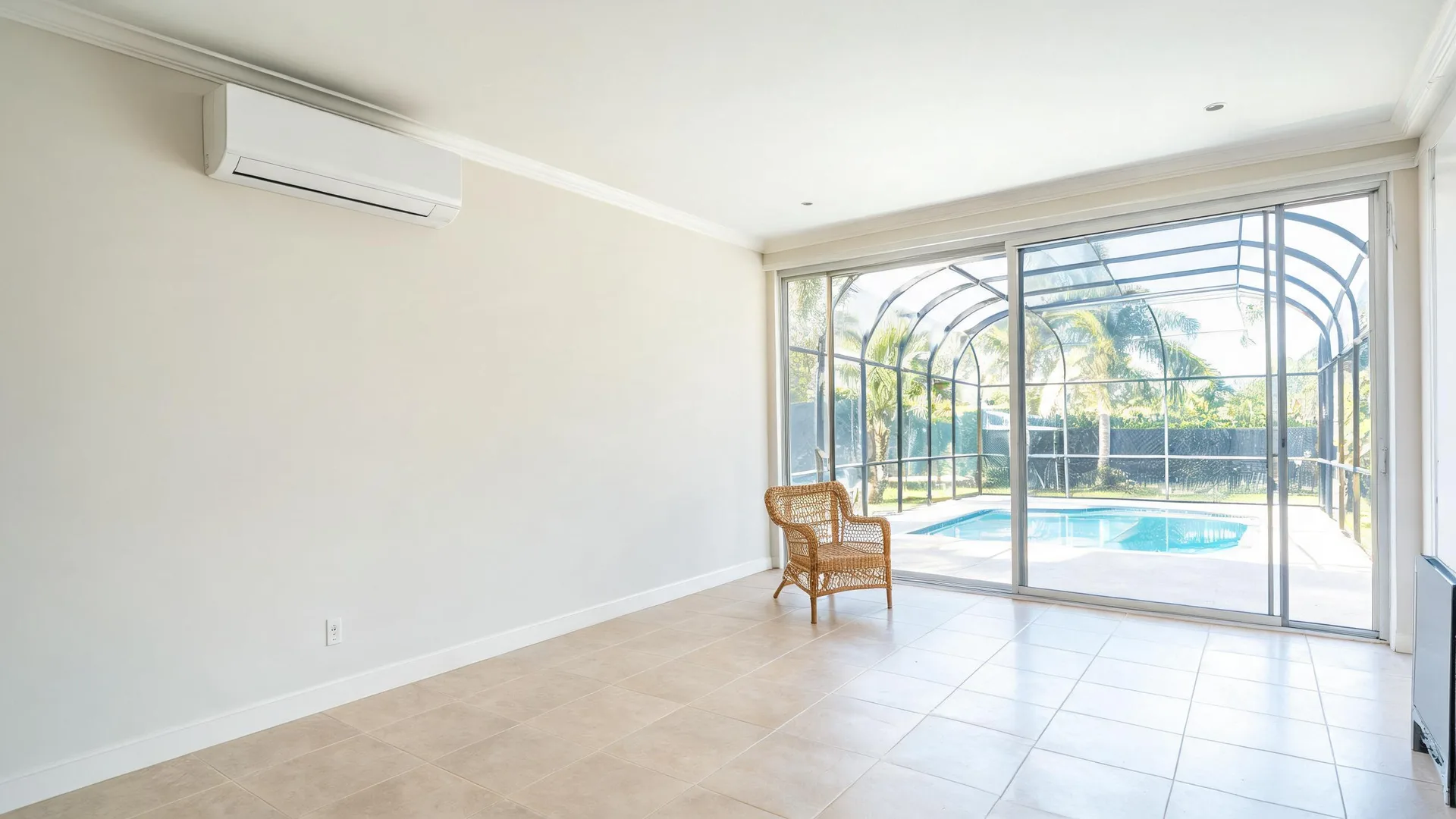
Electricity here runs 17.72 cents per kilowatt-hour
That is higher than what most counties in the country pay. A mini-split runs on electricity alone, so every degree of cooling or heating it produces draws on that rate.
Takes about a minute. No obligation.
That is higher than what most counties in the country pay. A mini-split runs on electricity alone, so every degree of cooling or heating it produces draws on that rate.
Two mini-splits can heat and cool the same room and land on different bills every month. With power priced the way it is here, the difference between an efficient unit and a weaker one shows up on your electric bill, not just on the spec sheet.
NOAA nClimDiv, 1991–2020 normals
Gas heats most homes in Macoupin County, just over half.
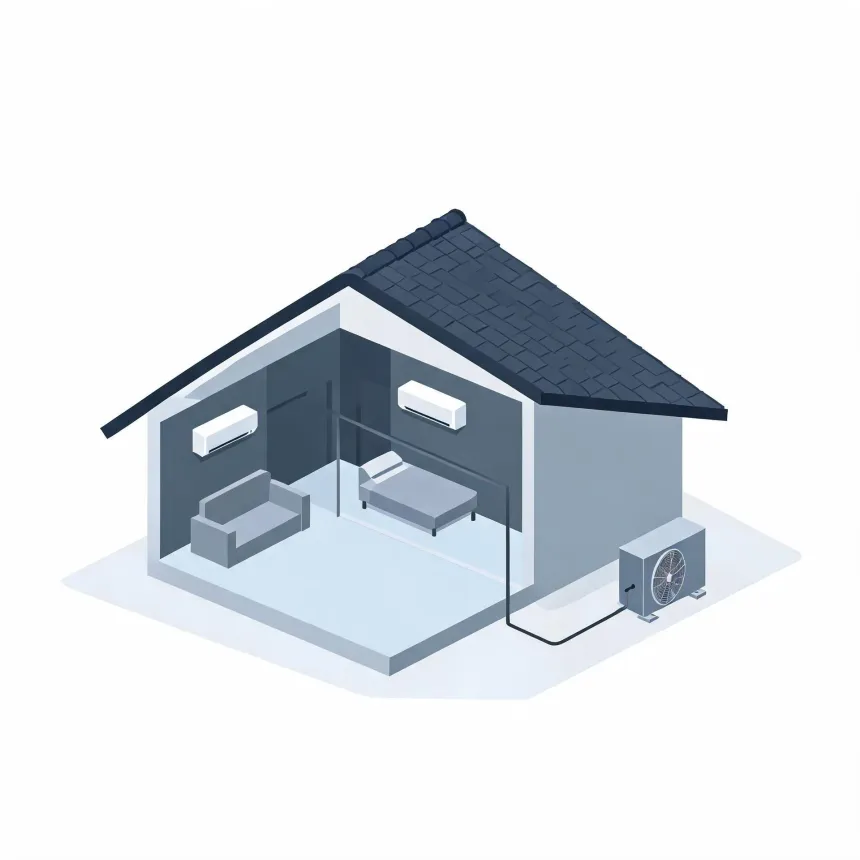
A mini-split here usually goes in as a second system, cooling and taking some of the load off the furnace, not replacing it.



Macoupin County sits in climate zone 4A, a mixed zone where both the furnace and the mini-split have real work to do across the year. Any split-system heat pump sold new here, ductless units included, has to meet the same federal minimum: at least 14.3 Btu of cooling for every watt-hour it draws, and at least 7.5 Btu of heat for every watt-hour in winter. That floor applies everywhere in the country, but what it buys you here is worth more, since every watt-hour costs more to begin with. A unit built to just clear that minimum will cost more to run than one built well past it, and in this county that gap shows up on the bill faster than it would somewhere with cheaper power.
That gap between a unit that just clears the minimum and one built past it lands on your electric bill every month, not just on the spec sheet. Worth knowing which one you're getting before it goes in.
Find a contractorCooling runs May through September here, five months of the year. April is when to get this done. A mini-split installed in April goes in with no pressure on anyone, no scheduling around a heat wave, no window unit propped in while you wait. Winter matters too. Overnight lows average 24°F across December, January and February, cold enough that the unit will lean on the furnace to carry the house, not the other way around. Get it in before May and it's ready for the first hot stretch instead of catching up to it.
SEER2 covers cooling and HSPF2 covers heat, and a unit can be strong at one and only average at the other. If a mini-split is doing real work in both directions, check both ratings, not just the one on the sticker in the showroom.
That number comes from a lab test with a clean coil, a full charge of refrigerant, and clear airflow. A dirty filter, a coil caked with dust, or a refrigerant charge that's drifted low will all pull a running unit below the number on its label, no matter how high that number was to start.
Whatever gets pulled out still has refrigerant in it, and that refrigerant has to be recovered into a tank before the line gets cut. That's not optional and it's not a courtesy, it's handling a sealed system safely. If the old unit is a window shaker or a portable, it just gets hauled off once it's disconnected. If it's an older ductless system, the indoor head comes off its mounting plate, the line set gets pulled from the wall, and that line set often gets replaced rather than reused, since a new unit needs a line clean enough to hold its charge. The outdoor condenser gets disconnected from its power whip and lifted off its pad or wall bracket. Most of what comes out of an old unit is recyclable scrap metal and copper, so little of it ends up in a landfill. None of this touches your ductwork, because a mini-split doesn't use any.
If your house was built in 1966 or earlier, a mini-split sized for a new build won't fit it right. A load calculation based on square footage alone doesn't account for how an older house actually loses heat or holds cold. A unit sized too big will short cycle, switching on and off instead of running steady, and that costs more over a month than a unit sized right from the start. One sized too small will run constantly on the coldest or hottest days and still lose ground. The only way to know is a load calculation done for your house as it stands now, not the house it was when it went up.