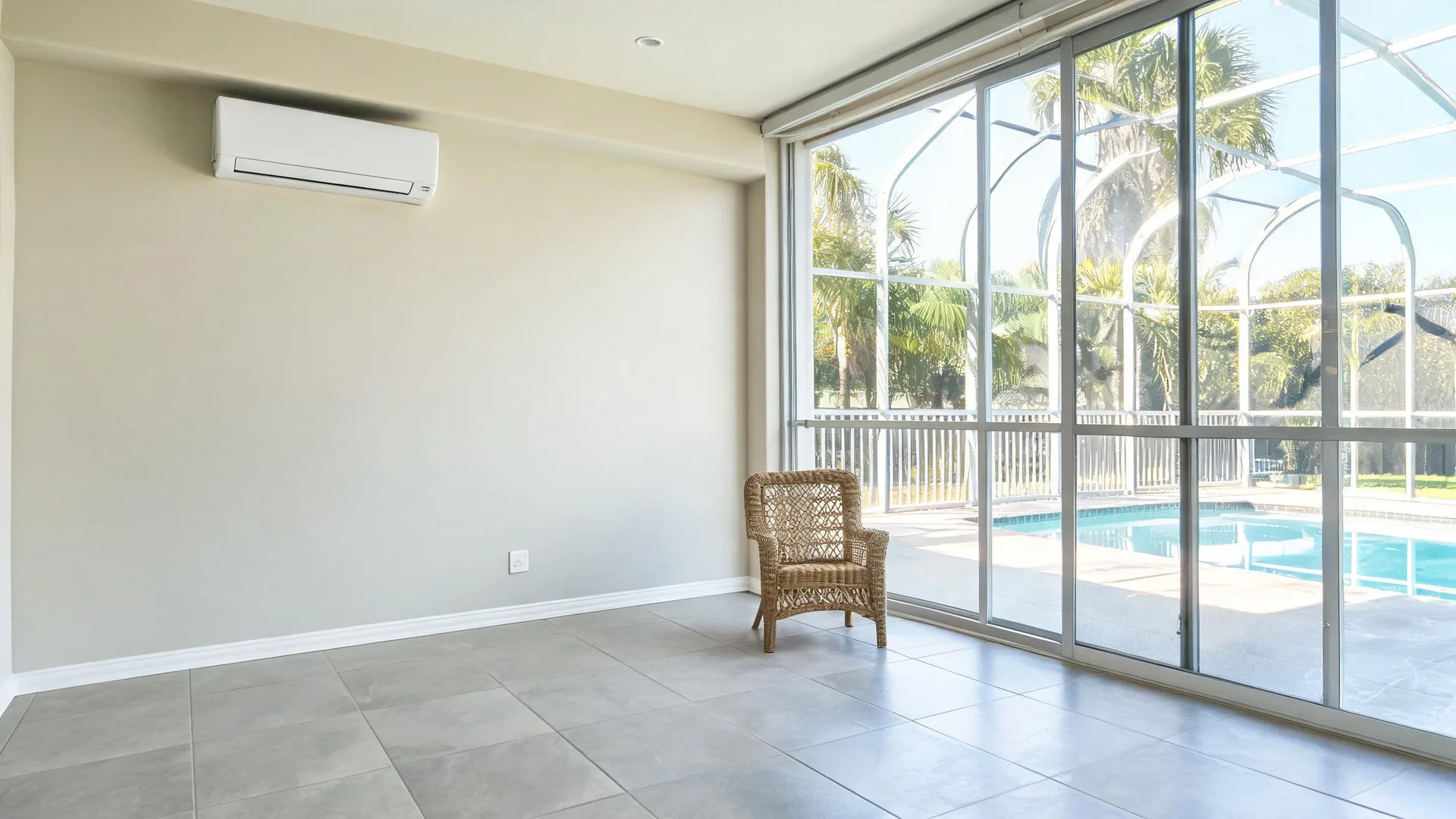
Electricity here runs 17.14 cents a kilowatt-hour
That is above what most US counties pay. A mini-split runs on electricity for both heating and cooling, so that rate applies every time it cycles on, all year.
Takes about a minute. No obligation.
That is above what most US counties pay. A mini-split runs on electricity for both heating and cooling, so that rate applies every time it cycles on, all year.
A mini-split with a higher efficiency rating uses less power to move the same heat. At this rate per kilowatt-hour, that difference in efficiency shows up on every bill the unit touches.
NOAA nClimDiv, 1991–2020 normals
Cooling starts in May here.
A mini-split installed in April goes into a finished job, not a rushed one.



Coles County falls under zone 4A in the 2021 energy code, a mixed climate that asks real work of both heating and cooling. That rating is why a mini-split sold here can't be a stripped-down unit. Any split-system heat pump manufactured from January 1, 2023 on has to remove at least 14.3 Btu of heat per watt-hour it uses in summer, and deliver at least 7.5 Btu of heat per watt-hour in winter. Those are the federal minimums for every split-system heat pump, ductless included. A contractor sizing a system for this county is already working within that floor, not above it as an upgrade.
That rate applies no matter which unit goes in, but a higher-rated system uses less power to hit the same temperature. Ask a contractor what efficiency rating they're quoting before anything else.
Find a contractor
Half the homes in Coles County were built in 1971 or earlier. A mini-split going into a house that age is going into walls and windows that were built to a different standard than what's common now. That doesn't mean the house can't be heated and cooled well. It means sizing the system takes an actual look at the place, not just a square footage number.
A mini-split carries two ratings, not one. The cooling rating measures heat removed per watt-hour over the summer. The heating rating measures heat delivered per watt-hour over the winter. A unit can be strong on one and average on the other, so both numbers belong in the quote, not just the one that sounds best.
That rating is tested at a specific capacity matched to a specific load. A mini-split too big for the room will short cycle, switching on and off before it reaches steady operation, and it won't hit that rating in practice. One sized correctly for the space it's heating and cooling is what makes the number on the label mean anything once it's running.
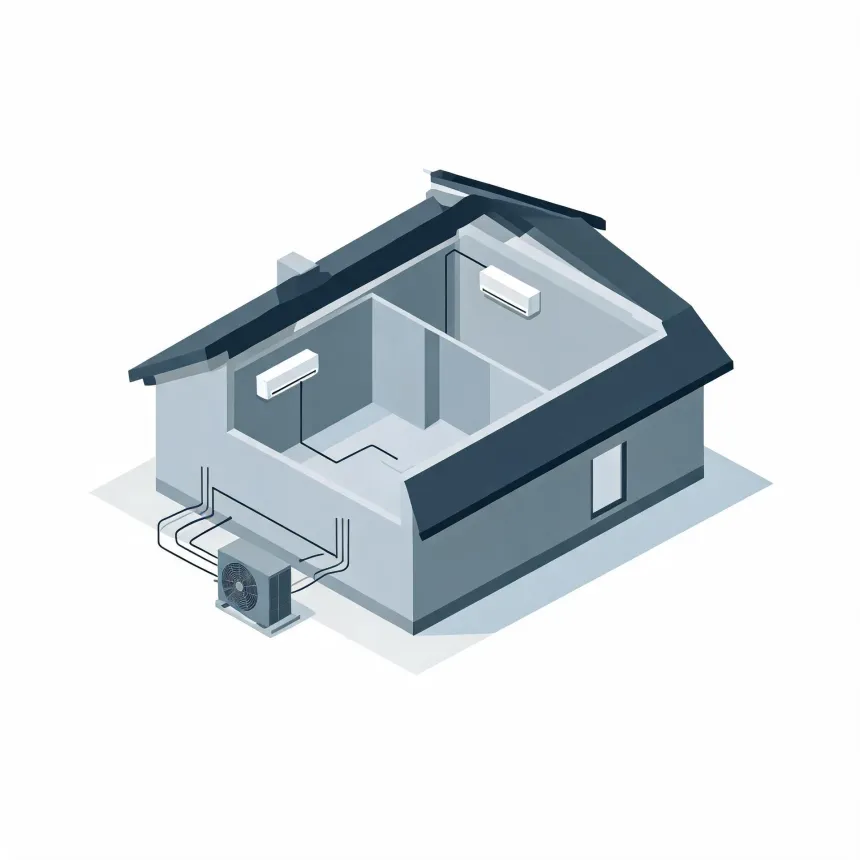
Whatever is heating and cooling the house now has to come out before the new system goes in, and what that takes depends on what's there. A window unit or portable AC is simple, it unplugs and leaves. A central system is a bigger job: an outdoor condenser, a coil in the plumbing, and lines running to it all have to come out, and the refrigerant inside has to be recovered properly rather than released. A baseboard or wall furnace being replaced outright means capping a gas line or disconnecting wiring, work that has to be done before anything new goes in. None of this is optional or something to leave half done. A contractor pulling out the old equipment should be able to say exactly what's involved in your case once they've seen what's there.
A load calculation is what sizing actually looks like in practice. A contractor measures each room, checks the windows, and accounts for how the walls hold or lose heat, then sizes the indoor heads and outdoor unit to that number. Skip this step and a contractor is just guessing off square footage, and a guess either way costs you. Too big and the unit cycles on and off without settling into steady operation. Too small and it runs flat out on the coldest and hottest days and still falls short. Ask to see the load calculation before you agree to a size.