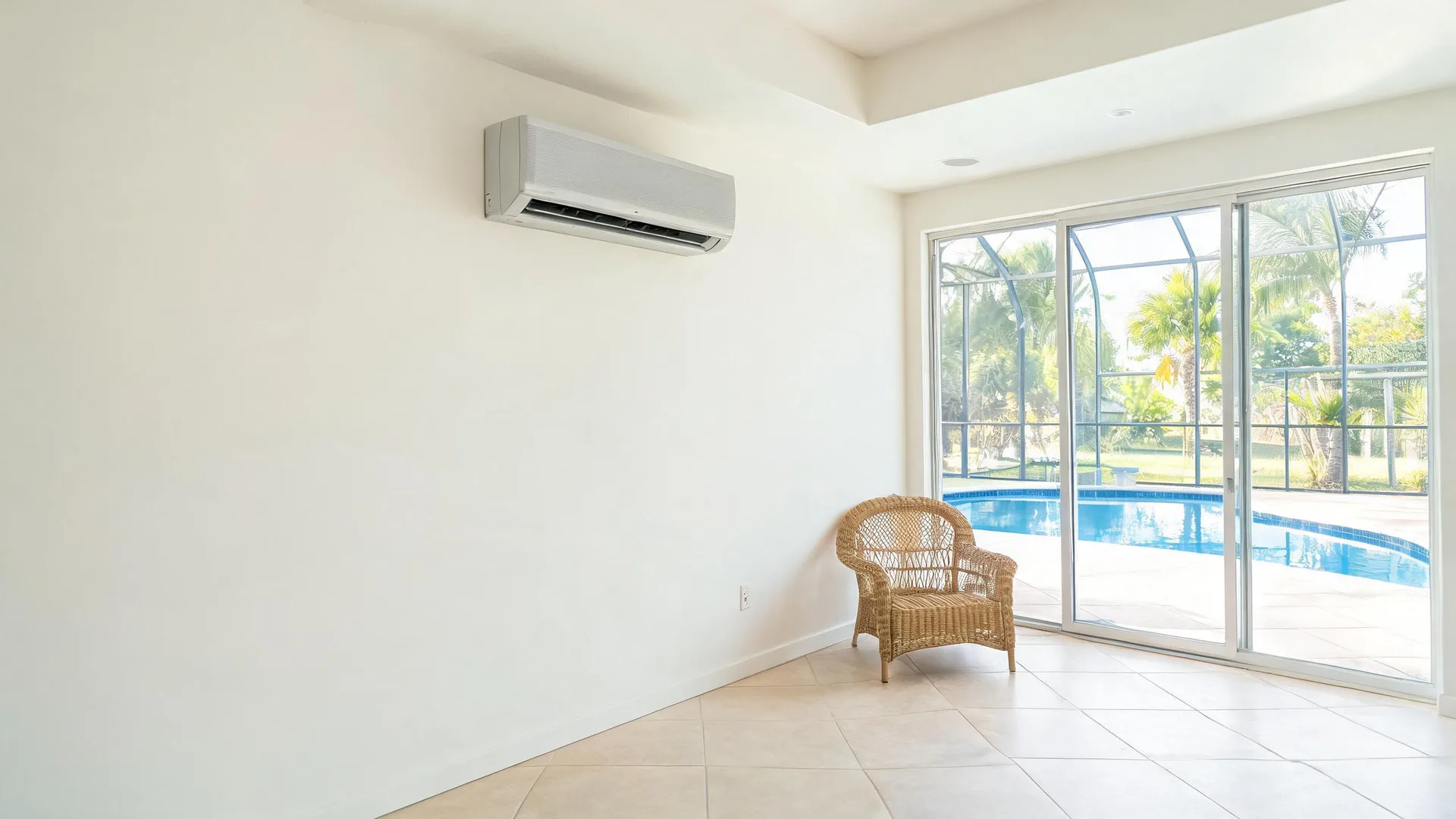
Electricity here isn't cheap
Illinois homes paid 15.87 cents per kilowatthour in 2024. A mini split that loses efficiency from a bad install or the wrong size will show up on every bill that follows.
Takes about a minute. No obligation.
Illinois homes paid 15.87 cents per kilowatthour in 2024. A mini split that loses efficiency from a bad install or the wrong size will show up on every bill that follows.
At that rate, the difference between a well-matched system and an oversized or undersized one adds up fast. Getting the sizing and setup right from the start pays off on every bill after.
NOAA nClimDiv, 1991–2020 normals
Most homes in Cook County heat with utility gas, at 80.2 percent.
A mini split here usually works alongside that gas furnace, not in place of it.



May is a good month to get a mini split installed in Cook County. Cooling runs June through August here, so a system put in during May gets tested and adjusted before it has to work hard. An install rushed during the first hot week leaves less room to catch a bad line set connection or a refrigerant charge that's off. Doing it in May also means any follow-up visit happens on a normal schedule instead of during a run of emergency calls.
Cook County falls in climate zone 5A, a cool zone where heating carries the bigger load. Any mini split installed here, ductless or not, has to clear 14.3 SEER2 for cooling and 7.5 HSPF2 for heating under the federal minimum. That standard narrows the field before you ever compare brands. A federal tax credit is available toward a qualifying system, on top of meeting that baseline.
Find a contractorWhen you're comparing systems, ask how each one is rated for both heating and cooling, since a mini split paired with a gas furnace is mostly asked to cool in summer and only has to carry the heating load on the mild days in between. Ask what happens below that point, when the furnace takes over. A good system hands off cleanly without you noticing the switch. Ask about the compressor type. A variable speed compressor adjusts its output to match the room instead of cycling fully on and off, which means less wear over years of use, even used seasonally. Ask what the warranty covers on the compressor specifically, not just the unit as a whole, since that part does the most work whenever the system runs. Ask how the outdoor unit performs in cold air, not just what the brochure claims, because that number tells you how much it can actually contribute before the furnace has to step in. A contractor who installs these regularly should answer all of this without pausing to think it over.
SEER2 tells you how the system holds up cooling through a stretch of warm weather. HSPF2 does the same for heating over a stretch of cold weather. A mini split can run strong on one rating and weaker on the other, so check both instead of whichever number stands out on the label.
The label number comes from equipment tested under set conditions, not from the walls or line sets it ends up connected to. A mini split sized wrong for the room or installed with a weak refrigerant line connection will run below that rating no matter what the paperwork says. The label says what the equipment is capable of. Getting that performance out of it in the house is a separate job, and it comes down to the install.
A mini split sized by square footage alone is a guess, and it's usually wrong in one direction or the other. The right way is a room by room load calculation, weighing window area, insulation, ceiling height, and what's on the other side of each wall. Oversize it and the unit short cycles, reaching the set temperature fast and shutting off before it's pulled the moisture out of the air, so the room feels cold and damp instead of just comfortable. Undersize it and the compressor runs flat out without ever catching up on the coldest or hottest days, which wears it down faster than a unit that gets to cycle normally. This matters more with a mini split than a central system, since each indoor head is sized on its own for the room it serves, not for the house as a whole. A contractor who skips the calculation and sizes off a chart is guessing at both ends of the year, not just one.
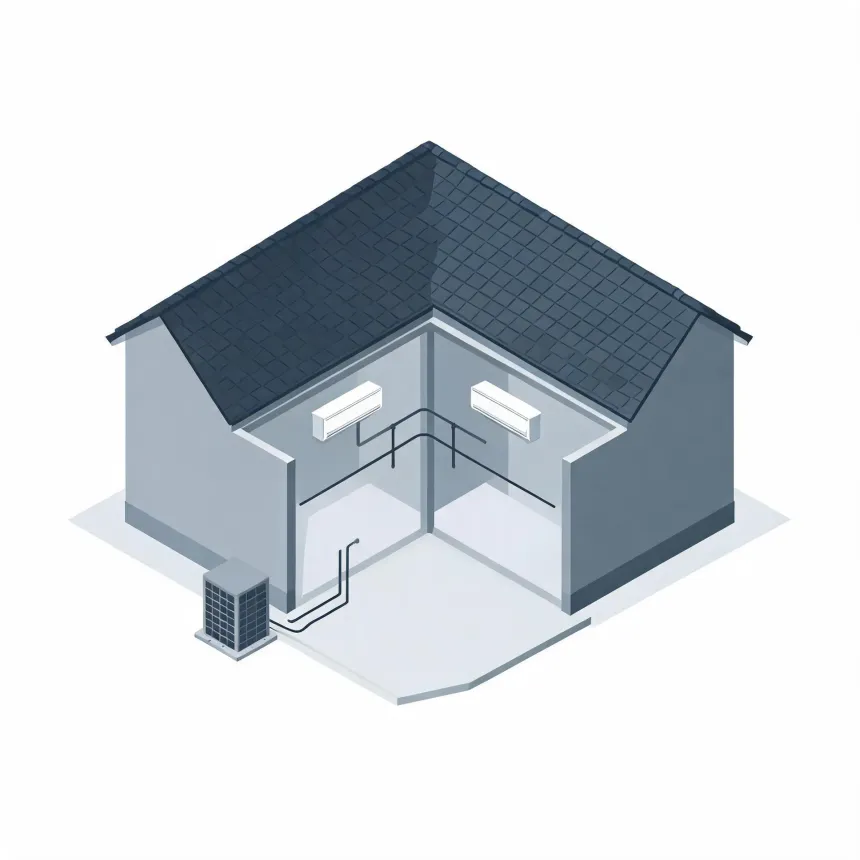
Install day starts with the outdoor unit, the compressor, set on a pad or wall bracket somewhere it can drain and breathe. From there a line set runs to each indoor head, carrying refrigerant lines, a drain line, and electrical wiring through a hole sized just for that bundle. That wall penetration gets sealed afterward, so it's weathertight and not just patched. Once the lines are connected, the system gets evacuated with a vacuum pump to pull out moisture and air before any refrigerant moves through it. Skip that step and the system can struggle long before any part actually fails. The last stretch is the charge and the test, running each zone to see that it heats and cools the way it should, and that's the part that takes the time most people don't expect.