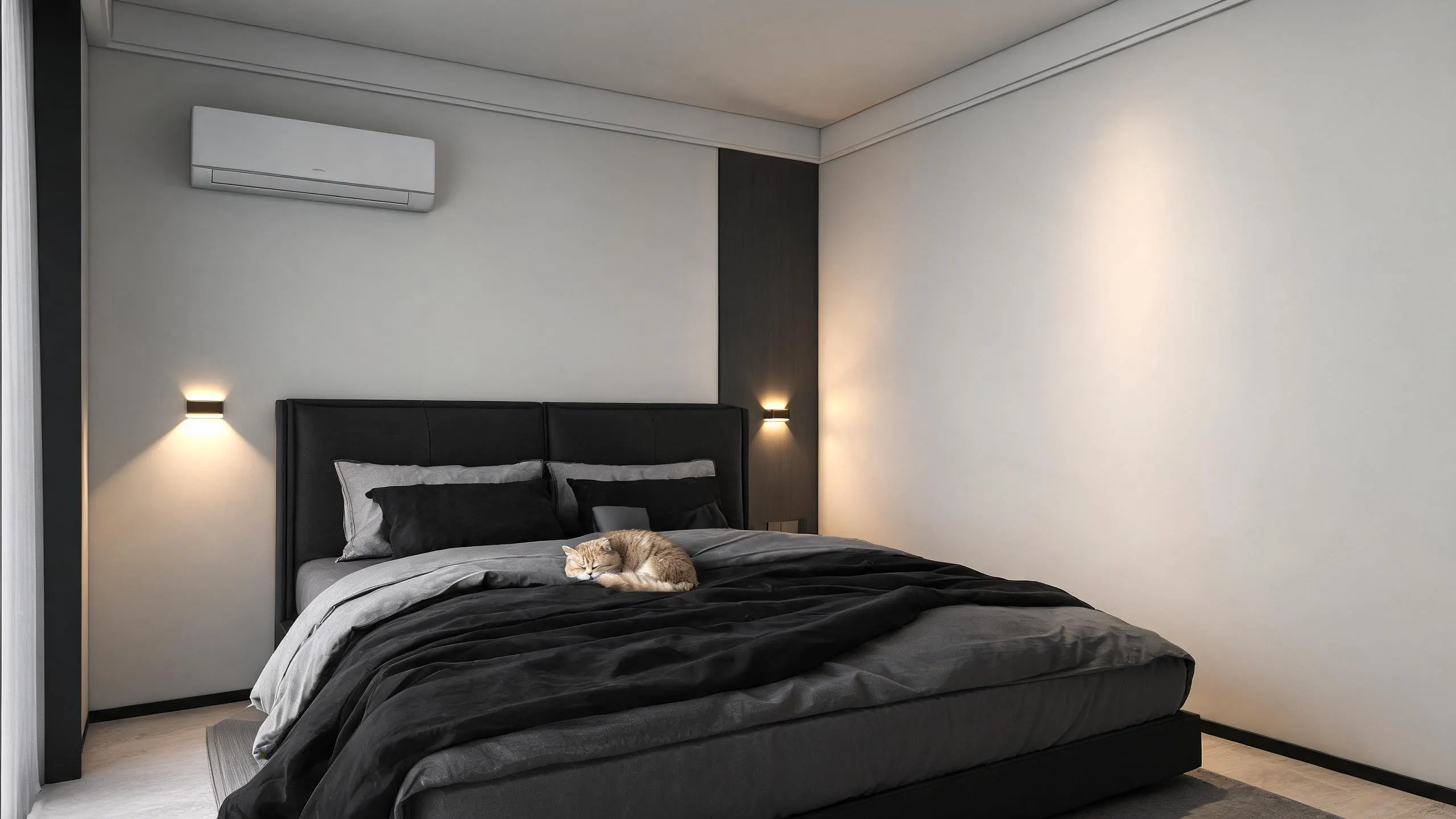





An orange cat sleeps on a neatly made bed with dark grey bedding in a minimalist bedroom with wall sconces and a mounted air conditioner.

Mini Split Installation in Freeport, IL

Tell us about the job

Takes about a minute. No obligation.

New system or replacementMini-splitStephenson County, IL
Step 1 of 2

What ZIP code is the job in?

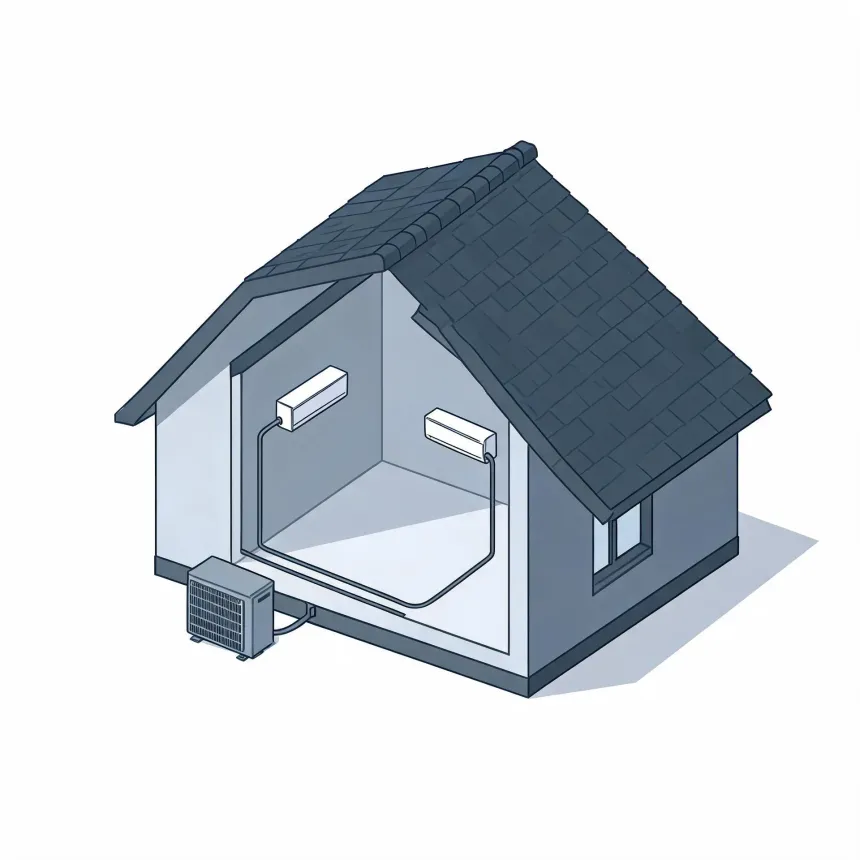
Utility gas heats 67.3% of occupied homes in Stephenson County, most of them through a furnace and ducts. A mini split works differently. Instead of ducts carrying heated air through the house, each indoor unit heats or cools the room it's mounted in, run by an outdoor compressor. That makes it a good match for a room addition, a garage, or a space the furnace doesn't reach well, without extending ductwork to get there. Some homeowners use one to cover a single problem room and keep the gas furnace for the rest of the house. Others are moving away from gas entirely and use a set of mini split units to heat and cool the whole home.

8 months
October through May, your system heats
3 months
June through August, it cools
15°F
the average winter night it heats against
82°F
the average summer afternoon it cools against
Isometric cutaway illustration of a small house with a shingled gable roof, showing two wall-mounted indoor air conditioning units connected by refrigerant lines to an outdoor condenser unit on the ground outside.
Your system heats October through May and cools June through August.

NOAA nClimDiv, 1991–2020 normals

Three months of cooling a year is a light load for any system.

A mini split here doesn't need top-tier efficiency to hold up, just a sound install.

124 severe weather events between 2015 and 2024, no case for sizing up

124 severe weather events from 2015 to 2024
16% of homes statewide lost power a day or more in 2024
67 damaging wind events from 2015 to 2024

Illinois homes paid 15.87 cents per kilowatthour in 2024, above the national average. A mini split runs on electricity, so that rate matters more here than in a state with cheaper power. That doesn't mean paying for the biggest or most expensive unit on the market. A standard, mid-efficiency system sized to the room will hold the electric cost down without paying for capacity this climate never asks for. What drives the bill up is a unit sized wrong for the room or an install that's rushed, not the brand on the box. A clean mount and good line set work matter more than the model number.

A new mini split here has to clear a set efficiency bar

Stephenson County falls in zone 5A. Any mini split installed here has to meet the federal minimum for a split-system heat pump, 14.3 SEER2 for cooling and 7.5 HSPF2 for heating. That's the floor a contractor has to install to, which narrows down what can legally go in. A federal tax credit is available on top of that for units that qualify.

Find a contractor
A man in a dark jacket, cap and tan work pants climbs concrete steps toward a teal front door, carrying a canvas tool bag beside a potted shrub in a blue planter.
A white mini-split air conditioner outdoor condenser unit mounted on metal brackets against a beige stucco exterior wall, with a blue sky and scattered clouds in the background.

An older house, built before this was the plan

Half the homes in Stephenson County were built in 1960 or earlier. A house that old wasn't built with a mini split in mind, and the walls, the window placement, the room layout all came first. The install has to work around that, not the other way around. Line sets run where they can actually reach the outdoor unit, and the indoor head goes where the wall allows it, not necessarily where it would heat the room best. None of that makes the install harder to get right. It just means the system gets planned around the house instead of the house getting built around the system.

What SEER2 and HSPF2 actually measure

SEER2 rates cooling efficiency and HSPF2 rates heating efficiency, each measured over a full season rather than at a single moment. A higher number means the compressor moves more heat per unit of electricity it uses. The rating says nothing about how much heat or cold the unit can put out, only how efficiently it does that once it's running.
Why the rating on the box isn't the rating you get

The printed number comes from a lab test run under set conditions, with the line set length and mount the test calls for. A real install rarely matches that exactly. A longer line set, a poor mount, or refrigerant charged wrong all pull the actual efficiency below what's on the label. Good install work is what closes that gap.

If the old system is a gas furnace, it isn't going anywhere. A mini split covering one room or a few rooms runs alongside it, not in place of it. Where a whole-home setup is replacing the furnace outright, the furnace and its ductwork can usually just get shut down and left in place, disconnected from the gas line by whoever handles that part of the job. The ducts themselves don't need to come out. They can stay in the walls and floor doing nothing, or still carry air if only part of the heating load is moving to the mini split. Any equipment swap that touches the gas line is its own job, separate from mounting the indoor heads and running the line set.

Comparing mini splits comes down to a handful of straight questions, not a spec sheet. Ask how many indoor heads the outdoor compressor is expected to run at once. A system built around a single head gives that room its full output. A system splitting one compressor across several rooms has to share that capacity, so ask what happens when every room wants heat or cooling at the same time. Ask who sized the room, not just the house. A head sized off square footage alone can leave a sunny room sticky in summer or a corner room cold in winter. Ask what line set length the quote assumes, since a longer run between the outdoor unit and the indoor head changes what the system can actually deliver. And ask what happens to the old system, whether it stays as backup or gets disconnected, because that decides what the mini split is actually responsible for covering.