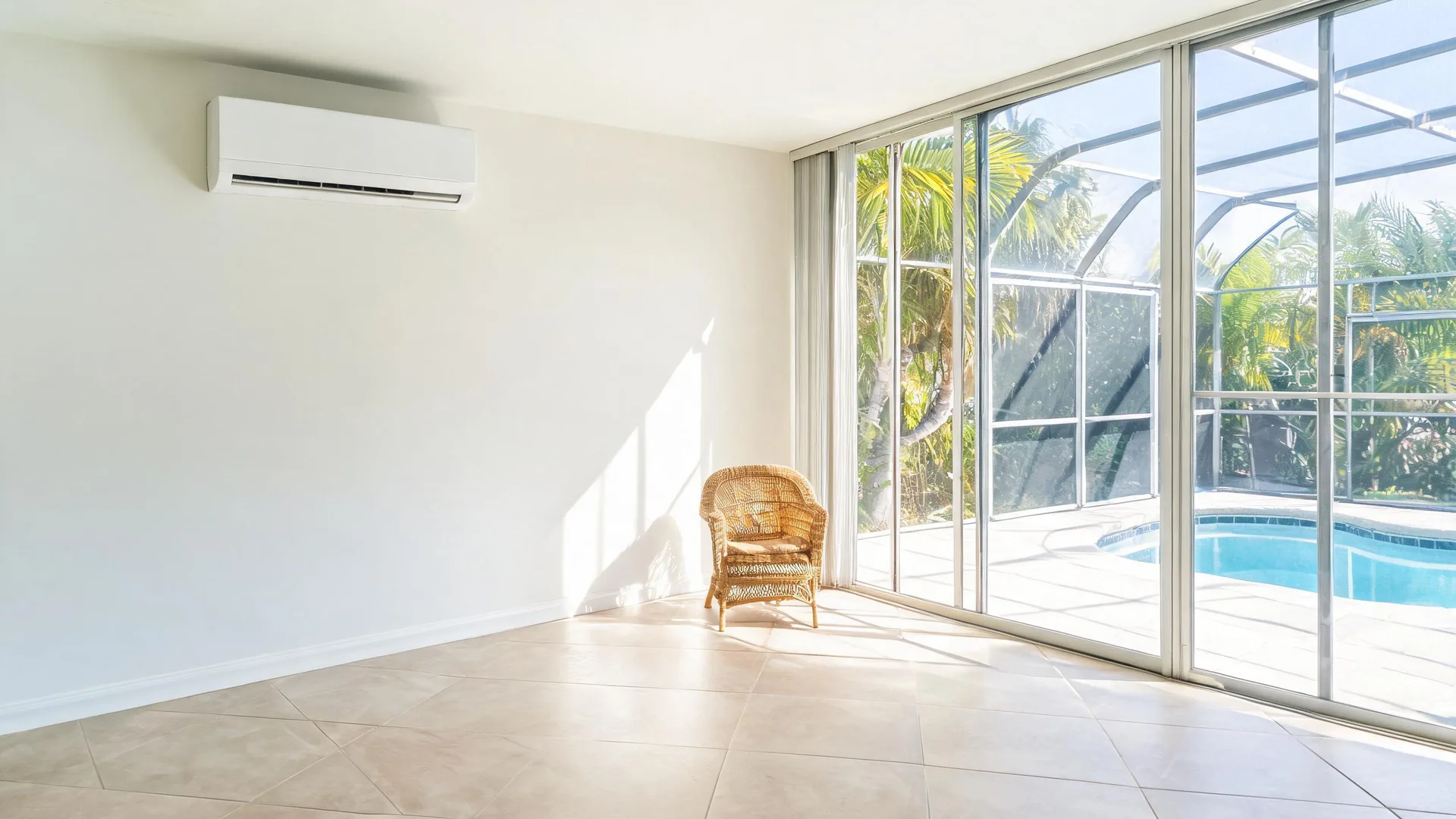
Electricity here runs 17.35 cents a kilowatt-hour
That is higher than what most US counties pay. A mini-split runs on electricity alone, so every degree it moves shows up on that rate.

Takes about a minute. No obligation.
That is higher than what most US counties pay. A mini-split runs on electricity alone, so every degree it moves shows up on that rate.
Summer dew points average 66 degrees across June, July and August in Madison County. A mini-split has to wring that moisture out of the air before the room feels cool, and that work costs more here than where the air runs drier.
NOAA nClimDiv, 1991–2020 normals
Most homes in Madison County heat with gas, at 60.7 percent.
A mini-split adds cooling and backup heat alongside that gas furnace, instead of replacing it.




Madison County falls in climate zone 4A, which the energy code treats as mixed: humid enough to demand real cooling work, cold enough to demand real heating work. Any mini-split sold here has to clear a federal floor to match that. For units built from 2023 onward, that means at least 14.3 Btu of cooling for every watt-hour it draws over the summer, and at least 7.5 Btu of heat per watt-hour over the winter. That standard applies whether the system has ducts or not. It sets the floor, not the ceiling, so systems above it exist, and in a zone that asks this much of both seasons, the difference shows up on the bill.
Power here costs more than most places pay, and a mini-split runs on nothing but power. Picking one rated above the federal floor instead of right at it is how that cost gets held down, on every bill, every summer and winter the unit runs.
Find a contractorA load calculation on the actual rooms tells an installer what size unit to put in. That matters more in a house built in 1971 or earlier, when central air wasn't standard and nothing about the place was laid out with a mini-split in mind. Square footage alone does not answer it. Oversized, the unit cools the room fast without pulling the moisture out of the air. Undersized, it runs flat out all summer trying to keep up. Either mistake shows up on the power bill before it shows up anywhere else.
A mini-split carries a cooling rating and a separate heating rating, because the two sides of the machine do different work. The cooling number tells you how much heat it moves out of the room per watt-hour drawn. The heating number tells you the same thing running in reverse, pulling heat from outside air into the room. A unit can be strong on one side and average on the other. Reading only one number gives you half the picture of a machine that has to carry both seasons.
That number on the label gets measured on a unit matched to the space it's supposed to condition. Put the same unit in a room it's too big or too small for, and it stops hitting that rating. Oversized, it cools the air fast and shuts off before it has pulled the moisture out, so it cycles on and off all day burning power without finishing the job. Undersized, it runs constantly and never gets ahead. The rating on the box only holds up when the sizing behind it is right.
Sizing a mini-split starts with a room by room load calculation, not a guess. The installer looks at how much glass is in each wall, which way the room faces, what's above and below it, and how people actually use the space. A sunroom and a bedroom of the same square footage can carry very different loads. That number, in Btu, is what decides which unit goes in, not the floor plan alone. Get it wrong and the machine fights the room instead of conditioning it. A unit too big cools the air fast and shuts off before it has pulled the humidity out, so the room feels cool and damp at once. A unit too small never shuts off at all, running flat out and still losing ground on the hottest or coldest days. Either way the compressor is cycling or straining more than it should, and that wear shows up years before it ought to.
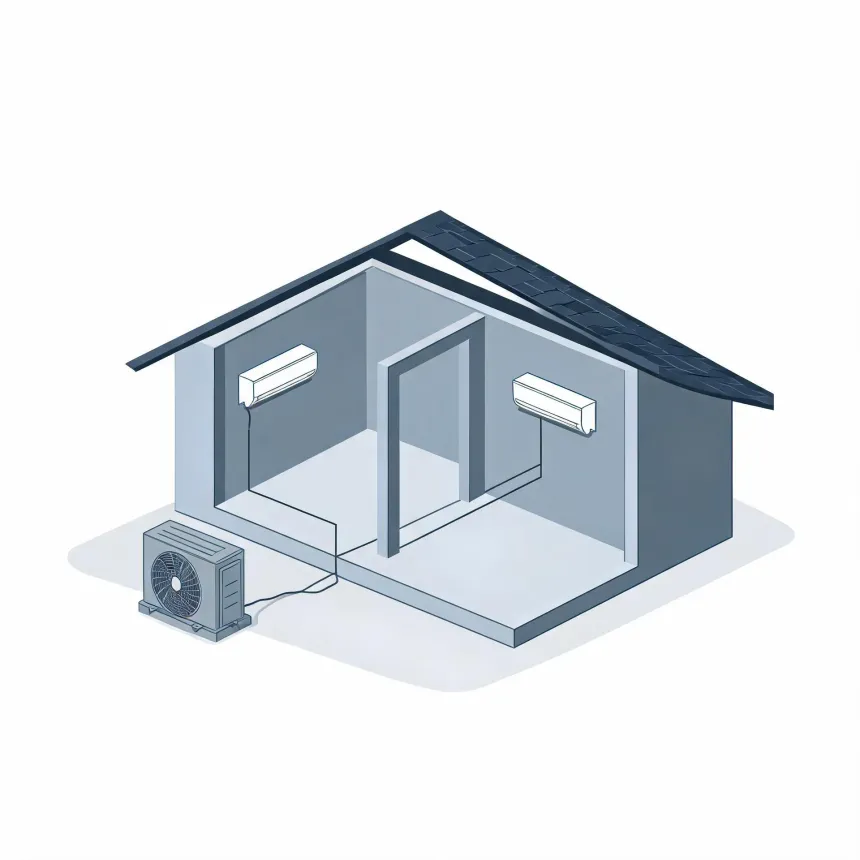
Installation starts outside, not with the indoor unit. The outdoor condenser needs a clear, level pad and enough space around it for air to move through the coil, so the installer picks that spot before anything else goes in. Indoors, the air handler goes high on a wall or on the ceiling, in the spot the load calculation and the room layout call for, not just wherever looks convenient. A small hole gets drilled through the wall for the line set, the pair of refrigerant lines that run between the two units, along with the drain line and the electrical whip. Once the lines are run and connected, the installer pulls a vacuum on the system to clear out air and moisture before the refrigerant ever moves through it. Any moisture left in those lines turns into acid over time and eats at the compressor from the inside. After the vacuum holds and the charge is set, the unit gets powered on and tested across both cooling and heating before the job is called finished.