






A tabby cat rests on a made bed in a dark modern bedroom equipped with a wall-mounted split air conditioner.

Mini Split Installation in Joliet, IL

Tell us about the job

Takes about a minute. No obligation.

New system or replacementMini-splitWill County, IL
Step 1 of 2

What ZIP code is the job in?

Will County logged 346 severe weather events between 2015 and 2024. Damaging wind caused 202 of those, hail caused 89, and 33 tornadoes touched down in that stretch. A mini-split's outdoor unit sits exposed to all of it, unlike a furnace tucked in a basement. Statewide, 16% of Illinois households lost power for a full day or more in 2024. A heat pump system with no backup leaves you with no heat or cooling until the power comes back.

8 months
October through May, your system heats
3 months
June through August, it cools
20°F
the average winter night it heats against
83°F
the average summer afternoon it cools against
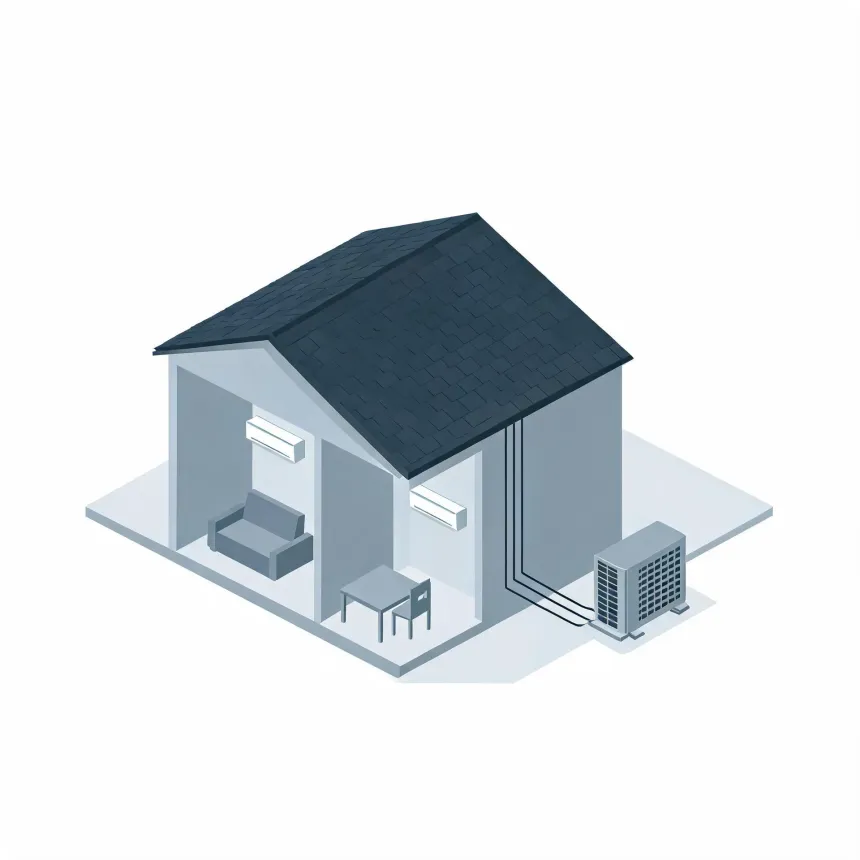
Isometric illustration of a cutaway house with a dark shingled gable roof, showing two wall-mounted indoor air handlers, a sofa, table and chair inside, and refrigerant lines running to an outdoor condenser unit beside the building.
Your system heats October through May and cools June through August.

NOAA nClimDiv, 1991–2020 normals

Cooling runs June through August here.

Get the installation done in May and the crew isn't racing a heat wave to finish.

Almost every house around Joliet runs on gas, which changes what a mini-split's job is here

87.9% of homes heat with gas
Cooling runs June through August
Summer afternoons average 83°F
Built for Weather That Doesn't Let Up202 wind events and 89 hail events hit this county between 2015 and 2024, and the outdoor unit sits right in the open for all of it.

Will County falls in climate zone 5A, a zone where heating carries more of the load than cooling. Any mini-split installed here, ductless or not, has to meet the same federal minimum as other split-system heat pumps: at least 14.3 Btu of cooling for every watt-hour it draws over the summer, and at least 7.5 Btu of heat for every watt-hour over the winter. That standard applies to units built from January 2023 onward, so it sets the floor for what a contractor can install now. A federal tax credit is available on top of that for qualifying equipment. The standard doesn't carve out a separate rule for ductless systems, so a mini-split has to clear the same bar as any other heat pump sold today.

Plan the installation around the outages, not just the weather

Where the outdoor unit goes matters here. Have the contractor set it where wind-blown debris and hail have less of a shot at it, with clearance from fences and low branches. Ask what backup options exist for the indoor head too, so a day without power doesn't mean a day without heat or cooling.

Find a contractor
A man in a dark long-sleeved shirt and brown work pants, seen from behind, climbs porch steps carrying a worn canvas tool bag toward a teal front door, with a planter of white flowers and grass beside the entry.
A white outdoor air conditioner condenser unit mounted on metal wall brackets against gray horizontal siding, with a blue sky and white clouds behind it.

Running Through Every Season, Not Just the Easy Ones

Cooling only runs three months here, June through August, but those afternoons average 83 degrees and the unit doesn't get a break once it starts. Winter is the long season in zone 5A, and if this mini-split is doing heat pump duty that whole stretch, it's working through the months that matter most. Add in a wind event or hail storm landing on that outdoor unit during either season, and a system built for mild weather somewhere else starts showing problems early. Size it for what this county actually throws at it, not for the average.

The Old Unit Doesn't Just Unplug

A mini-split's refrigerant line runs between the outdoor compressor and the indoor head, and that line has to be recovered before anything gets disconnected. A contractor pulls the refrigerant into a recovery tank rather than letting it vent, then opens the line set, caps the ports, and removes both the outdoor unit and the wall-mounted head. The mounting plate and line set holes get removed or sealed depending on what the new system needs.
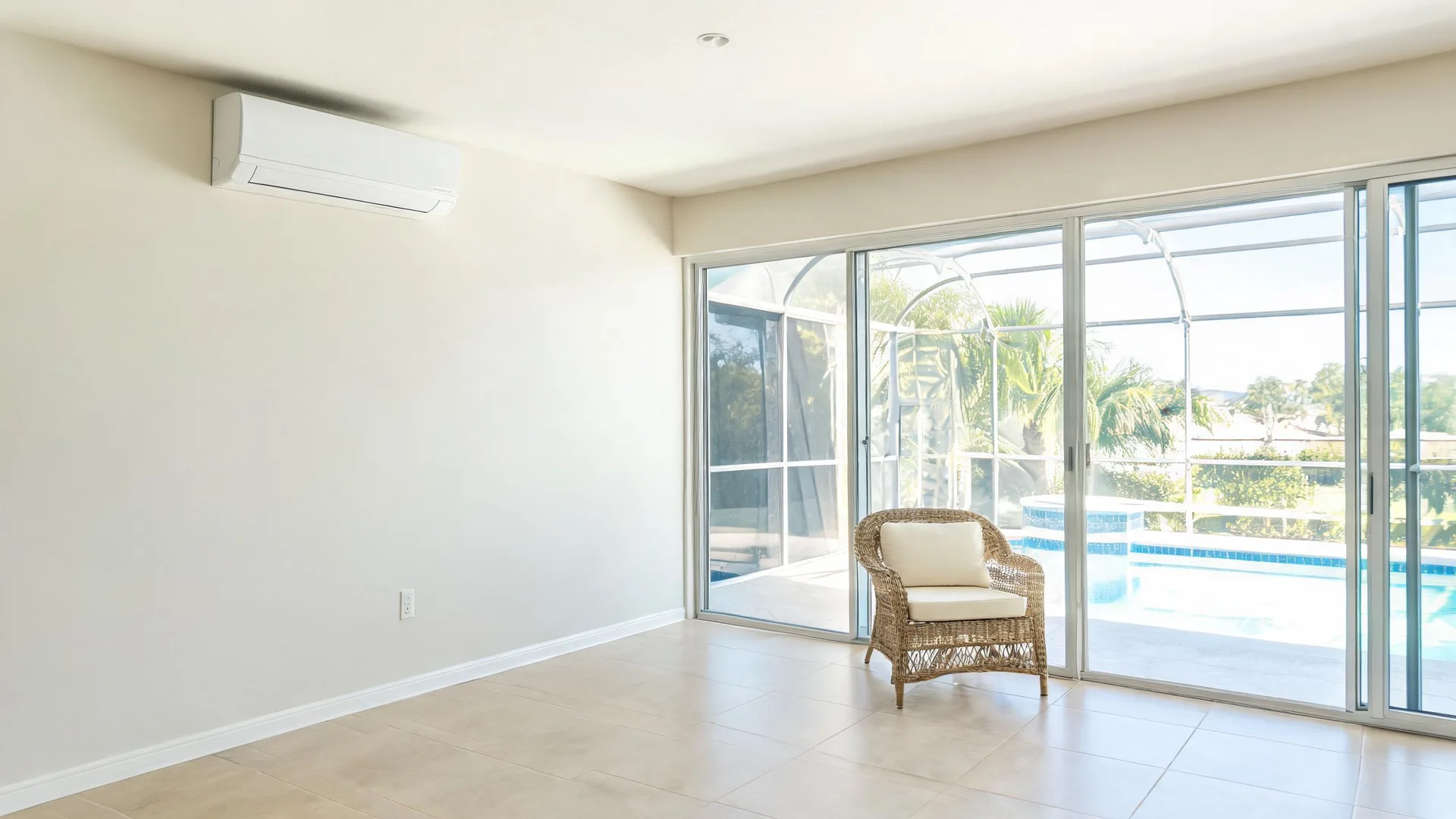
What Happens If You're Replacing an Older Mini-Split

Older systems sometimes ran on a refrigerant that's no longer produced, which is one reason a straight swap isn't always possible. The new line set usually can't reuse the old one either, since line size and refrigerant type both have to match the new equipment. A contractor checks whether the existing electrical whip and disconnect box can serve the new unit or need to be replaced alongside it.

Sizing a mini-split starts with a load calculation, not a tape measure around the room. A contractor works out how much heat the space gains in summer and loses in winter, factoring in window area, insulation, ceiling height, and what's on the other side of each wall. Square footage alone misses all of that. Oversize the unit and it cools the room fast, shuts off, and leaves the air clammy because it never ran long enough to pull moisture out. Undersize it and the compressor runs constantly, straining to keep up on the hottest or coldest days without ever reaching the set temperature. Either mistake wears the equipment harder than running the right size would.

Installation starts with the outdoor unit and indoor head going up, but most of the day goes into what connects them. The line set carrying refrigerant between the two has to be cut to length, run through a sleeved hole in the wall, and connected with flared fittings at both ends. A contractor pulls a vacuum on that line set before any refrigerant moves through it, which clears out air and moisture that would otherwise cause corrosion or block flow later. Skip that step and the system can run for a while before the problem shows up, by which point it's a harder fix. Once the line is holding vacuum, the system gets charged, the electrical connections get made at the disconnect box, and the contractor tests heating and cooling before calling the job done. A wall-mounted head going in is a shorter job than one tied into existing ducts, since there's no ductwork to inspect or modify first.