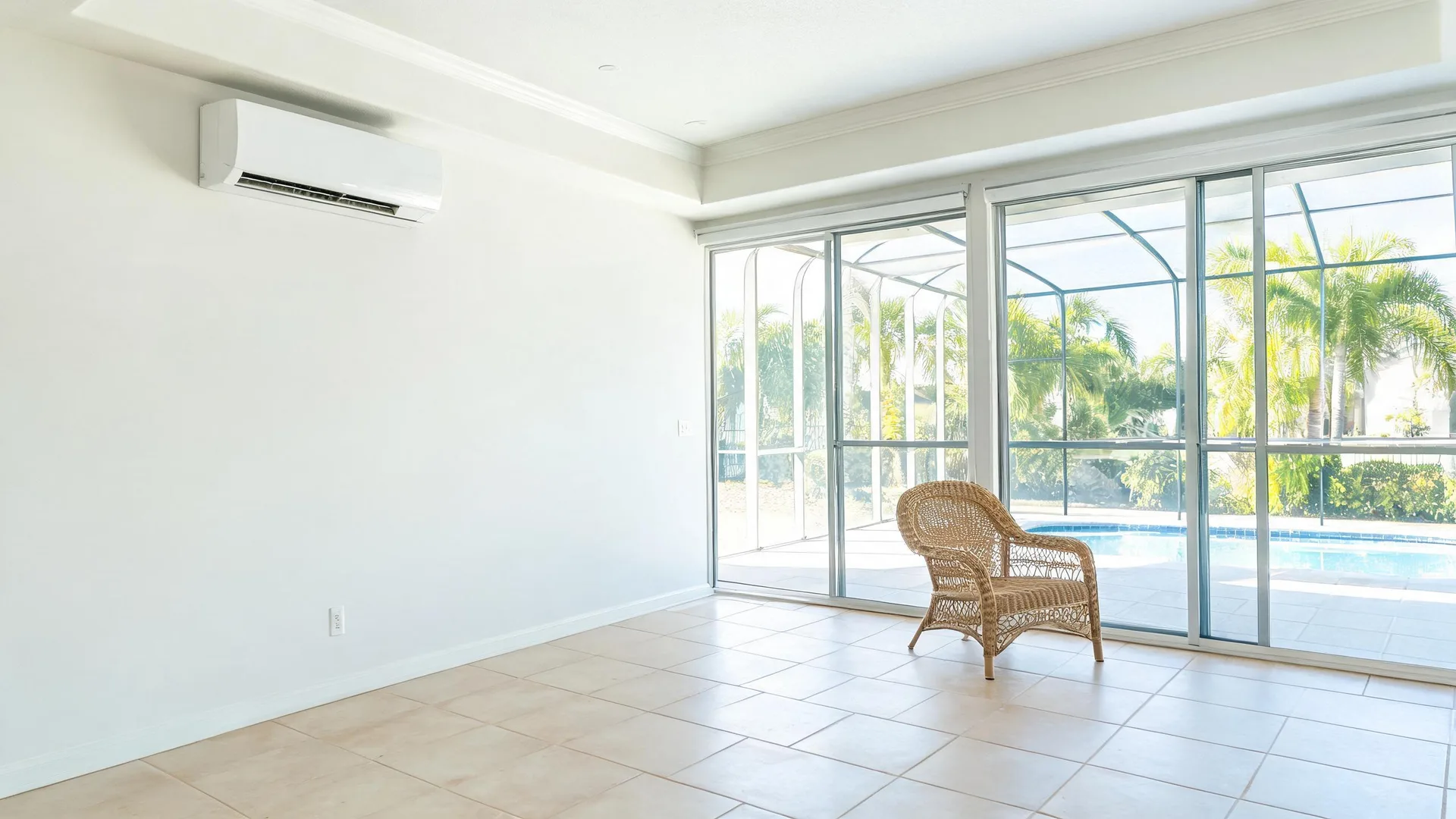
Electricity here runs 17.22 cents a kilowatt-hour
That is higher than what most US counties pay. A mini-split runs on electricity, so every hour it works, that rate applies.
Takes about a minute. No obligation.
That is higher than what most US counties pay. A mini-split runs on electricity, so every hour it works, that rate applies.
A mini-split that moves heat efficiently uses less power to do the same job. At this rate per kilowatt-hour, the difference between a unit that runs well and one that doesn't shows up on every bill, not just the big ones.
NOAA nClimDiv, 1991–2020 normals
A mini-split sized too big cools the room fast, then shuts off before it pulls the moisture out of the air.
Getting the size right means a room by room look at windows, insulation, and layout, not a guess based on square footage.




Williamson County falls under zone 4A in the 2021 energy code, a mixed climate that asks real work of both the heating side and the cooling side. A mini-split sold here counts as a split-system heat pump under the federal standard, and any unit built from January 2023 on has to clear 14.3 for the cooling rating and 7.5 for the heating rating. Those numbers set a floor. A contractor quoting something below it isn't offering you a deal, they're offering you something that can't legally be installed. Above that floor, a federal tax credit is available on qualifying equipment, which is worth asking about when you're comparing units.
Get the sizing and the equipment right at install, and the rate you pay on every bill from here on is lower than it has to be. That's worth getting right the first time.
Find a contractorA mini-split runs for years, not months, so look past the sticker on the unit and ask what keeps it running well that whole time. Ask what the warranty covers on the compressor versus the rest of the system, since that part costs the most to replace and fails the least gracefully. Ask whether the contractor matches the indoor head and outdoor condenser as a factory pair, because mixing brands or mismatched models can quietly drop the efficiency the rating promised. Ask how the line set gets run and insulated, since a poorly insulated line set loses capacity before the refrigerant even reaches the room. Ask what maintenance the unit needs and how often, because a system that gets its coils and filters cleaned on schedule holds its efficiency, and one that doesn't drifts further from it every year it runs.
The efficiency number on a mini-split comes from lab testing that runs the unit through a full range of conditions, not just its best moment. It reflects how much heat the system moves for the electricity it draws, averaged over a season of real operation. A higher number means the compressor and the fan motors are doing more work per watt, not that the unit is bigger or stronger.
That number on the label assumes the refrigerant charge is exact, the line set is sized and insulated correctly, and the indoor head is matched to the outdoor condenser. Get any of those wrong and the system can run for years at a lower efficiency than what's printed on it, with no warning light to tell you. The rating is a ceiling a correct install reaches, not a guarantee that comes in the box.
If the old system is forced air, it usually stays in place. Pulling out a furnace and its ductwork is a separate job, and most mini-split installs just add new equipment alongside what's already there or replace one failed component at a time. If the old system is another ductless unit, the outdoor condenser and indoor head come down, and the line set gets checked rather than reused. Refrigerant in an old system has to be recovered properly, not vented, so a contractor will pump it down and capture it before disconnecting anything. Old mounting brackets and pads often aren't reused even when they look fine, since a new condenser may have different clearance or weight needs. Whatever gets hauled away, the wall and the refrigerant inside the old unit both need proper disposal, not a trip to the curb.
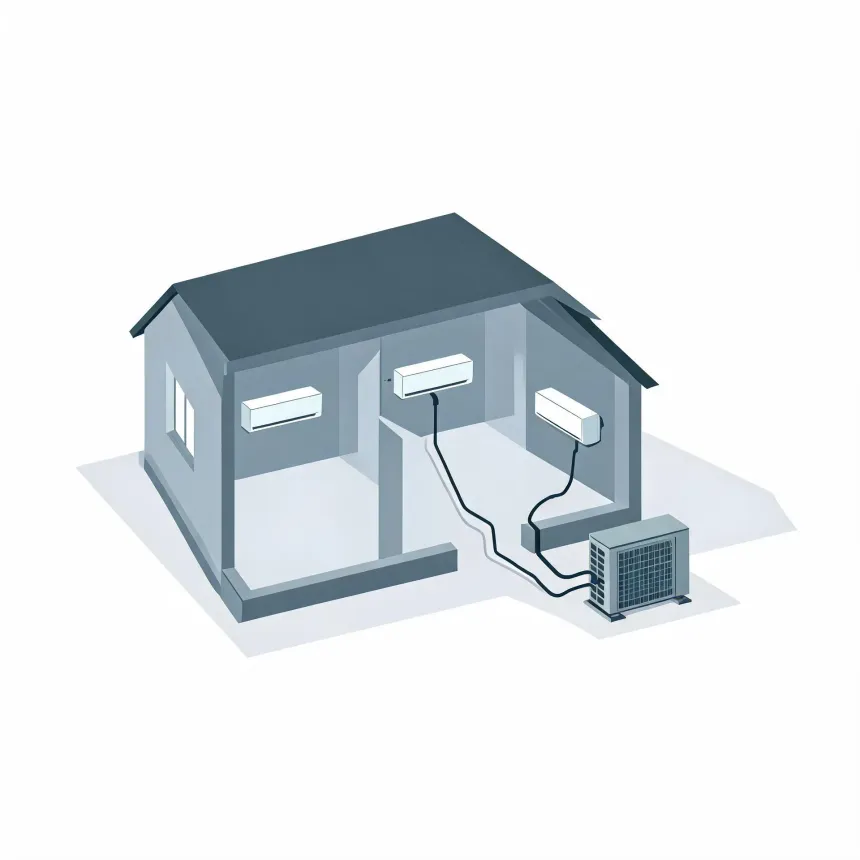
Installation starts with placement, not drilling. The indoor head needs clear airflow across the room and a clean path to the outdoor unit, so the contractor marks both before any tool comes out. A hole gets drilled through the wall for the line set, the wiring, and the condensate drain, angled slightly so condensation runs outside instead of back into the wall. The outdoor condenser sits on a pad or bracket, set level and away from anything that blocks airflow around it. Once both ends are mounted, the line set gets connected, the system is pressure tested for leaks, and the air is pulled out of the lines before refrigerant ever flows. Only after that vacuum test holds does the contractor open the valves and let the system run.