Gas heats most of this county
Utility gas heats 77.7% of occupied homes in Rock Island County. Electricity accounts for most of the rest, at 17.9%, with a small share running on bottled or LP gas.
Takes about a minute. No obligation.
Utility gas heats 77.7% of occupied homes in Rock Island County. Electricity accounts for most of the rest, at 17.9%, with a small share running on bottled or LP gas.
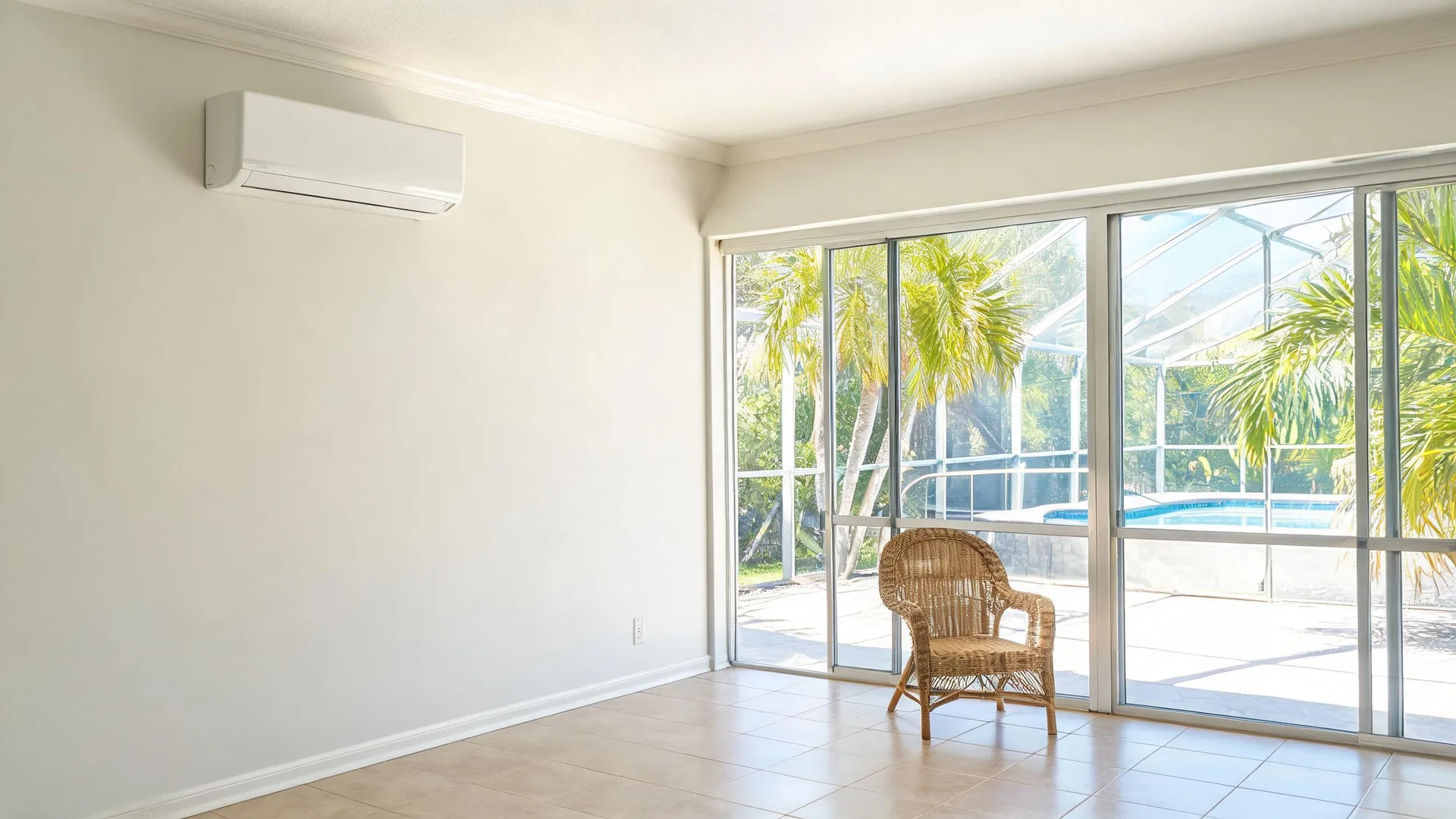
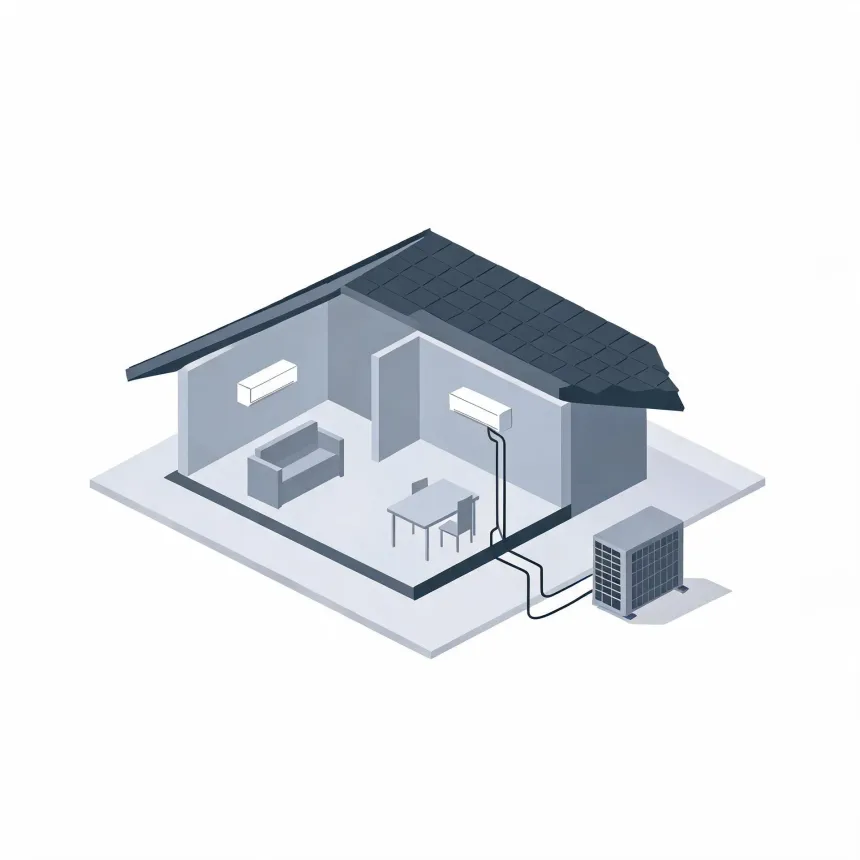
In a gas-heated house, a mini-split usually handles cooling, or covers a room the furnace and ducts don't reach well. The furnace still carries the heating load on the coldest days.
NOAA nClimDiv, 1991–2020 normals
Cooling here only runs June through August.
Get the mini-split in before June and the install happens on your schedule, not during the first hot week.



Electricity in Rock Island County averaged 10.13 cents per kilowatt-hour in 2025, lower than most of the country pays. That changes the math on which mini-split makes sense here. A top-efficiency model costs more up front, and with power this cheap, the lower bills take longer to catch up to that extra cost. Efficiency still matters, but sizing and installation matter more. A unit that's too big or too small for the room, or set in the wrong spot, costs you in comfort no matter what its rating says.
Half the homes in Rock Island County were built in 1962 or earlier. An older house usually means a mini-split has to work with the walls, windows, and room layout you've already got, not a blank slate. Getting the sizing and placement right for your rooms matters as much as the unit you pick.
Find a contractorCooling runs three months here, June through August, with afternoon highs averaging 83°F. The dew point sits around 63°F those same months, which is what makes the air feel heavy rather than just warm. That's a normal summer load for a mini-split. It doesn't call for a bigger compressor or a higher-tier unit than the room calls for. Size it to the space, and it'll keep up those three months same as any other.
The number on the label comes from testing the unit across a range of conditions, not its peak output on one hot afternoon. A high rating means it holds efficiency across a full range of loads. It doesn't promise that every hour of operation will be cheap, just that the average over time is good. Two units with the same cooling capacity can carry very different ratings depending on how well they modulate at partial load, which is where a mini-split spends most of its running time.
The rating describes the equipment, not the installation. A unit sized wrong for the room, or placed where it short-cycles or struggles to reach the space it's meant to cool, won't deliver the efficiency on its label no matter how high that number is. Refrigerant charge, line length, and placement of the indoor head all affect real-world performance as much as the rating does. A mid-rated unit installed right will often outperform a high-rated one installed poorly.
When you're comparing systems, ask how many indoor heads the outdoor unit is meant to run, and whether it's a single-zone or multi-zone setup. A multi-zone condenser splits its capacity across every head connected to it, so adding rooms later can mean each one gets less than it would on its own dedicated unit. Ask about the minimum output too, not just the maximum. A system that can't turn down low will short-cycle in a small room, switching on and off instead of running steady, and that's harder on the compressor and worse for comfort than a unit that modulates down gently. Ask what line length the quoted capacity assumes, since running refrigerant lines farther than that can change how the unit actually performs once it's installed. And ask who's doing the vacuum and charge check at the end, because a mini-split that isn't evacuated and charged properly will never hit the numbers on its spec sheet, no matter how good that sheet looks.
Rock Island County sits in climate zone 5A, a cool zone where heating carries more of the year's work than cooling, with enough summer humidity that the code accounts for it too. Any split-system heat pump sold here, mini-splits included, has to meet the same federal minimum: at least 14.3 Btu of cooling for every watt-hour it draws over the summer, and at least 7.5 Btu of heating for every watt-hour over the winter. That's not a target a contractor aims for. It's the floor every unit on the market already clears before it reaches your house. So the question when you're comparing systems isn't whether one meets the standard, since they all do. It's which one is sized and placed right for the room it's going in.