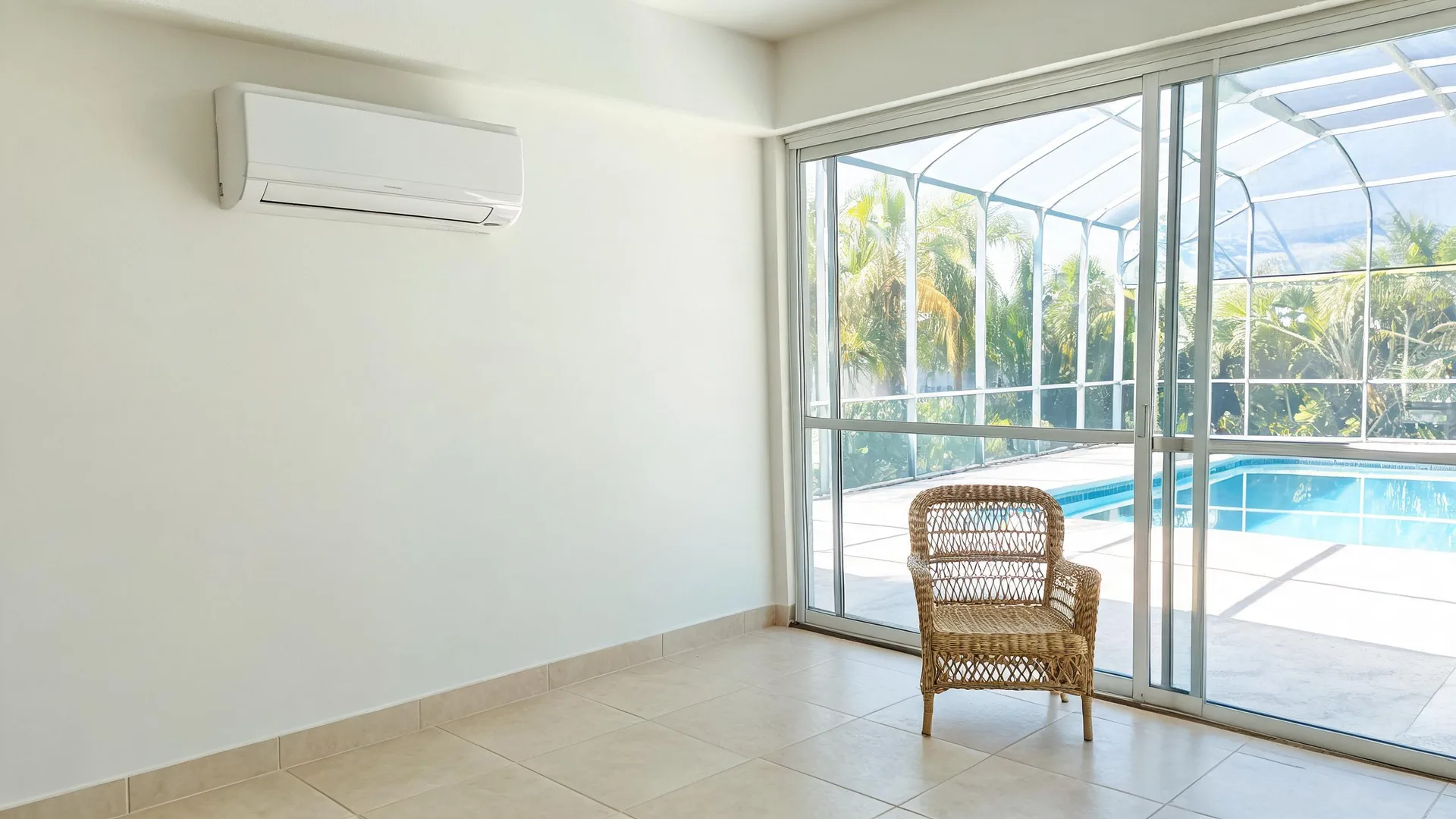
Electricity here runs 17.36 cents a kilowatt-hour
That is higher than what most US counties pay. A mini-split runs on electricity from the first watt, so that rate applies every time it cycles on.
Takes about a minute. No obligation.
That is higher than what most US counties pay. A mini-split runs on electricity from the first watt, so that rate applies every time it cycles on.
A mini-split that moves heat well instead of fighting to do it uses fewer of those expensive kilowatt-hours to hold the same temperature. At this rate, the difference between a system that runs well and one that does not shows up on every bill it sends.
NOAA nClimDiv, 1991–2020 normals
Cooling season starts in May here.
Get the mini-split in before April ends and the installer isn't racing a heat wave to do it.



Jefferson County sits in climate zone 4A, a mixed zone that asks real work of both heating and cooling. Any mini-split put in here has to meet the federal minimum for that kind of system. For a split-system heat pump, that means pulling at least 14.3 Btu of cooling from every watt-hour of electricity over the summer, and delivering at least 7.5 Btu of heat per watt-hour over the winter. Those numbers set the floor. A unit can be built to do better, but nothing sold here can legally do worse.
That rating floor is the minimum, not the target. Picking a unit that clears it by more gets paid back on every bill at this electric rate. Worth comparing before you settle on one.
Find a contractor
A mini-split that's installed right will run for years without much thought. One installed wrong starts showing it within the first year, sometimes the first season. The line set gets bent too sharp and the refrigerant can't flow the way it should. The lineset gets undercharged or overcharged and the compressor works harder than it needs to every single cycle. A wall unit mounted on the wrong part of the wall short cycles because it reads the room temperature wrong, and short cycling wears parts out faster than steady running ever would. None of that shows up on the sales brochure. It shows up in how many hours a day the compressor runs and how many times it has to start up, which is the hardest thing on it. A unit sized right for the space it's heating and cooling, with a properly evacuated line set and the correct refrigerant charge, settles into long steady cycles. That's what the compressor is built for. Fighting a bad charge or short cycling because of bad placement is not.
A mini-split is sized to the room it conditions, not just the square footage on paper. Window count, ceiling height, and what's on the other side of the walls all factor into the load calculation an installer should run before quoting a unit. Oversized and the system short cycles, never running long enough to settle into steady operation. Undersized and it runs flat out without ever catching up. Ask to see the load calculation, not just a number pulled from a chart.
Some systems are built to run one indoor head off one outdoor unit. Others split that same outdoor unit across two or three rooms at once. Running more zones than the outdoor unit is rated for means every head gets less than it needs when they call for heating or cooling at the same time. Ask how many zones the outdoor unit supports and how many you're actually installing, because those numbers need to match.
Taking out the old system matters as much as putting in the new one. If the home had central air or a furnace before, that equipment and its ductwork don't do anything for a mini-split, since it moves heat through refrigerant lines instead of ducts. An old window unit or a failed mini-split is a smaller job, but the refrigerant in it still has to be recovered properly, not just vented, because releasing it into the air is illegal and the lines need to be empty before anyone cuts into them. If the old system ran on a dedicated circuit, an electrician should check whether that circuit and breaker are right for the new unit's draw, since mini-splits don't always pull power the same way whatever was there before did. Any wall bracket or mounting pad left from the old equipment should come down too, since the new indoor head gets placed where the load calculation says it works best, not wherever the last one happened to hang.
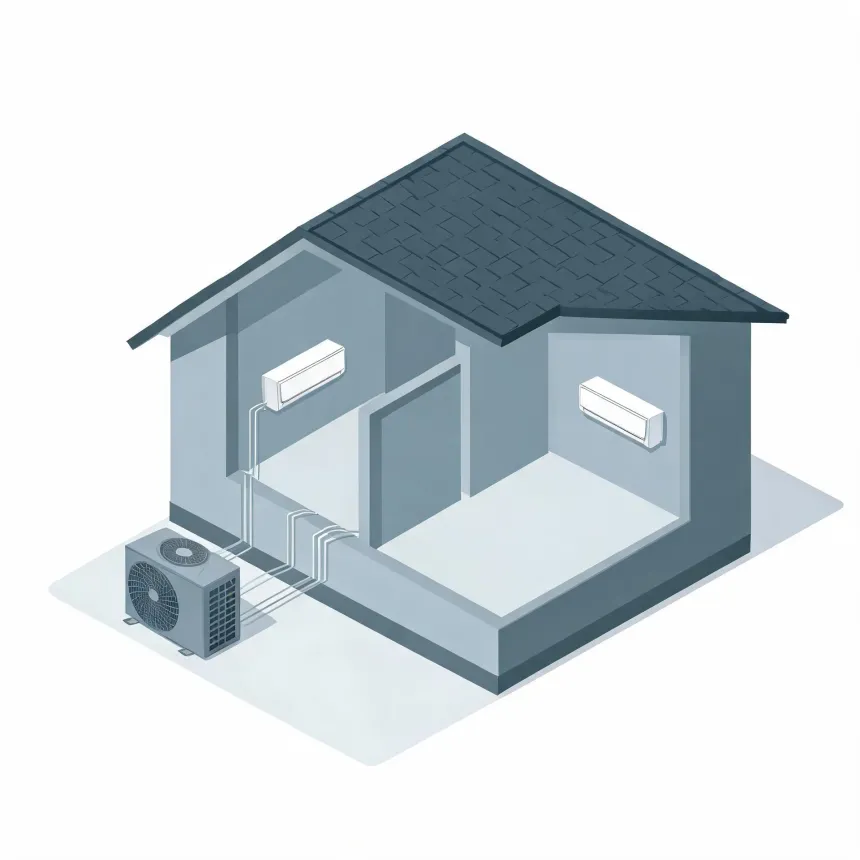
Installation starts outside, not in the living room. The outdoor unit needs a pad or mounting bracket set level and clear of the spots where runoff or snow piles up, since a unit tilted off level won't drain condensate right. From there the installer runs the line set to the indoor head, through a hole drilled in the wall and sealed against weather once the lines are through. The lines get connected, then the whole system is pulled down to a vacuum before any refrigerant moves, which clears out moisture and air that would otherwise damage the compressor. Once the vacuum holds, the system gets charged and the installer checks pressures while it runs a cycle in both heating and cooling before calling it done. None of this is fast work if it's done right, and rushing the vacuum step is one of the most common corners cut on a bad install.