





A lit residential street at dusk featuring large two-story brick houses with glowing windows, mature trees, and a street lamp.

Mini Split Installation in Naperville, IL

Tell us about the job

Takes about a minute. No obligation.

New system or replacementMini-splitDuPage County, IL
Step 1 of 2

What ZIP code is the job in?

DuPage County recorded 275 severe weather events between 2015 and 2024. Damaging wind caused 180 of those, hail caused 58, and 21 tornadoes touched down in that stretch. A mini-split's outdoor unit sits exposed to all of that, so where it goes and what shields it matters as much as the install itself. Outages follow the same storms. Across Illinois, 16% of households went at least a day without power in 2024, and a day without power means no heat and no hot water, not just no air conditioning.

8 months
October through May, your system heats
3 months
June through August, it cools
19°F
the average winter night it heats against
82°F
the average summer afternoon it cools against
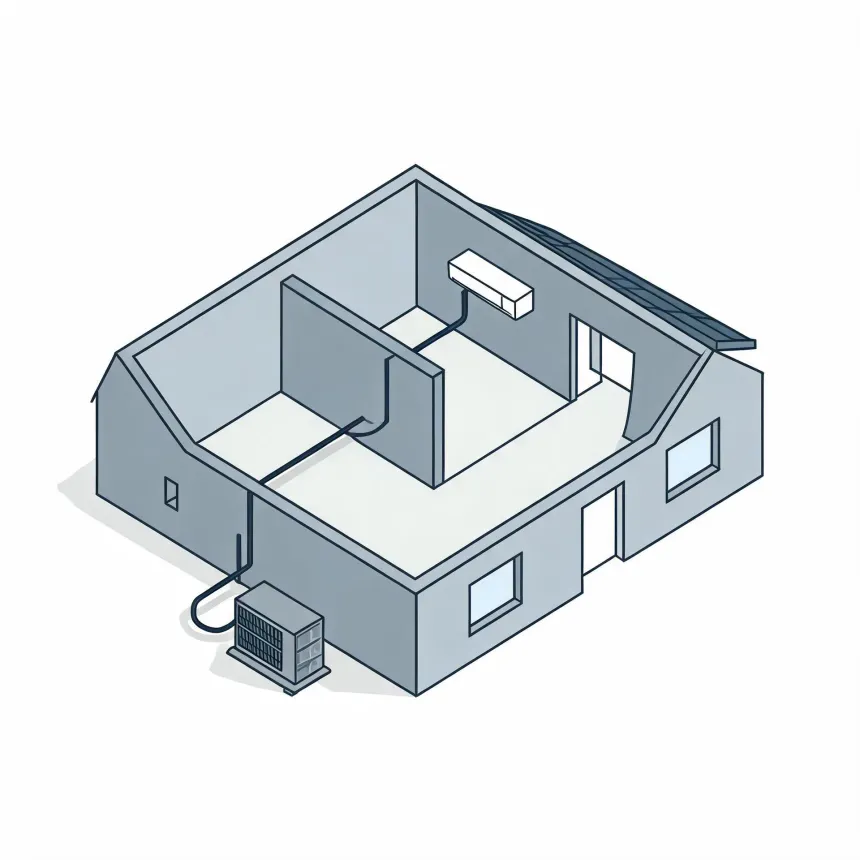
Isometric line illustration of a cutaway house showing an interior wall-mounted air conditioning unit connected by a line to an outdoor condenser beside the exterior wall.
Your system heats October through May and cools June through August.

NOAA nClimDiv, 1991–2020 normals

Cooling season in DuPage County runs June through August.

Get the install done in May and the storms that knock out power all summer won't catch you without a backup plan.

Most homes here run on gas, which is exactly why a mini-split needs its own plan for power

83% of homes heat with gas
Cooling runs June through August
Summer afternoons average 82°F

DuPage County falls in climate zone 5A, a cool zone where the heating load matters more than the cooling load. Any split-system heat pump sold here, ductless models included, has to meet the federal minimum for units built from 2023 on: at least 14.3 Btu of cooling for every watt-hour it draws, and at least 7.5 Btu of heat for every watt-hour in winter. That rule doesn't care what brand or size you pick, it sets the floor every one of them has to clear. A unit that meets it is allowed to be installed here. A system that meets the minimum may also qualify for the federal energy credit, worth checking against the paperwork before you buy.

Pick the spot and the backup plan before the install, not after the first storm

Ask the installer to walk the yard before they pick a spot for the outdoor unit. Somewhere it's shielded from wind and clear of where ice or branches could come down on it. Ask what happens to heat and hot water if the power goes out, and whether that's something this install can cover. Settle both before the crew shows up, not after.

Find a contractor
A man in a cap, dark jacket and tan pants, seen from behind, steps onto a porch toward a teal front door while carrying a waxed canvas tote bag; a potted shrub in a blue planter sits to the right.
A white outdoor air conditioner condenser unit mounted on metal wall brackets against gray horizontal siding, with a blue sky and white clouds behind it.

The number on the label is a best case, not a promise

That efficiency number on the label is a ratio, not a guarantee. It tells you how much heat the unit moves for the power it draws, measured at a set outdoor temperature in a lab. Run it on a mild afternoon and it gets close to that number. Run it on the coldest night of the year or the hottest day, and it works harder for the same result, because the ratio holds best near the middle of the range it was tested at. That's true of every heat pump, ductless or not. The rating also assumes a clean filter, a properly charged line set, and a coil that isn't caked with dust or ice. Skip maintenance for a few years and the real number drifts well below what's on the sticker, even though the machine hasn't changed. None of that shows up on the label. It just shows up on the bill.

The line set and where the indoor head goes drive the labor

The outdoor unit and the indoor head connect through a line set carrying refrigerant, plus a drain line and a power run between them. A short, straight path through one wall is a quick job. Running that line up through a second floor, around framing, or across a long distance to reach the room that needs it takes more time and more material, and that time is most of what you're paying for.
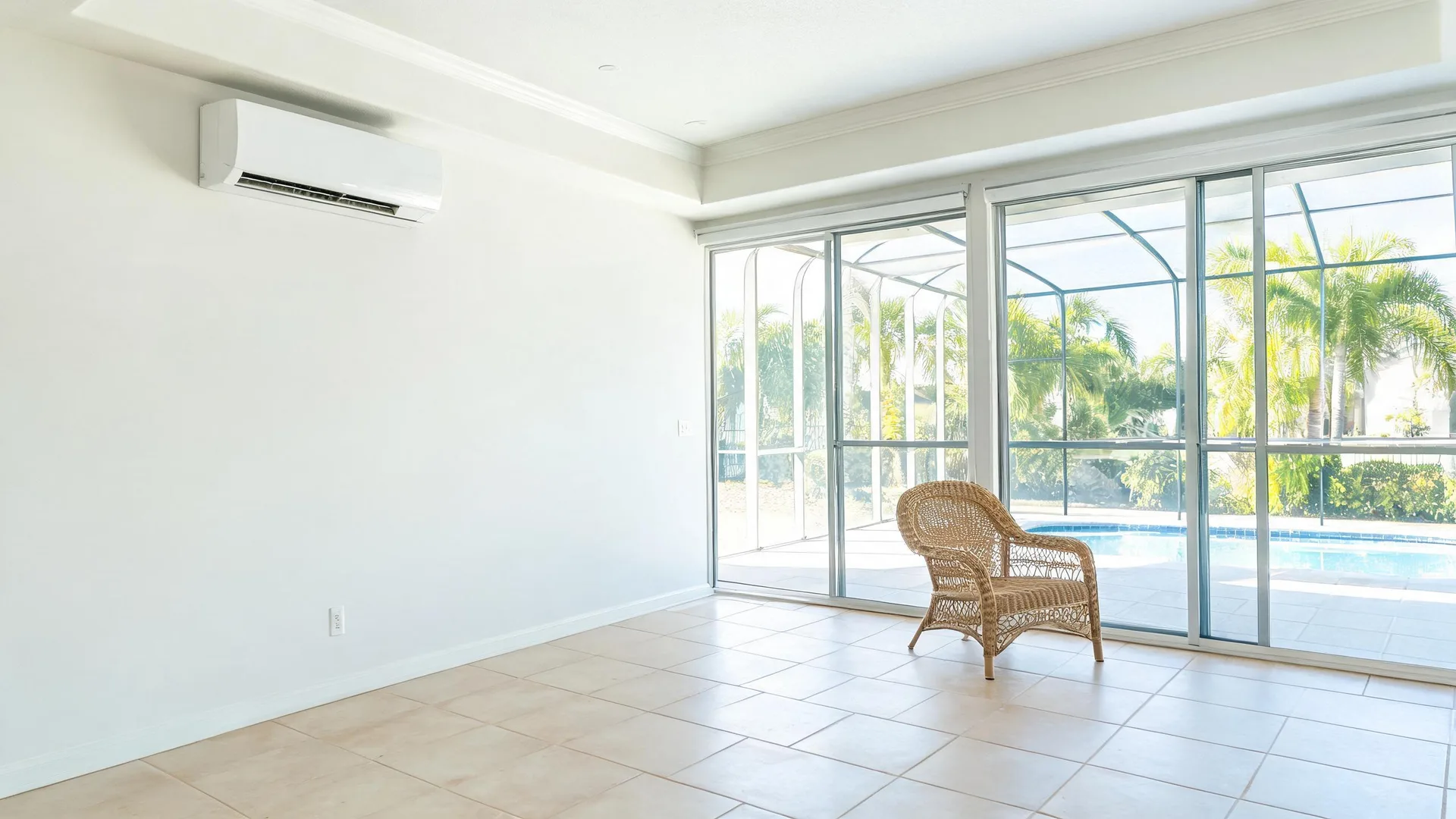
The wall it passes through decides how much cutting happens

Every mini-split needs a penetration through the exterior wall for the line set, sealed and sleeved against weather. What's behind that wall, framing, brick, block, or something else, decides how much work that hole takes to make and finish. A crew won't know until they open it up, which is why the quote can shift once the wall tells them what's actually there.

The old equipment doesn't just get unplugged and hauled off. If it's a ducted system coming out for a ductless one, the furnace or air handler and the ductwork tied to it either get capped off or stay in place as backup heat, and that decision affects how the mini-split gets sized. If there's an outdoor condenser already there, it has a refrigerant charge in it that has to be recovered into a tank, not vented, because releasing refrigerant to the air is against federal law. The old line set usually comes out of the wall rather than getting reused, since a new system needs line sizing matched to its own equipment. Whatever's left, the old condenser, the indoor coil, any abandoned line set, gets disconnected and removed as part of the swap. A thermostat wired to the old system won't control the new one, so that gets pulled too. None of this is optional cleanup. It has to happen before the new equipment goes in, not after.

Install day starts with pressure, not power tools. Once the indoor head and outdoor unit are set and the line set is run, the installer pulls a vacuum on the lines to clear out air and moisture before any refrigerant moves through them. Skip that step and moisture sits in the line, which ruins the compressor over time. The system gets checked for leaks before it's charged, since a joint that weeps refrigerant slowly can take months to show up as a comfort problem. Once it holds vacuum, the lines get charged to the weight the manufacturer specifies for that line length, not just topped off by feel. Only after all of that does the crew power it on, run it in both heating and cooling, and check that the head is actually moving the air it's supposed to move.