




A lit brick residential street at dusk showing a row of two-story homes with covered porches and mature trees.

Mini Split Installation in Peoria, IL

Tell us about the job

Takes about a minute. No obligation.

New system or replacementMini-splitPeoria County, IL
Step 1 of 2

What ZIP code is the job in?

Peoria County saw 280 severe weather events between 2015 and 2024. Most of that was wind, 147 events, with 106 hail events and 11 tornadoes in the same stretch. An outdoor condenser sits outside year round, so hail and wind-blown debris are things it has to take. Across Illinois, 16% of households lost power for a day or more in 2024. A mini-split won't run without power, and neither will a furnace's blower or igniter even if the gas itself is still flowing. Where the outdoor unit goes and what backs it up are worth working out before installation, not after a storm.

8 months
October through May, your system heats
4 months
June through September, it cools
20°F
the average winter night it heats against
84°F
the average summer afternoon it cools against
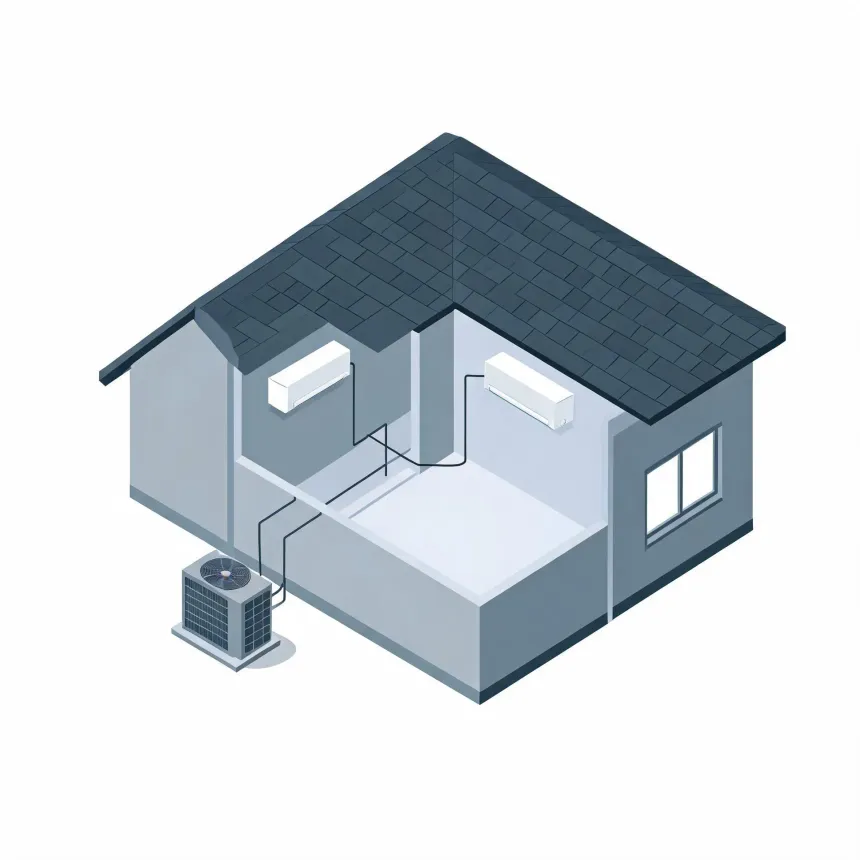
Isometric illustration of a cutaway gray house with a dark shingled roof, showing two wall-mounted indoor air conditioning units connected by lines to an outdoor condenser unit on the ground outside.
Your system heats October through May and cools June through September.

NOAA nClimDiv, 1991–2020 normals

Half the homes in Peoria County were built in 1966 or earlier.

An install into an older house means fitting the line set and mounting to walls and framing nobody can see from outside.

Four months of hard cooling, and weather that doesn't let up

Cooling runs June through September
Summer afternoons average 84°F
147 damaging wind events from 2015 to 2024

Most houses in Peoria County heat with gas, 68.1 percent of them. Electricity accounts for another 26.6 percent, and a small share run on bottled or LP gas. That gas majority shapes how a mini-split usually gets used here: as the system that handles cooling and takes over heating duty in the shoulder months, while the furnace carries the coldest stretch of winter. Installing it that way means two systems to plan around instead of one, with the mini-split's indoor and outdoor units sized for that split role rather than for carrying a whole winter alone. A household already on electric heat is a different job, since the mini-split may need to cover more of the year by itself.

Plan for the next outage before the installers leave

Get the outdoor unit's placement and backup plan settled at installation, not after the next storm knocks out power or drops hail on it. That's a decision made once, while the lines are already open and the crew is already there.

Find a contractor
A beige split-system air conditioner outdoor condenser unit mounted on metal wall brackets atop a stucco wall.

May, before the heat starts

Cooling in Peoria County runs June through September, four months. May is the month to get a mini-split installed, before that first hot stretch hits and before every installer in the county is booked solid. A rushed install in June means working around whatever schedule is open, not the one that suits the job. Winter matters too. Overnight lows average 20°F across December, January and February, cold enough that an outdoor unit put in carelessly, or mounted somewhere it'll catch drifting snow or ice, causes problems long before next summer shows up.

How many zones you're conditioning

Every indoor head needs its own run of refrigerant line back to the outdoor unit, and its own spot on the wall or ceiling with clearance to move air. A single zone is a straightforward line set and a mounting bracket. Add a second or third head and the outdoor unit has to be sized for all of them running at once, with separate line sets routed to each room. More zones means more holes through the wall, more line hidden in chases or soffits, and more time spent getting each head level and placed where it'll actually cool the room instead of a hallway.
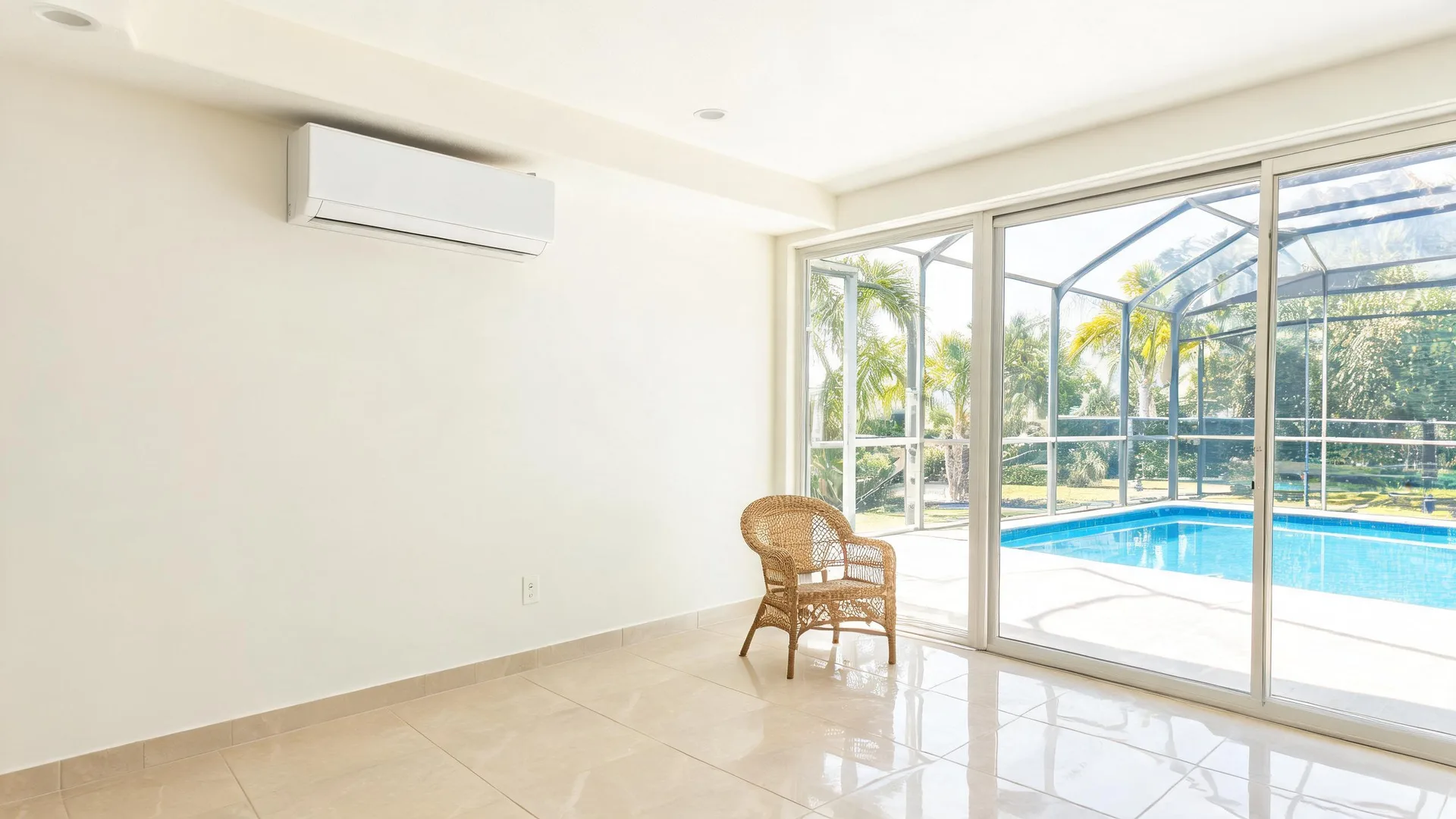
What the line set has to pass through

The refrigerant line, the drain line and the electrical whip all travel together from the indoor head to the outdoor unit, usually through a single wall penetration. A ground floor exterior wall with nothing in the way is a short run. Getting that same line up through an attic, across a joist bay, or down an interior wall to reach an outdoor unit on the other side of the house takes longer and may mean opening drywall that has to be patched after. The length of the run and what's in its path, not the equipment itself, is usually what separates a quick install from a long one.

When you're comparing systems, ask what the SEER2 and HSPF2 ratings are, since those tell you how efficiently a unit cools and heats, not how big it is. Ask about the sound rating for the outdoor unit, measured in decibels, especially if it'll sit near a patio or a bedroom window. Ask how the system handles low outdoor temperatures if you want it carrying any real share of winter heating, since not every mini-split keeps producing heat once it gets cold enough outside. Ask what the warranty covers on the compressor versus the rest of the parts, because those terms aren't always the same. And ask who's doing the line set work and whether they're pulling a vacuum on the lines before charging the system, since a line set that isn't evacuated properly leaves moisture and air in the refrigerant circuit, and that shows up later as a system that won't hold its charge.

Electricity in Peoria County averaged 18.04 cents per kilowatt-hour in 2025, more than most US counties pay. A mini-split draws power every time it runs, and here that draw costs more than it would almost anywhere else. SEER2 and HSPF2 ratings are where that cost gets decided, since a more efficient unit moves the same heat or cooling while pulling less power. A unit with a low rating doesn't fail any sooner, it just costs more to run for as long as you own it. That makes the ratings worth checking before buying, not after.