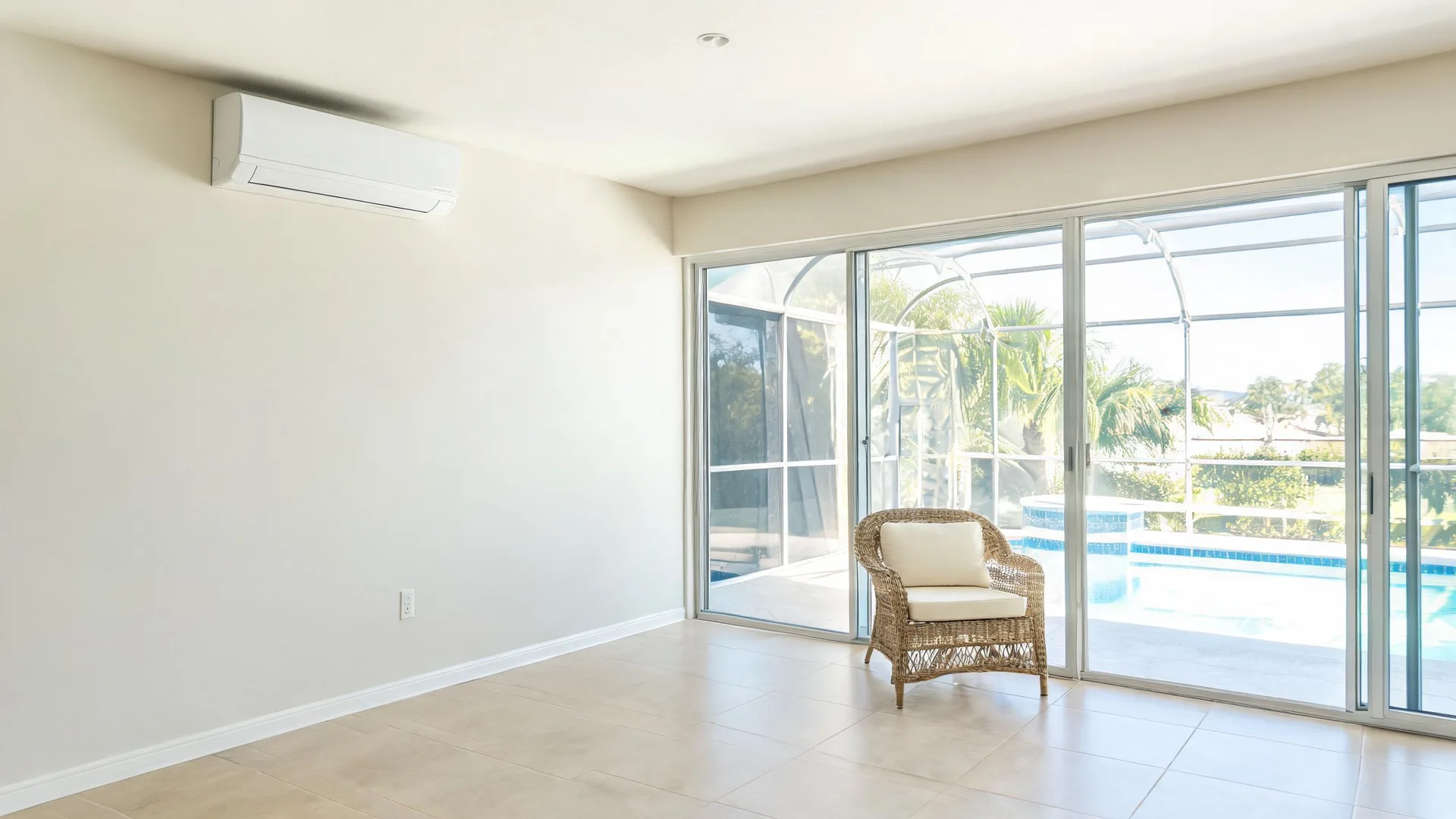
Electricity here runs 15.87 cents per kilowatthour
Illinois households paid that rate in 2024. A mini split that pulls less power to do the same heating or cooling job shows up in the bill every month it runs.
Takes about a minute. No obligation.
Illinois households paid that rate in 2024. A mini split that pulls less power to do the same heating or cooling job shows up in the bill every month it runs.
When you look at mini split systems for this house, the efficiency rating matters as much as the price tag. At this electric rate, a less efficient unit costs more to run for as long as it's installed.
NOAA nClimDiv, 1991–2020 normals
A mini split sized too big cools the room fast, then shuts off before it pulls the damp out of the air.
The right size runs longer at a lower output, and that's what keeps the room steady and dry.



Most homes in Bureau County heat with utility gas, and that gas furnace usually runs alongside central air cooling the whole house from one thermostat. A mini split works differently. It runs on electricity, so it doesn't compete with the furnace for the job of heating the house. Most homes here add one to handle a room the furnace and AC don't reach well, a sunroom, a garage, a finished attic. You set that room's temperature on its own, separate from the rest of the house.
Bureau County falls under zone 5A. Any mini split installed here has to clear the federal minimum for split-system heat pumps. That's 14.3 SEER2 for cooling and 7.5 HSPF2 for heating, whether the unit serves one room or several. A federal tax credit is available for qualifying heat pump installations, worth checking against the unit you're considering.
Find a contractorHalf the homes in Bureau County were built in 1958 or earlier. A mini split running day into night doesn't care about the age of the house, but the wall it mounts to and the path the line set takes through it are different questions in an older home. Whoever installs it has to work with what's actually behind that wall, not what a newer build would have. Worth asking the installer to check that before the mounting bracket goes up.
A mini split handles one room or a few rooms. It isn't taking over the job your furnace and central air already do, so there's no old system to pull out on their account. Whatever heats and cools the rest of the house keeps running the way it always has.
Where a mini split replaces anything, it's usually whatever was patched into that room before. A window AC, a space heater, maybe a baseboard unit. Those come out once the new lines and head are in and running. The room is free of the cord and the rattle in the window frame.
A few questions tell you more than any brochure. Ask what the unit's rated capacity is for both heating and cooling, not just cooling, since some systems lose a lot of heating output once it gets cold outside. Ask how low the outdoor temperature can drop before the heat pump stops keeping up and backup heat is needed. Ask whether the indoor head is sized for the room it's going in, since an oversized unit short cycles and an undersized one runs constantly without catching up. Ask what the warranty covers on the compressor versus the labor to access it, because those are often different terms. And ask who services the brand locally, since a mini split with no nearby parts or trained techs turns a small repair into a long wait.
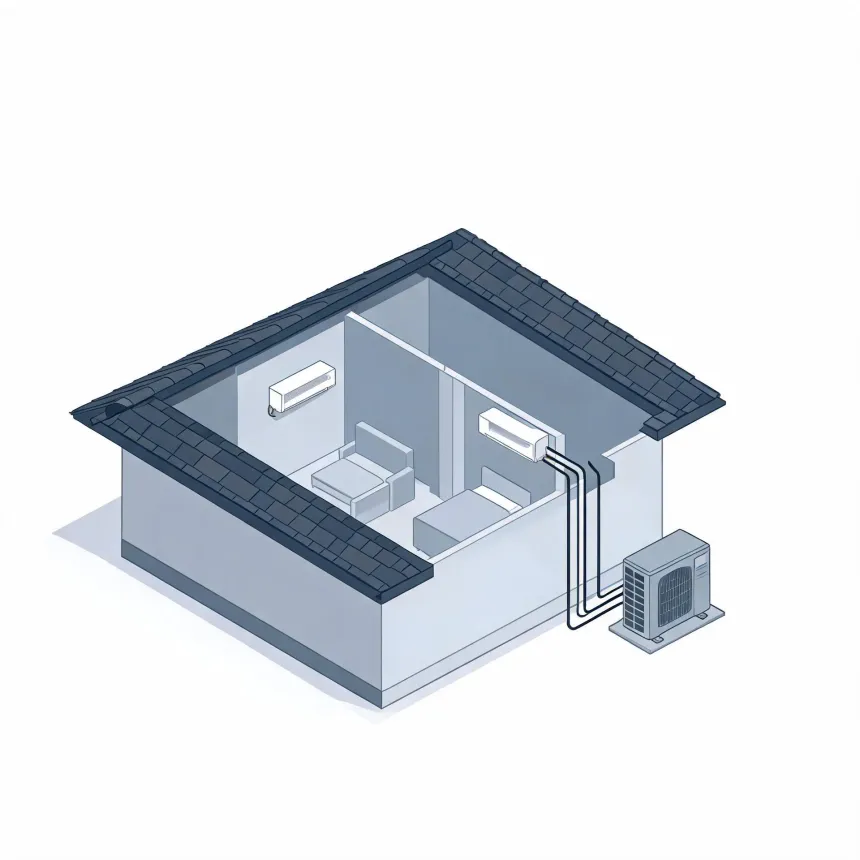
Installation day starts outside, not in. The outdoor compressor needs a spot on a pad or bracket with clear airflow on all sides and a short, direct run to the room getting the indoor head. Whoever installs it drills one hole through the wall for the line set, the refrigerant lines, power wire, and condensate drain bundled together, then runs those lines to the compressor outside. Once the indoor head is mounted and the lines are connected, the tech pulls a vacuum on the line set before opening the refrigerant valves. That vacuum step pulls out moisture and air that would otherwise ruin the compressor over time, and it's not optional even though it adds to the day. After that comes a test run in both heating and cooling, checking the line set connections for leaks and making sure the head is reading the room's temperature correctly before anyone calls it done.