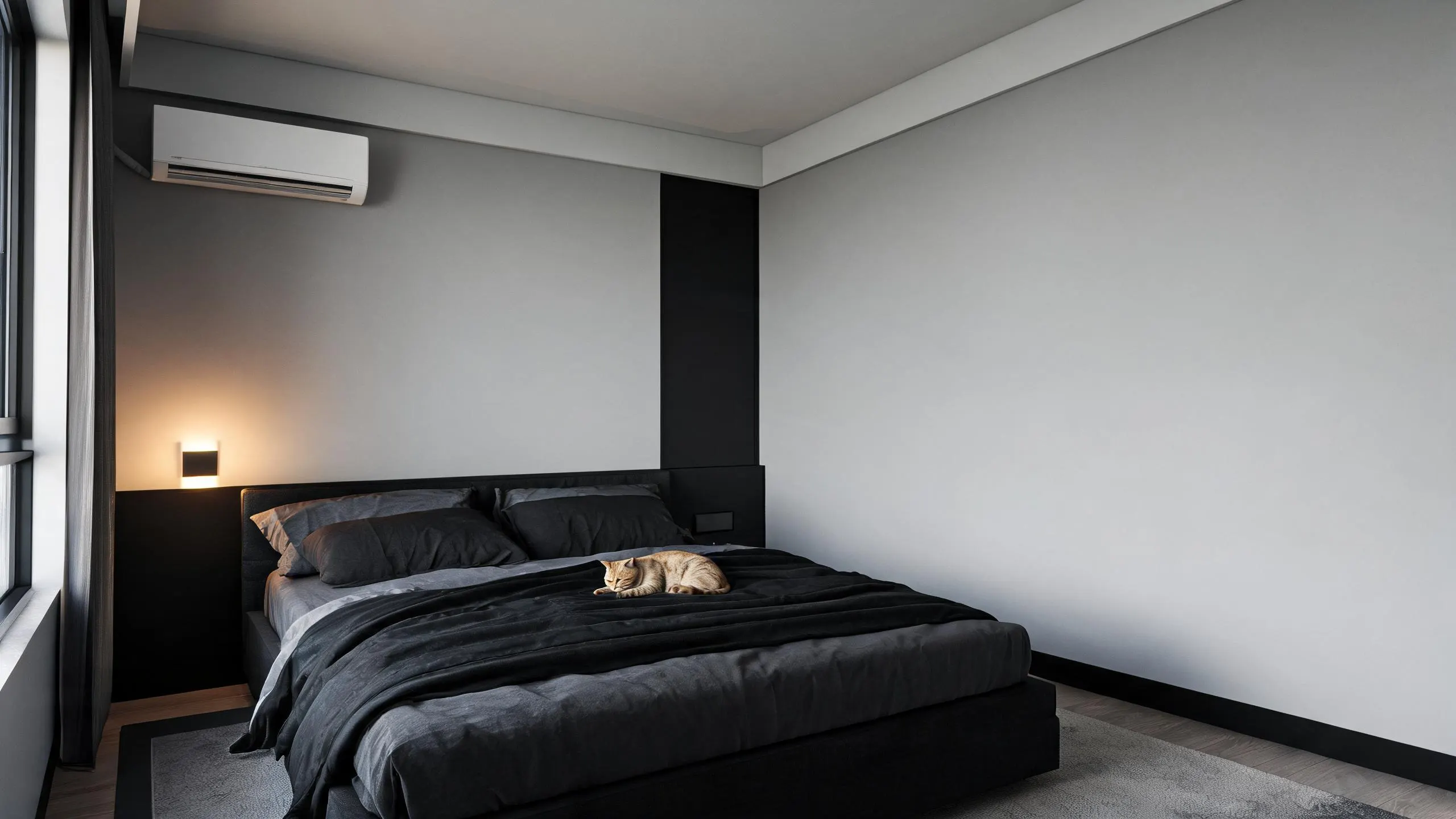






An orange cat rests on a dark grey bed in a minimalist monochrome bedroom.

Mini Split Installation in Quincy, IL

Tell us about the job

Takes about a minute. No obligation.

New system or replacementMini-splitAdams County, IL
Step 1 of 2

What ZIP code is the job in?

Electricity in Illinois ran 15.87 cents per kilowatthour in 2024. A mini split runs on electricity, nothing else, so that rate applies to every hour it works. The efficiency of the unit you choose decides how many of those cents turn into heat or cool air and how many just run the compressor harder than it needs to. A mini split with a high efficiency rating uses less power to move the same amount of heat, and at this rate the gap between a good unit and an average one shows up on the bill every month, not just in the spec sheet.

7 months
October through April, your system heats
4 months
June through September, it cools
22°F
the average winter night it heats against
85°F
the average summer afternoon it cools against
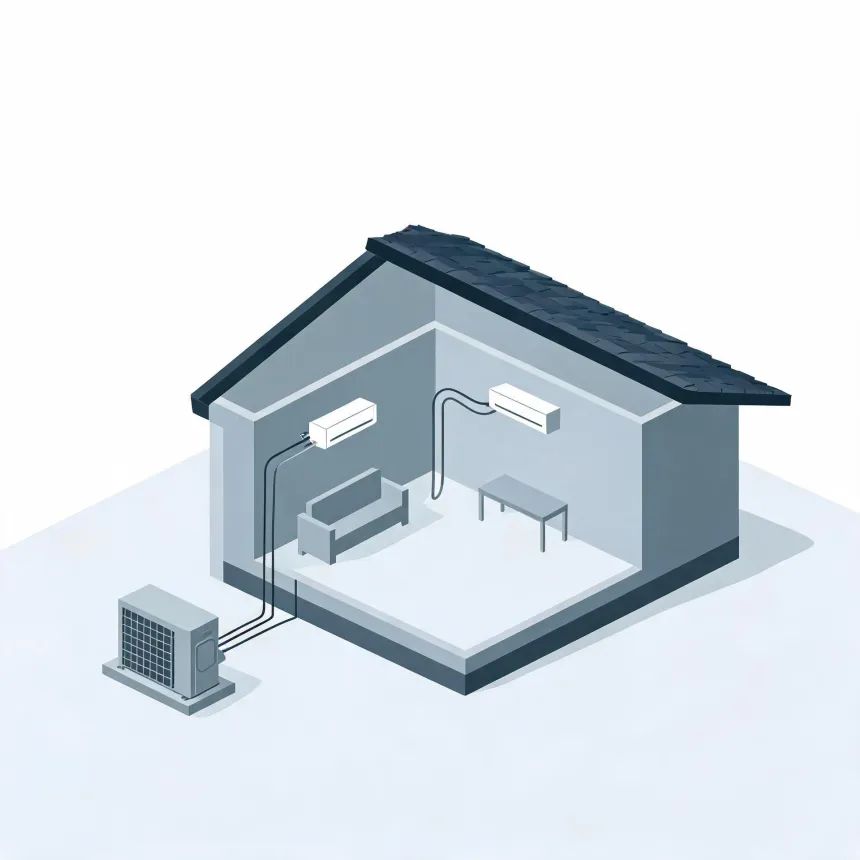
Isometric illustration of a cutaway house showing two wall-mounted indoor air conditioning units connected by line sets to an outdoor condenser unit, with a sofa and table inside the room.
Your system heats October through April and cools June through September.

NOAA nClimDiv, 1991–2020 normals

The cost of a mini split job comes from the line set run and the wall it has to pass through, not just the unit on the price tag.

A contractor sizing your job is pricing the labor to get refrigerant line from the outdoor unit to each indoor head, not just the equipment itself.

Most homes here heat with gas, cooling doesn't

58.8% of homes heat with gas
Cooling runs June through September
Summer afternoons average 85°F
Get it installed before JuneCooling runs June through September here. May is the month to have it ready.

Half the homes in Quincy were built in 1965 or earlier. A house that age was built for a furnace and a window unit or two, not a mini split, and the walls and floor plan weren't laid out with line sets in mind. That doesn't rule anything out. It means the install has to work around what's already there instead of what a newer house would offer. A contractor sizing the job for an older home here is figuring out where line sets can actually run and which walls make sense for an indoor head, before they figure out how many heads you need.

A new system here has to clear a set bar

Adams County sits in climate zone 5A, a cool zone where heating carries the bigger load. Any mini split installed here has to meet the federal minimum for a split-system heat pump. That means 14.3 SEER2 for cooling and 7.5 HSPF2 for heating. There's no separate rule for ductless units, they have to clear the same bar as any other split system. A unit that clears it by more than a little can qualify for a federal tax credit.

Find a contractor
A person in a dark jacket, knit cap and tan work pants climbs porch steps toward a dark green front door, carrying a canvas tool bag, with a potted shrub beside the entry.
A beige split-system air conditioner outdoor condenser unit mounted on metal wall brackets atop a stucco wall.

The install decides where the heads live for good

A line set run through a wall stays there. Once the install is done, the head is in that room for as long as the system runs, this summer and the summers after it. That is why the walls get figured out before anything else. A contractor who takes the time to find the right path for the line sets, instead of the easiest one, is the reason the heads end up in the rooms you actually want cooled.

The rating is a ratio, not a size

SEER2 and HSPF2 tell you how much heat a mini split moves for the power it uses, nothing about how much heat it can move. A high rating on a unit that's too small for the room still leaves that room short. Sizing the head to the space and checking the rating are separate jobs, and both have to get done.
The number on the label is a ceiling, not a guarantee

A mini split hits its rated efficiency under set test conditions. How it actually runs depends on the charge being right, the line set length, and the install matching what the manufacturer specs. The same unit installed well or installed poorly can run at a different efficiency for as long as it's in the wall.

When you're comparing quotes, ask each contractor what size head goes in each room and how they got that number. Sizing should come from a load calculation, the square footage, the ceiling height, the windows and how the room is used. A contractor who quotes a size off a chart without walking the room is guessing. Ask what's included in the line set run and whether the quote covers the wall penetration and any condensate drain work, since that's where quotes start to differ even for the same equipment. Ask how many indoor heads one outdoor unit will support and whether that changes how each room performs when every head is running at once. And ask what happens to the warranty if the line set gets extended or the system gets serviced by someone other than who installed it, because manufacturers often tie coverage to how the job was done, not just what was bought.

Install day starts with the wall penetration, since everything else follows from where that hole goes. The line set runs from there to each indoor head, carrying refrigerant lines, a condensate drain and an electrical whip bundled together through a sleeve in the wall. Once the hole is cut and the lines are run, the indoor head mounts on a bracket and the outdoor unit gets set on a pad or bracket outside. The lines get connected, then the system is pressure tested before anyone opens the valves, so a leak shows up before the charge goes in rather than after. Next the line set gets evacuated to pull out moisture and air, since either one left behind will keep the system from holding the charge it needs. Only then does the refrigerant get released into the lines and the system get checked against what the manufacturer specs for that line length.