



A dark modern bedroom with grey bedding, a wall-mounted air conditioning unit, and a cat resting on the bed.

Mini Split Installation in Rockford, IL

Tell us about the job

Takes about a minute. No obligation.

New system or replacementMini-splitWinnebago County, IL
Step 1 of 2

What ZIP code is the job in?

Gas heats 83.5% of homes in Winnebago County, and most of those houses have no ductwork built for a heat pump or furnace replacement. A mini split skips that problem. It runs on its own refrigerant lines, so you're not tying it into a gas furnace or opening up walls for ducts. That makes it a fit for additions, garages, or any room your gas system doesn't reach well. Homes already on electric heat, about 12.6% here, can use one as the whole system rather than a supplement.

8 months
October through May, your system heats
3 months
June through August, it cools
16°F
the average winter night it heats against
82°F
the average summer afternoon it cools against
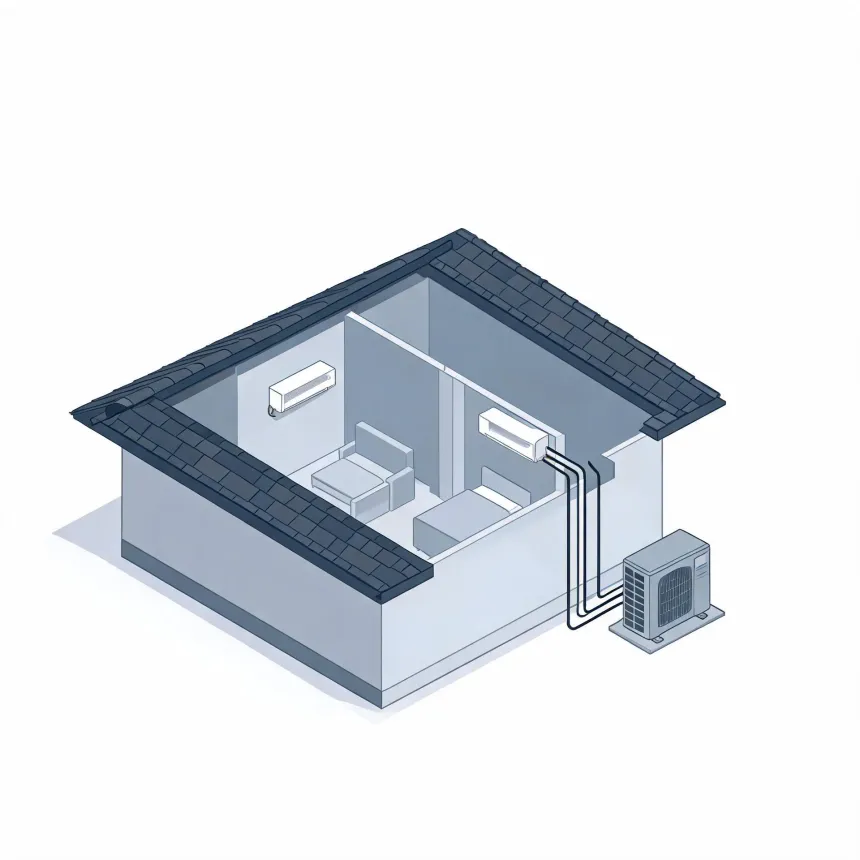
Isometric illustration of a cutaway house with tiled roof showing two wall-mounted indoor mini-split units connected by line sets to an outdoor condenser beside the building.
Your system heats October through May and cools June through August.

NOAA nClimDiv, 1991–2020 normals

A mini split sized too big will short cycle, shutting off before it pulls the moisture out of the air.

The right size comes from a room by room load calculation, not a guess based on square footage.

Half the homes here were built by 1971, and a mini split has to work with the house you have

Half the homes here were built by 1971
Cooling runs June through August
Summer afternoons average 82°F

A standard mini split, sized right for the space, is what most rooms in Rockford need. Nothing about the electric rates here points to spending more for a higher efficiency unit than the job calls for. At 15.87 cents per kilowatt hour, Illinois electricity costs are in line with most of the country, not high enough on their own to justify oversizing a system or stepping up to a pricier tier. The unit should match the room's load, not the rate on the bill.

Have it installed before June, not during it

Cooling starts in June here, with May as the month to get a mini split in place. Putting it in now means the sizing, the line set, and the mounting get done without a deadline pushing the work. Wait until the heat is already on and you're choosing from whatever's available, on whatever day a contractor can get to it.

Find a contractor
A white outdoor air conditioner condenser unit mounted on metal wall brackets against gray horizontal siding, with a blue sky and white clouds behind it.

Three months of summer is not a reason to oversize

Cooling runs about three months here, June through August, with afternoon highs averaging 82°F. That's the stretch a mini split actually works to cool this room. The rest of the year it sits unless you're running it for heat too. Winnebago County is zone 5A, a cool climate where heating carries the bigger load, not cooling. A short, moderate summer like this doesn't wear on a compressor the way a longer or hotter season would, and it's not a reason to size up. The unit only needs to match what this room asks of it in June, July and August.

The number of zones sets the base cost

A single room needs one outdoor compressor and one indoor head. Add rooms and you're either adding separate single-zone systems or stepping up to a multi-zone compressor running several heads off one outdoor unit. More heads on one compressor costs less than running that many standalone systems, but it also means the outdoor unit has to be sized for all of them running at once.
Where the line set runs changes the labor

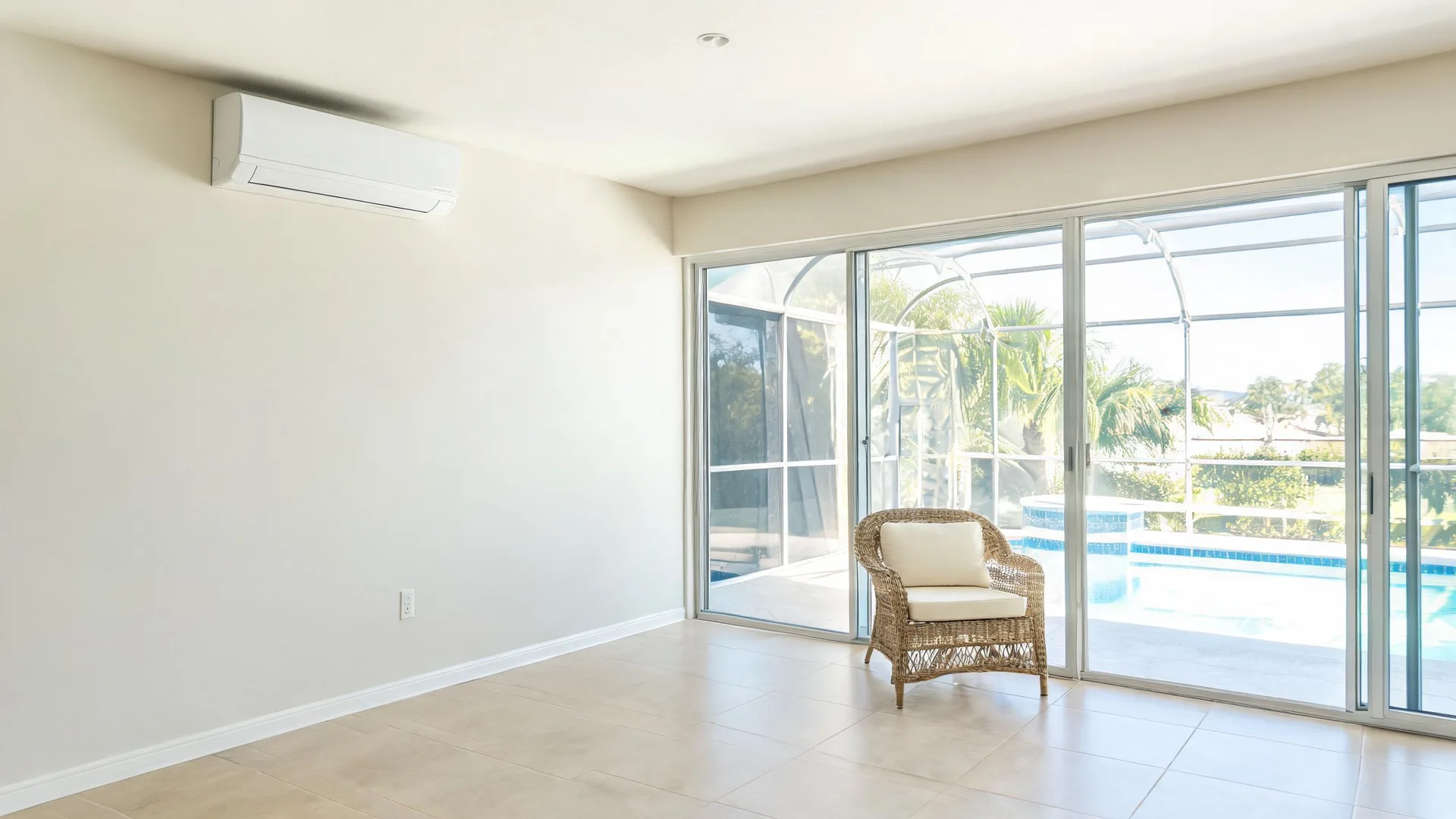
The refrigerant line connects the indoor head to the outdoor compressor through a hole in the exterior wall. A straight shot through an exterior wall is the simplest run. Longer distances, runs through multiple floors, or a compressor placed far from the heads all add length to the line set and time to the install. The mounting surface matters too. A head going on a wall with clear framing behind it goes up faster than one that has to work around a stud layout or get extra support.

Ask every contractor what SEER2 and HSPF2 numbers they're quoting and whether that's for the system as installed, not just the compressor's best-case rating on paper. Ask what sound rating the outdoor unit carries, since some sit much quieter than others and it matters if that unit lands near a bedroom window or a neighbor's patio. Ask whether the warranty requires a specific brand of maintenance or an authorized dealer to stay valid, because some manufacturers void coverage if just anyone services it. Ask how many indoor heads that outdoor compressor can actually support at full output, not just how many it can physically connect to. And ask for the load calculation itself, not just a quote. A contractor who hands you a number without showing how they got there is guessing at your comfort, not sizing for it.

If this is a replacement, the old system has to come out before the new lines go in. A contractor recovers the refrigerant from the old unit first, since it can't legally be vented into the air, then disconnects the electrical and pulls both the indoor and outdoor pieces. If the old system shared a wall penetration with the new mini split, that hole might get reused for the new line set. If not, it gets patched and the new one goes wherever the install calls for it. None of the old equipment goes out with the regular trash. The refrigerant, the compressor oil, and the metal all have to be handled separately and hauled off for proper disposal.