




A two-story dark-sided house with a covered front porch behind a trimmed hedge, framed by large green trees, photographed from ground level with blurred grass in the foreground.

Mini Split Installation in Waukegan, IL

Tell us about the job

Takes about a minute. No obligation.

New system or replacementMini-splitLake County, IL
Step 1 of 2

What ZIP code is the job in?

Most homes in Lake County heat with gas, 83.2% of them. A mini split works differently. It runs on electricity and handles heating and cooling from the same unit. That makes it a common choice for additions, garages, or converted spaces that never got gas ductwork run to them in the first place. It also works as the only system in a home, but most people here are adding it alongside a furnace rather than replacing one outright.

8 months
October through May, your system heats
3 months
June through August, it cools
19°F
the average winter night it heats against
81°F
the average summer afternoon it cools against
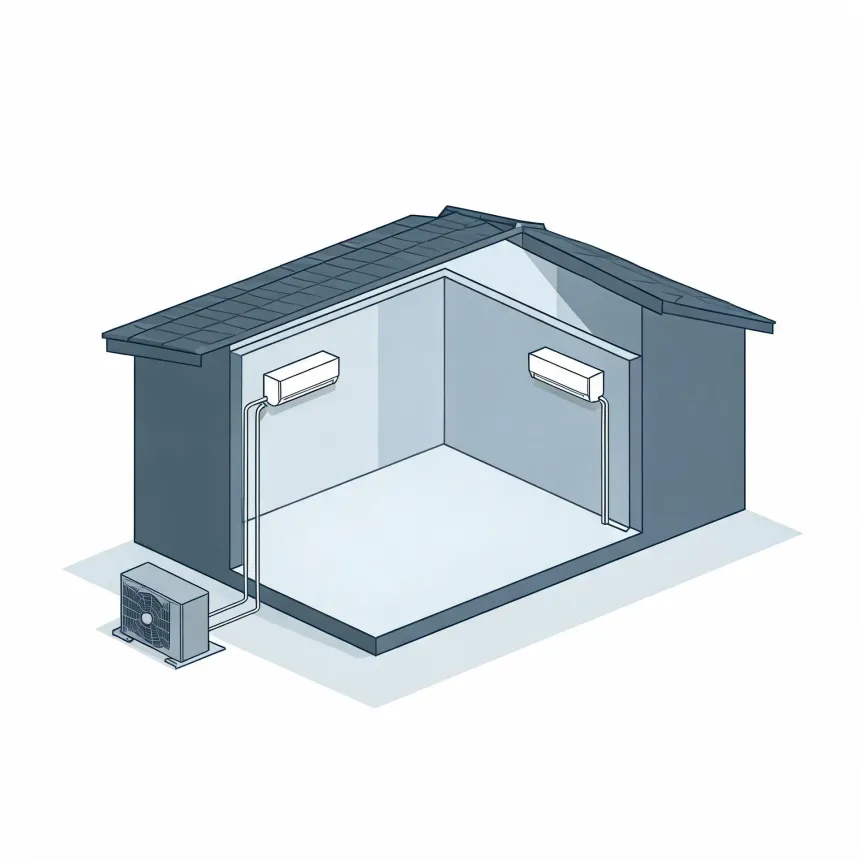
Cutaway isometric illustration of a small building interior showing two wall-mounted indoor air conditioning units connected by line sets running down to a single outdoor condenser unit on the ground outside.
Your system heats October through May and cools June through August.

NOAA nClimDiv, 1991–2020 normals

An old window unit or electric baseboard setup usually just gets disconnected and hauled off once the mini split is in.

If a furnace stays in place for backup heat, the installer only needs to run new wiring and a dedicated circuit for the mini split, not touch the ductwork at all.

Get it installed before June, so a Lake County summer isn't the one testing it

Cooling runs June through August
Summer afternoons average 81°F
138 damaging wind events from 2015 to 2024

A standard mini split, sized right for the room it's heating and cooling, is what most homes here need. Lake County sees its share of damaging wind and hail, but none of that calls for oversizing the unit. The outdoor compressor is built to sit outside through all of it, mounted on a pad or bracket clear of rooflines and drainage. What matters more than size is the install itself, the line set sealed where it passes through the wall and the unit secured enough to take wind. A bigger, pricier system won't hold up any better than the right-sized one.

The right size mini split, installed once, is all this room needs

Electricity here runs 15.87 cents per kilowatt-hour, and a correctly sized mini split is what keeps that number manageable. Going bigger than the room needs just means paying more to run it, not better heat or cooling. Get the sizing right and the install sound, and this is a one-time job.

Find a contractor
A beige split-system air conditioner outdoor condenser unit mounted on metal wall brackets atop a stucco wall.

It runs more hours at a lower pace, not harder

A mini split runs every time the room calls for it instead of cycling on a timer, so the compressor spends most of its time at low, steady output rather than shutting off and kicking back on. That steady pace is easier on the parts than hard starts and stops. The inverter driving the compressor ramps up and down to hold the temperature, which is part of why these systems tend to hold up well over years of use. What actually wears a unit down is dirt, not runtime. An outdoor coil caked with debris or a dirty indoor filter makes the compressor work harder to move the same air, and that strain adds up faster than the hours on the clock do. Ask an installer how the unit behaves in the shoulder months, running low and often rather than off completely, and whether the filter sits somewhere it will actually get cleaned.

The rating tells you the ratio, not the bill

The efficiency number on a mini split's label is a ratio of cooling or heating output to the electricity it takes to produce it. A higher number means the unit gets more output per unit of power. It doesn't tell you what the unit will cost to run in a given room, because that depends on how well sized the install is and how well the room holds temperature.
A separate rating for cooling and for heat

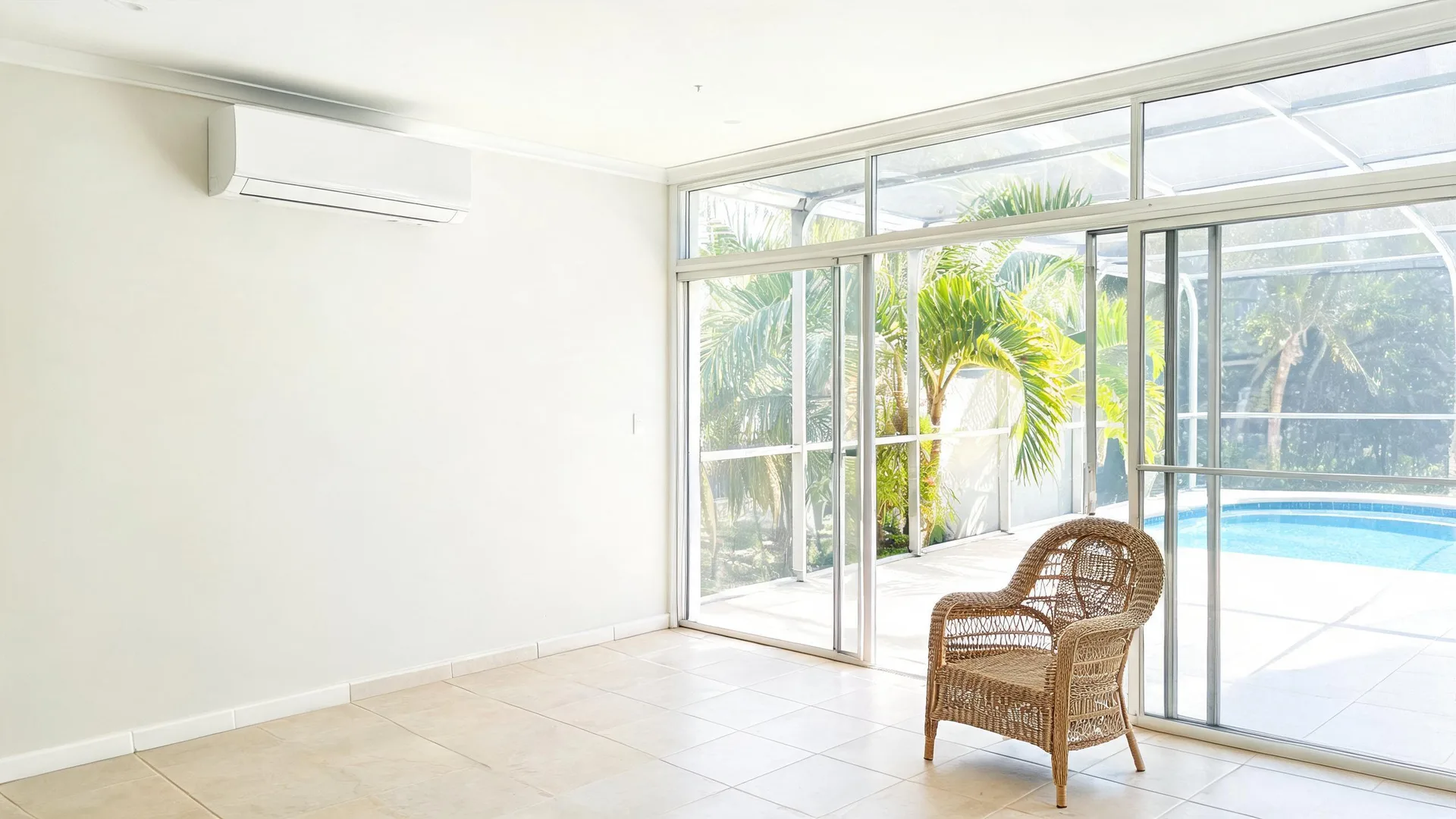
A mini split carries one rating for cooling and another for heating, since it's doing opposite jobs with the same compressor and refrigerant loop. When comparing units, look at both, not just whichever is printed bigger on the spec sheet. A unit that cools efficiently isn't automatically the right pick if heating is the main reason it's going in.

Most of the cost in a mini split job is the line set run, the copper that carries refrigerant between the outdoor compressor and the indoor head. A short, straight run through one wall costs less labor than a run that has to go up through a soffit, across a ceiling cavity, or down an exterior wall to reach where the compressor needs to sit. Every indoor head needs its own line set and its own penetration through the wall, so a system with multiple zones costs more to install than the same total capacity in one unit, even before you count the equipment. The electrical side matters too. A mini split needs a dedicated circuit, and if the panel doesn't have room for one, that's added work before the unit itself goes in. Where the outdoor compressor ends up also plays into it. A pad close to the panel and the indoor head keeps wiring and line set short. One tucked around the side of the house or up on a bracket takes more to reach.

Install day starts outside and in at the same time. One crew member mounts the bracket for the indoor head and cuts the hole for the line set while another sets the pad and positions the outdoor compressor. The hole through the wall gets sealed around the line set once it's through, not after, because that gap is an easy way for air and moisture to get in. The line set itself gets connected, then the system is evacuated with a vacuum pump to pull out air and moisture before refrigerant ever enters it. Skip that step and the compressor is running with contamination in the loop from day one. Once it holds vacuum, the lines are charged, the electrical hookup gets tied into its dedicated circuit, and the installer runs the system through both heating and cooling before calling it done.